What does Luke 6:6 mean?
“And it came to pass also on another sabbath, that he entered into the synagogue and taught: and there was a man whose right hand was withered.” — Luke 6:6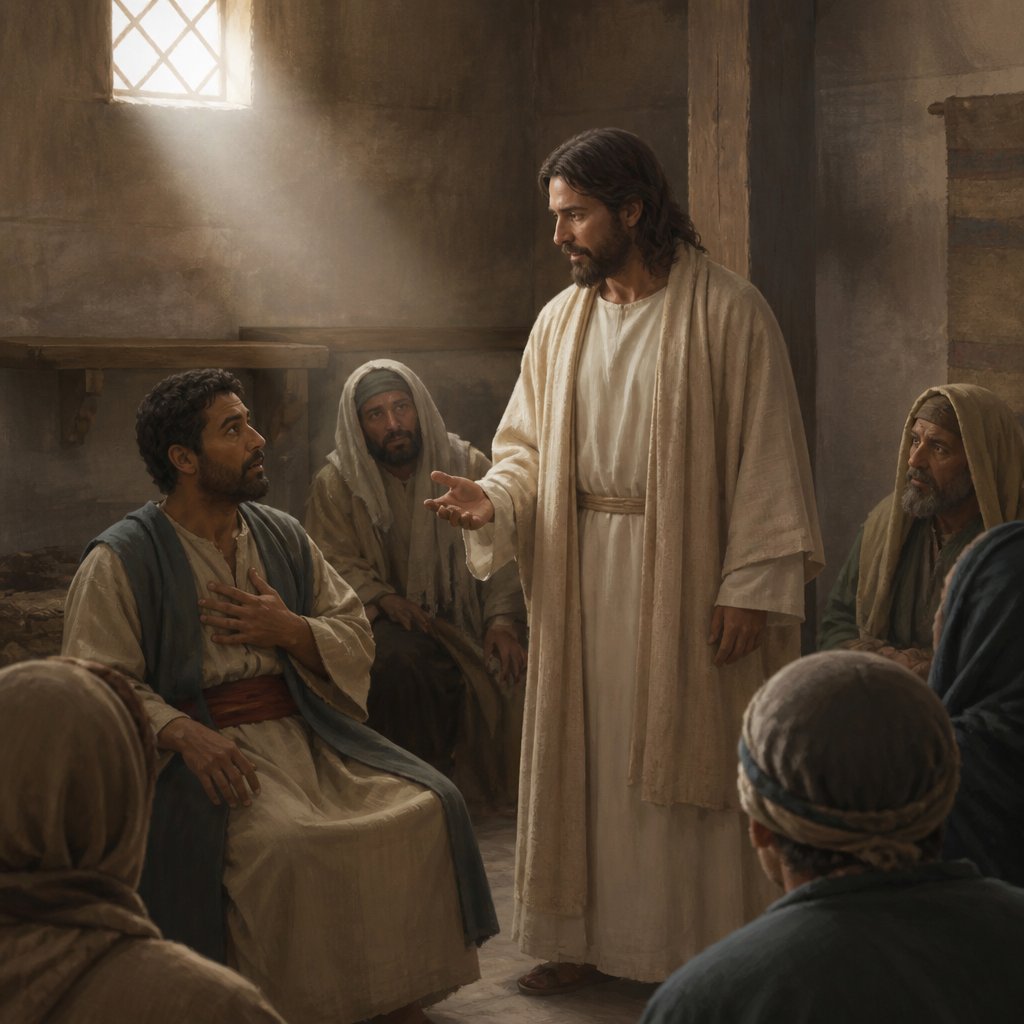
The Bible verse Luke 6:6, found in the King James Version, reads: "And it came to pass also on another sabbath, that he entered into the synagogue and taught: and there was a man whose right hand was withered."
This verse is situated within the broader context of the Gospel of Luke, which is one of the four canonical gospels in the New Testament. Written by Luke, a physician and companion of the apostle Paul, this book is dedicated to providing an accurate and detailed account of the life, teachings, death, and resurrection of Jesus Christ. The gospel is believed to have been written for Theophilus, a high-ranking Roman official, in order to provide him with a well-ordered and reliable account of the life of Jesus.
The verse in question takes place on the Sabbath, a day of rest and worship for the Jewish people. Jesus, as a devout Jew, would have also observed the Sabbath and regularly attended the synagogue, which served as a gathering place for Jewish communities for worship and instruction in the scriptures. In this particular instance, Jesus entered the synagogue and began to teach, as was his custom. However, the focus quickly shifts to a man who had a withered right hand.
The man with the withered hand is in need of healing, and this situation sets the stage for a confrontation between Jesus and the religious leaders of the time. The Pharisees and scribes, who were highly respected religious authorities, were critical of Jesus' teachings and actions, and they were watching him closely to find fault. They were particularly interested in his actions on the Sabbath, as they believed that working or performing miracles on this day was a violation of the Law. In this context, the man with the withered hand becomes a symbol of not only physical infirmity but also of the brokenness and need for restoration that exists within individuals and communities.
The significance of this verse lies in the way that Jesus responds to the man's need. Rather than avoiding controversy or criticism, Jesus chooses to address the man's condition, despite knowing that it would provoke the religious leaders. In Luke 6:8-10, Jesus tells the man to stand up and then asks the Pharisees and scribes whether it is lawful to do good on the Sabbath or to do evil, to save life or to destroy it. When none of them respond, Jesus heals the man, restoring his hand to full health.
This act of healing on the Sabbath is significant for several reasons. First, it demonstrates Jesus' authority over the law and his emphasis on compassion and mercy over legalistic observance. He challenges the narrow interpretation of the Sabbath laws and asserts that acts of kindness and mercy are always appropriate, regardless of the day. Second, it reveals Jesus' commitment to addressing human suffering and brokenness, regardless of the consequences. By healing the man with the withered hand, Jesus exemplifies his mission to bring wholeness and restoration to the marginalized and oppressed.
The response of the religious leaders also sheds light on their own spiritual condition. Their silence in the face of Jesus' question, as well as their subsequent anger and desire to plot against him (as described in Luke 6:11), exposes their hardness of heart and lack of compassion. In contrast, Jesus' response to the man with the withered hand reflects his deep empathy and love for those in need.
Overall, Luke 6:6 serves as a powerful reminder of Jesus' radical teachings and actions, his confrontation with religious legalism, and his commitment to healing and restoration. It highlights the themes of compassion, justice, and the kingdom of God, and it offers a profound challenge to all who seek to follow Jesus in addressing the brokenness and suffering of the world.
Get our apps


Artwork for Luke 6:6

Luke 6:6 - "And it came to pass also on another sabbath, that he entered into the synagogue and taught: and there was a man whose right hand was withered."
"And it came to pass also on another sabbath, that he entered into the synagogue and taught: and there was a man whose right hand was withered." - Luke 6:6

Luke 6

luke 6: 27

luke 6:30

Luke 6: 27-38

Luke 6:21-26

Luke 13:6-9

Luke 3:1-6

Luke 3:1-6

Luke 6:27-38

Luke 6:21-26

luke 3:1-6

Luke 14:6 - "And they could not answer him again to these things."

Luke 6:18 - "And they that were vexed with unclean spirits: and they were healed."

Luke 3:6 - "And all flesh shall see the salvation of God."

Luke 18:6 - "And the Lord said, Hear what the unjust judge saith."

Luke 6:36 - "Be ye therefore merciful, as your Father also is merciful."

Luke 6:38 Give, and it will be given to you

Luke 6:15 - "Matthew and Thomas, James the son of Alphaeus, and Simon called Zelotes,"

Luke 6:16 - "And Judas the brother of James, and Judas Iscariot, which also was the traitor."

Luke 19:6 - "And he made haste, and came down, and received him joyfully."

Luke 9:6 - "And they departed, and went through the towns, preaching the gospel, and healing every where."

Luke 5:6 - "And when they had this done, they inclosed a great multitude of fishes: and their net brake."

Luke 6:24 - "But woe unto you that are rich! for ye have received your consolation."

Luke 6:5 - "And he said unto them, That the Son of man is Lord also of the sabbath."

Luke 2:6 - "And so it was, that, while they were there, the days were accomplished that she should be delivered."

Luke 22:6 - "And he promised, and sought opportunity to betray him unto them in the absence of the multitude."

Luke 23:6 - "When Pilate heard of Galilee, he asked whether the man were a Galilaean."

Luke 12:6 - "Are not five sparrows sold for two farthings, and not one of them is forgotten before God?"