What does Luke 7:12 mean?
“Now when he came nigh to the gate of the city, behold, there was a dead man carried out, the only son of his mother, and she was a widow: and much people of the city was with her.” — Luke 7:12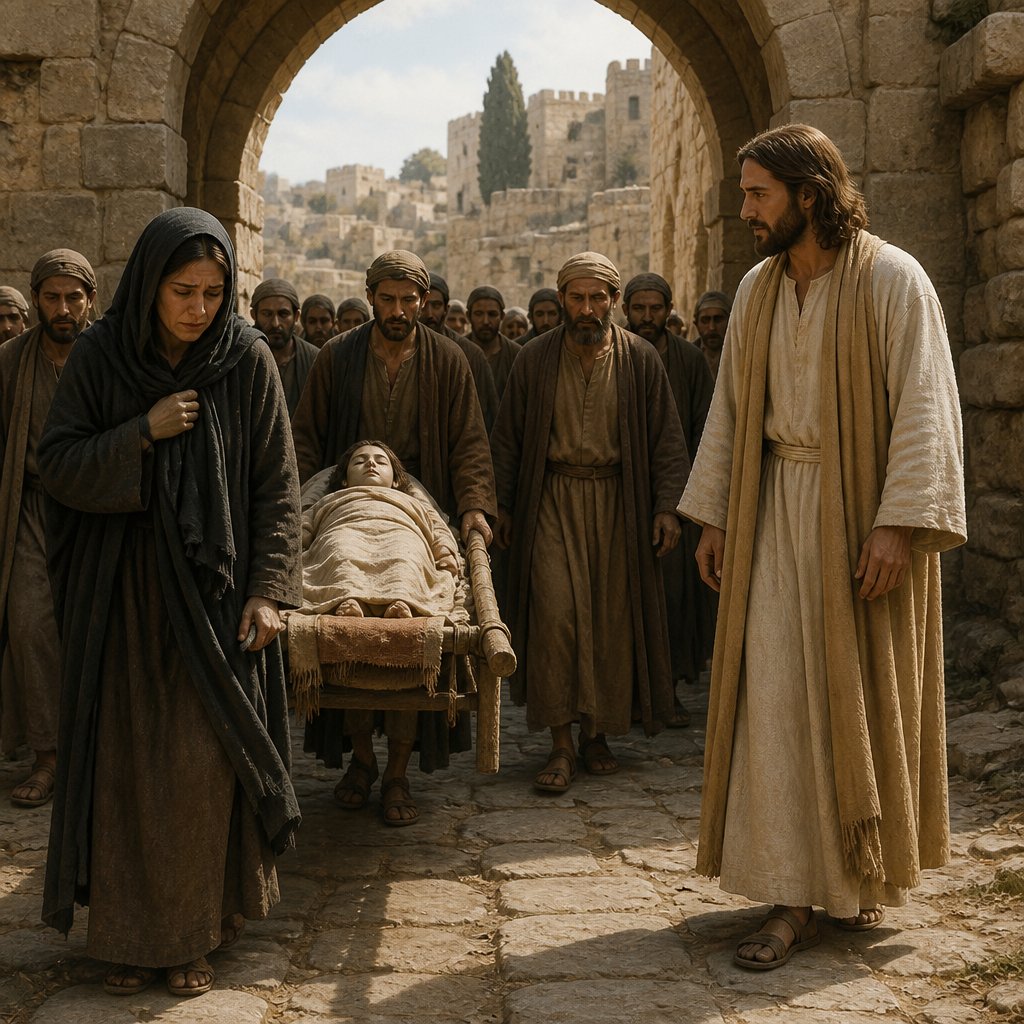
Luke 7:12 in the King James Version of the Bible reads, "Now when he came nigh to the gate of the city, behold, there was a dead man carried out, the only son of his mother, and she was a widow: and much people of the city was with her."
This verse is part of a larger narrative in the Gospel of Luke that tells the story of Jesus raising a widow's son from the dead. This story is significant in the larger context of the Gospel of Luke and the Bible as a whole, as it demonstrates Jesus' power over death and his compassion for the suffering.
The verse begins with Jesus approaching the gate of a city and witnessing a funeral procession. The procession is led by a mourning widow whose only son has died, leaving her with no family and no means of support. This is a heartbreaking situation, as widows in the ancient world were often left destitute and vulnerable without the protection and provision of a male relative.
The presence of a "dead man" in the story is significant, as death is a pervasive and universal human experience. This passage highlights the grief and sorrow that comes with the loss of a loved one, as well as the vulnerability and powerlessness that can be experienced in the face of death.
The fact that the dead man is the widow's only son deepens the tragedy of the situation. In the ancient world, sons were often seen as the means of carrying on a family's name and providing for their parents in old age. The loss of a son, especially the only son, would have been devastating for a widow, leaving her without any means of support or security.
The verse also mentions that "much people of the city was with her," indicating that the widow was not alone in her grief. The community has come out to support and mourn with her, emphasizing the communal nature of grief and the importance of coming together in times of loss.
This story is a powerful demonstration of Jesus' compassion and his ability to bring hope and healing in the midst of despair. As the narrative unfolds, Jesus approaches the grieving widow and, moved with compassion, tells her not to weep. He then touches the open coffin, and commands the young man to rise from the dead. The young man immediately sits up and begins to speak, and Jesus presents him to his mother alive.
This miraculous event demonstrates Jesus' authority over death and his ability to bring new life. It also foreshadows his own resurrection and the hope of eternal life that is available through faith in him.
The story of the widow's son also carries profound symbolic and spiritual significance. It serves as a powerful metaphor for the transformative power of Jesus' ministry, which brings new life, hope, and healing to those who are suffering and oppressed.
In this story, the widow represents all those who are marginalized, vulnerable, and in need of comfort and support. The death of her only son symbolizes the brokenness and despair that can come with loss and suffering, as well as the hopelessness that can accompany grief.
The raising of the widow's son from the dead by Jesus symbolizes the transformative power of his love and compassion. It offers a message of hope and restoration, demonstrating that even in the face of death and despair, Jesus is able to bring new life and healing.
In a broader theological and spiritual sense, this story points to the ultimate victory of life over death, as Jesus' own resurrection and the promise of eternal life for all who believe in him. It speaks to the hope and comfort that is available to all who are grieving, suffering, and in need of healing.
In conclusion, Luke 7:12 is a poignant and powerful reminder of Jesus' compassion, authority, and ability to bring hope and healing in the face of death and despair. It offers a message of comfort and restoration, and serves as a profound symbol of the transformative power of faith in Jesus.
Get our apps


Artwork for Luke 7:12

Luke 7:12 - "Now when he came nigh to the gate of the city, behold, there was a dead man carried out, the only son of his mother, and she was a widow: and much people of the city was with her."

Luke 7:12-15 - "As he approached the town gate, a dead person was being carried out—the only son of his mother, and she was a widow. And a large crowd from the town was with her. When the Lord saw her, his heart went out to her and he said, “Don’t cry.” Then he went up and touched the bier they were carrying him on, and the bearers stood still. He said, “Young man, I say to you, get up!” The dead man sat up and began to talk, and Jesus gave him back to his mother."
"Now when he came nigh to the gate of the city, behold, there was a dead man carried out, the only son of his mother, and she was a widow: and much people of the city was with her." - Luke 7:12
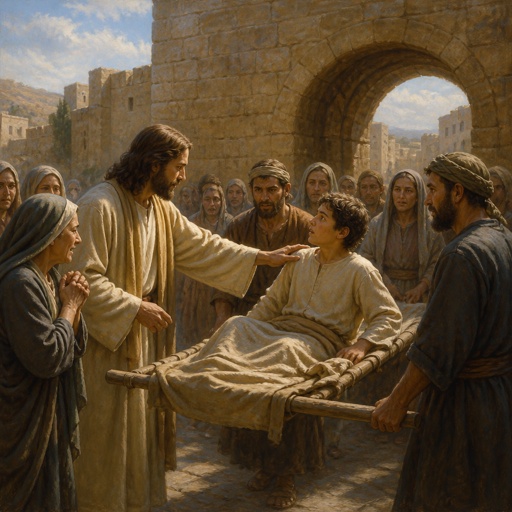
"As he approached the town gate, a dead person was being carried out—the only son of his mother, and she was a widow. And a large crowd from the town was with her. When the Lord saw her, his heart went out to her and he said, “Don’t cry.” Then he went up and touched the bier they were carrying him on, and the bearers stood still. He said, “Young man, I say to you, get up!” The dead man sat up and began to talk, and Jesus gave him back to his mother." - Luke 7:12-15

Luke 12:7 - "But even the very hairs of your head are all numbered. Fear not therefore: ye are of more value than many sparrows."
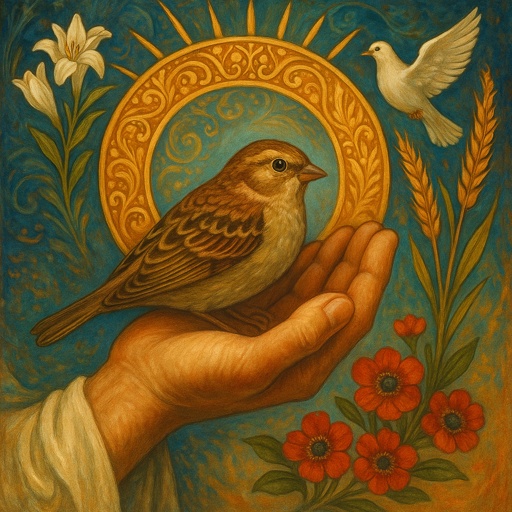
"But even the very hairs of your head are all numbered. Fear not therefore: ye are of more value than many sparrows." - Luke 12:7
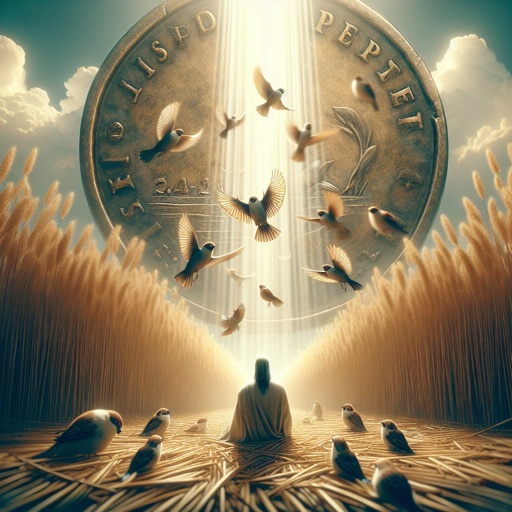
Luke 12:6-7 - "Are not five sparrows sold for two pennies? Yet not one of them is forgotten by God. Indeed, the very hairs of your head are all numbered. Don’t be afraid; you are worth more than many sparrows."

Luke 12:25
Luke 12:25

Luke 12: 49

Luke 12:34

Luke 12:10

Luke 12:50

Luke 7:33

Luke 7:50

Luke 7:50

Luke 12:12 - "For the Holy Ghost shall teach you in the same hour what ye ought to say."
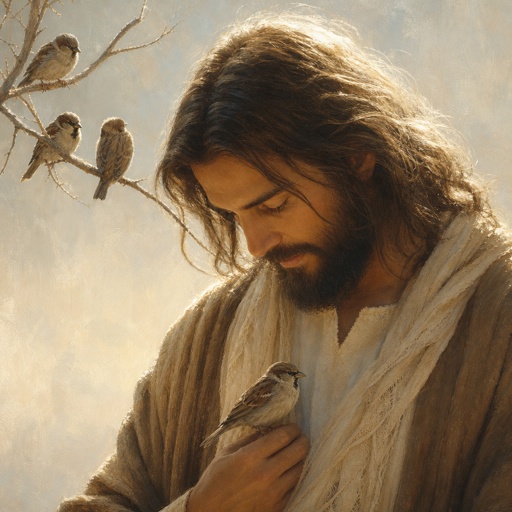
"But even the very hairs of your head are all numbered. Fear not therefore: ye are of more value than many sparrows." - Luke 12:7

"But even the very hairs of your head are all numbered. Fear not therefore: ye are of more value than many sparrows." - Luke 12:7

Luke 1:11-12

Luke 12:25-26

Luke 12:25-26

Luke 12:25-26

Luke 12:25-26
Luke 12:25-26

Luke 12:25-26

Luke 1:11-12

Luke 12:25-26

Luke 1:11-12

Luke 1:11-12