What does Luke 7:15 mean?
“And he that was dead sat up, and began to speak. And he delivered him to his mother.” — Luke 7:15
Luke 7:15 (KJV) says, "And he that was dead sat up, and began to speak. And he delivered him to his mother." This verse comes from the story of Jesus raising the widow's son from the dead. In order to fully understand the depth and meaning of this verse, it is important to consider the overall context of the passage and the symbolism present in the narrative.
The story of Jesus raising the widow's son from the dead is found in Luke 7:11-17. In this passage, Jesus and his disciples come to the town of Nain, where they encounter a funeral procession. A widow is mourning the loss of her only son, and Jesus is moved with compassion for her. He approaches the funeral bier and tells the young man to arise. The young man then sits up and begins to speak, and Jesus delivers him to his mother.
This miracle serves several important purposes within the broader context of the Gospel of Luke. Firstly, it highlights Jesus' power over death and his ability to bring about resurrection. This is a central theme of the New Testament, as Jesus' resurrection is the cornerstone of the Christian faith. By raising the widow's son from the dead, Jesus demonstrates his divine authority and foreshadows his own resurrection.
Furthermore, this miracle underscores Jesus' compassion and care for the marginalized and vulnerable. The widow in this story represents those who are left alone and destitute, without any source of support or security. In raising her son from the dead, Jesus not only restores her family but also provides a tangible expression of his love and concern for those who are suffering.
The act of delivering the resurrected son to his mother is also significant. In the ancient world, women who lost their husbands and sons faced extreme hardship and were often left without any means of support. By returning the young man to his mother, Jesus restores her sense of dignity and belonging, showing that he cares for those who are orphaned and widowed.
From a symbolic perspective, this story can be interpreted as a powerful metaphor for the larger narrative of redemption and restoration found throughout the Bible. The image of the young man being raised from the dead mirrors the hope of new life and transformation that is offered through Jesus Christ. Just as the widow's son is brought back to life, so too can believers experience spiritual rebirth and a renewed sense of purpose through their relationship with Christ.
Additionally, the act of Jesus delivering the resurrected son to his mother can be seen as a foreshadowing of his ultimate mission to reconcile humanity to God. In the same way that the young man is returned to his mother, so too are believers reconciled to God through Jesus' sacrifice on the cross. This act of deliverance symbolizes the restoration of broken relationships and the fulfillment of God's redemptive plan for humanity.
In conclusion, Luke 7:15 (KJV) holds deep significance within the broader narrative of the Gospel of Luke and the message of redemption found throughout the Bible. Through the story of Jesus raising the widow's son from the dead, we are reminded of Jesus' power over death, his compassion for the marginalized, and the hope of new life and restoration that is offered through his resurrection. This verse serves as a powerful testament to the transformative and life-giving nature of Jesus' ministry, and it continues to inspire and encourage believers today.
Get our apps


Artwork for Luke 7:15

Luke 7:15 - "And he that was dead sat up, and began to speak. And he delivered him to his mother."

"And he that was dead sat up, and began to speak. And he delivered him to his mother." - Luke 7:15

Luke 15: 4-7

Luke 15:7 - "I say unto you, that likewise joy shall be in heaven over one sinner that repenteth, more than over ninety and nine just persons, which need no repentance."
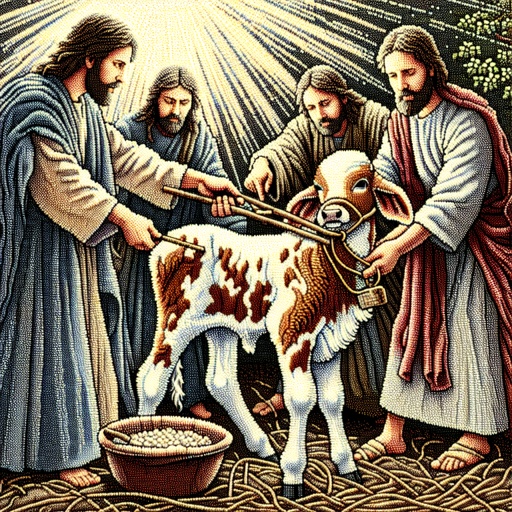
Luke 15:23

Luke 15:10

Luke 15:21

Luke 15:21

Luke 11:14-15

Luke 21:15-19

Luke 15:11-32

Luke 7:33

Luke 7:50

Luke 7:50

Luke 15:15 - "And he went and joined himself to a citizen of that country; and he sent him into his fields to feed swine."

John 15:7

Luke 4:15 - "And he taught in their synagogues, being glorified of all."

Luke 15:3 - "¶ And he spake this parable unto them, saying,"

Luke 7:36-50

John 15:7

Luke 7:41-47

Luke 7:36–50

Luke 15:11 - "¶ And he said, A certain man had two sons:"

Luke 9:15 - "And they did so, and made them all sit down."

Luke 20:7 - "And they answered, that they could not tell whence it was."

Luke 6:15 - "Matthew and Thomas, James the son of Alphaeus, and Simon called Zelotes,"

Luke 15:26 - "And he called one of the servants, and asked what these things meant."

Luke 7:35 - "But wisdom is justified of all her children."

Luke 15:2 - "And the Pharisees and scribes murmured, saying, This man receiveth sinners, and eateth with them."

Luke 15:23 - "And bring hither the fatted calf, and kill it; and let us eat, and be merry:"