What does Luke 7:2 mean?
“And a certain centurion’s servant, who was dear unto him, was sick, and ready to die.” — Luke 7:2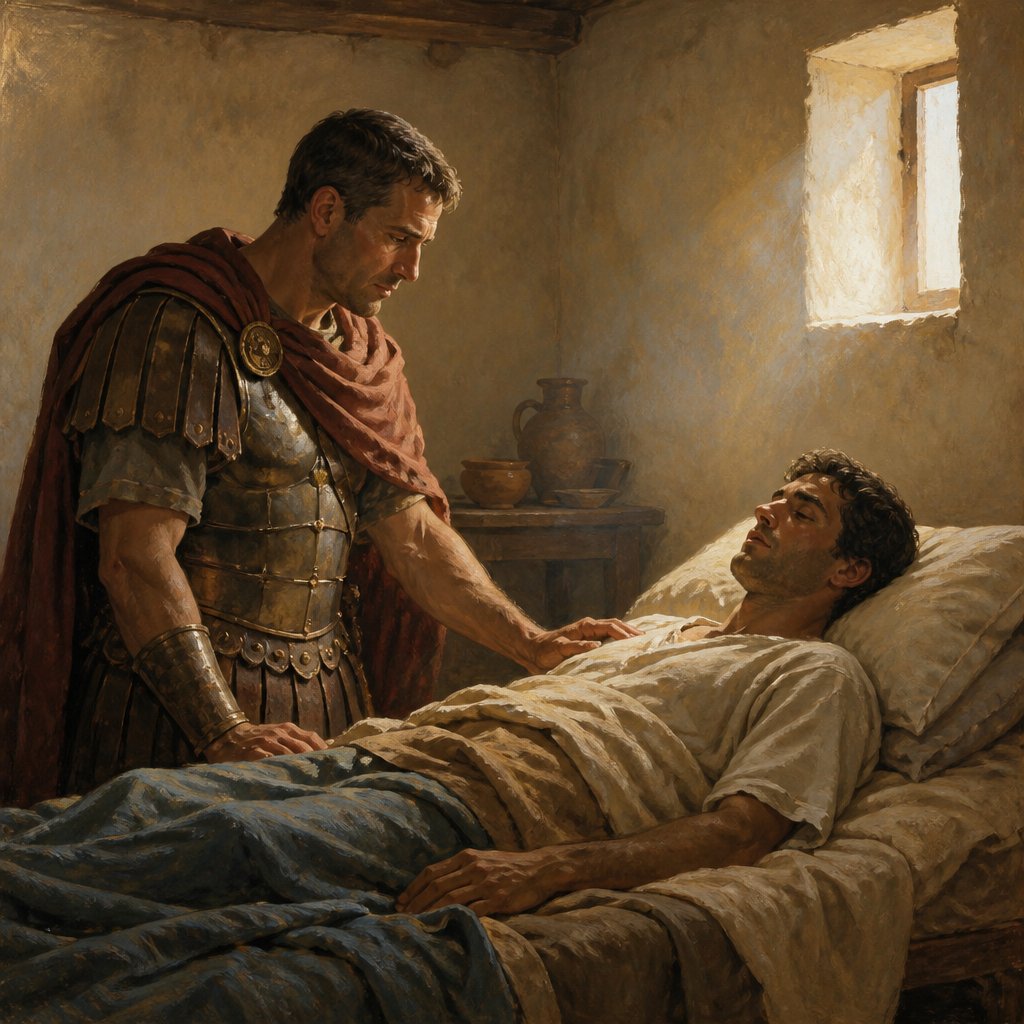
Luke 7:2 in the King James Version reads:
"And a certain centurion's servant, who was dear unto him, was sick, and ready to die."
This verse is a part of the larger narrative in the Gospel of Luke in the New Testament of the Bible. The story of the centurion's servant is a powerful demonstration of faith and humility, and it emphasizes the inclusive nature of Jesus’s ministry.
The context of Luke 7:2 is important to understanding its significance. In the preceding verses, Jesus has just finished delivering the Sermon on the Mount and has performed several miracles. He then enters Capernaum, where he encounters a centurion—a Roman army officer who was likely in charge of a hundred soldiers. In the Roman society of the time, centurions were seen as figures of authority and power. However, this centurion comes to Jesus in a spirit of humility and respect, seeking healing for his servant.
The centurion's servant, who is dear to him, is sick and on the brink of death. The centurion has likely heard of Jesus’s miraculous healing powers and sends Jewish elders to plead with Jesus on his behalf. It's important to note that at this time, there was significant tension between the Jewish people and the occupying Roman forces. The fact that the Jewish leaders are willing to intercede on behalf of the centurion is significant.
The story of the centurion's servant is a testament to the power of faith, regardless of one's social standing or cultural background. The centurion displays remarkable humility and faith in his approach to Jesus. Despite being a Gentile, he shows a profound respect for Jesus's authority and power, expressing his belief that Jesus only needs to speak the word for his servant to be healed. This belief in Jesus’s authority amazes him, as he remarks in verse 9, "I tell you, I have not found such great faith even in Israel."
The centurion's faith is a central theme in this passage. It highlights the universal nature of Jesus’s ministry, as well as the inclusive nature of God's love and healing power. The story challenges traditional societal boundaries and expectations, as it demonstrates that faith and humility are the key factors in receiving God's grace.
This passage also serves as a reminder of the power of intercession. The centurion does not personally approach Jesus but sends others on his behalf. This serves as an example of the importance of advocating for others in prayer and demonstrates the impact that interceding on behalf of someone in need can have.
Symbolically, the centurion's servant represents all who are in need of healing, both physically and spiritually. The centurion’s position of power and authority is juxtaposed with his compassion and concern for his servant, emphasizing the idea that true strength comes from humility, compassion, and faith in God. Additionally, the servant's physical illness can be interpreted as a representation of spiritual illness and the need for divine intervention and healing.
In conclusion, Luke 7:2 and the story of the centurion's servant serve as a powerful example of the inclusive nature of Jesus’s ministry, the significance of faith and humility, and the impact of intercessory prayer. It challenges societal norms and expectations and emphasizes the universal love and healing power of God. This passage continues to resonate with believers as a reminder of the transformative power of faith and the importance of advocating for others in need.
Get our apps


Artwork for Luke 7:2

Luke 7:2 - "And a certain centurion's servant, who was dear unto him, was sick, and ready to die."
"And a certain centurion's servant, who was dear unto him, was sick, and ready to die." - Luke 7:2

Luke 2:7 - "And she brought forth her firstborn son, and wrapped him in swaddling clothes, and laid him in a manger; because there was no room for them in the inn."

Luke 7:33

Luke 7:50

Luke 7:50

Luke 7:36-50

Luke 7:41-47

Luke 15: 4-7

Luke 7:36–50

Luke 20:7 - "And they answered, that they could not tell whence it was."

Luke 2:7 – "She gave birth to her firstborn, a son. She wrapped him in cloths and placed him in a manger, because there was no guest room available for them."

Luke 7:35 - "But wisdom is justified of all her children."
Luke 7:18 - "And the disciples of John shewed him of all these things."

Luke 7:23 - "And blessed is he, whosoever shall not be offended in me."

Luke 2:2

Luke 7:7 - "Wherefore neither thought I myself worthy to come unto thee: but say in a word, and my servant shall be healed."

Luke 7:48 - "And he said unto her, Thy sins are forgiven."

Luke 22:7 - "¶ Then came the day of unleavened bread, when the passover must be killed."

Luke 4:7 - "If thou therefore wilt worship me, all shall be thine."

Luke 8:7 - "And some fell among thorns; and the thorns sprang up with it, and choked it."

Luke 7:5 - "For he loveth our nation, and he hath built us a synagogue."

"And they answered, that they could not tell whence it was." - Luke 20:7

Luke 7:31 - "¶ And the Lord said, Whereunto then shall I liken the men of this generation? and to what are they like?"

Luke 7:10 - "And they that were sent, returning to the house, found the servant whole that had been sick."

Luke 7:30 - "But the Pharisees and lawyers rejected the counsel of God against themselves, being not baptized of him."

Luke 7:50 - "And he said to the woman, Thy faith hath saved thee; go in peace."

Luke 19:7 - "And when they saw it, they all murmured, saying, That he was gone to be guest with a man that is a sinner."

Luke 2:2 - "(And this taxing was first made when Cyrenius was governor of Syria.)"

Luke 2:37