What does Luke 7:20 mean?
“When the men were come unto him, they said, John Baptist hath sent us unto thee, saying, Art thou he that should come? or look we for another?” — Luke 7:20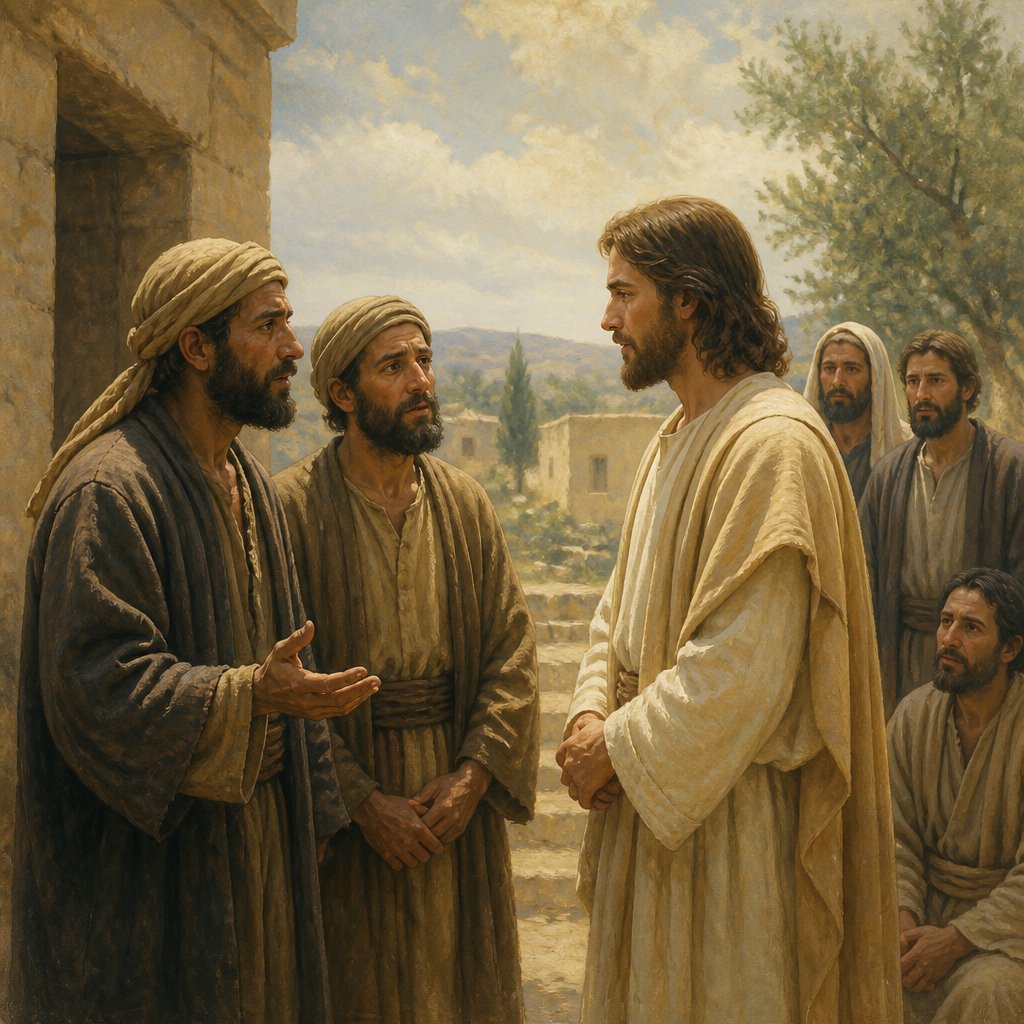
The Bible verse Luke 7:20 in the King James Version reads, "When the men were come unto him, they said, John Baptist hath sent us unto thee, saying, Art thou he that should come? or look we for another?" This verse comes from a larger passage in the Gospel of Luke in which John the Baptist, while imprisoned by Herod, sends his disciples to Jesus to ask if He is the Messiah. Jesus responds by performing miracles and giving the disciples messages to take back to John.
The verse raises important themes about faith, doubt, and prophecy, and holds significant contextual and symbolic meaning within the larger narrative of Jesus' ministry and identity. The verse also serves as a pivotal moment in which Jesus reaffirms His purpose and identity to John the Baptist and his followers.
To fully understand the depth and significance of Luke 7:20, it is important to consider the context in which it is situated. At this point in the Gospel of Luke, Jesus has already begun His ministry, performing miracles, preaching about the kingdom of God, and gaining followers. John the Baptist, who had been preaching and baptizing people in preparation for the coming Messiah, had been imprisoned by Herod.
While in prison, John hears about Jesus' miraculous works and teachings and sends two of his disciples to ask Jesus if He is the Messiah that was prophesied. This question reflects the doubt and uncertainty that John may have been experiencing, especially as a result of his imprisonment. Jesus responds to John's disciples by performing more miracles in their presence and instructing them to report back to John what they had witnessed. This interaction serves to reaffirm Jesus as the long-awaited Messiah and to strengthen John's faith in Him.
The themes of faith and doubt are central to the meaning of this verse, as well as to the larger narrative of John the Baptist and Jesus. At the heart of the verse is the question of whether Jesus is truly the promised Messiah. John's question reflects the doubt and uncertainty that even a devoted prophet like John may have experienced. This doubt is something that many people, then and now, struggle with as they seek to understand and follow God's plan for their lives.
In this exchange, Jesus responds to this doubt with compassion and understanding, not only performing miracles for the disciples but also offering them reassurances about His identity and mission. The miracles Jesus performs—such as healing the sick and casting out demons—serve as evidence of His divine authority and fulfill the messianic prophecies found in the Old Testament. His response to the disciples also offers a message of hope and encouragement to John, demonstrating that faith in Jesus is not misplaced.
Furthermore, the verse speaks to the larger theme of the fulfillment of prophecy and the role that John the Baptist played as a prophet. The Old Testament contained numerous prophecies about the coming of the Messiah, and John had been proclaiming the imminent arrival of the Messiah. His question in Luke 7:20 reflects the expectation and anticipation that many people would have had about the fulfillment of these prophecies. Jesus' response and the miracles that followed serve to demonstrate that He is indeed the fulfillment of these prophecies, bringing hope and salvation to the world.
In addition to its thematic significance, Luke 7:20 also carries symbolic meaning within the larger narrative of Jesus' ministry and identity. The question posed by John's disciples serves as a symbolic representation of the questions and doubts that many people have about Jesus and His identity. Through His response and the miracles He performs, Jesus provides a symbolic reassurance of His divine authority and the fulfillment of Messianic prophecies.
In conclusion, Luke 7:20 holds important themes of faith, doubt, and prophecy, and carries significant contextual and symbolic meaning within the larger narrative of Jesus' ministry and identity. The verse serves as a reminder of the importance of trusting in Jesus as the fulfillment of God's promises and of His power to bring hope and healing to those who seek Him. It also highlights the complexities of faith and doubt that are inherent in the human experience. These themes and messages make Luke 7:20 a powerful and reassuring passage for believers, offering hope and encouragement in the midst of doubt and uncertainty.
Get our apps


Artwork for Luke 7:20

Luke 7:20 - "When the men were come unto him, they said, John Baptist hath sent us unto thee, saying, Art thou he that should come? or look we for another?"
"When the men were come unto him, they said, John Baptist hath sent us unto thee, saying, Art thou he that should come? or look we for another?" - Luke 7:20

Luke 20:7 - "And they answered, that they could not tell whence it was."

"And they answered, that they could not tell whence it was." - Luke 20:7

Luke 13:20-21

Luke 13:20-21

Luke 13:20-21

Luke 13:20-21
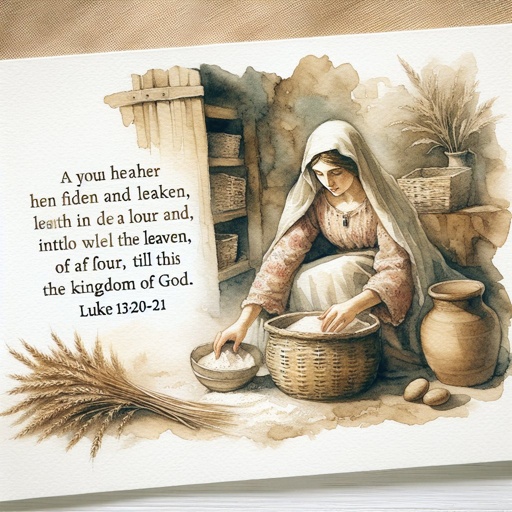
Luke 13:20-21

Luke 20:28

Luke 2:1-20
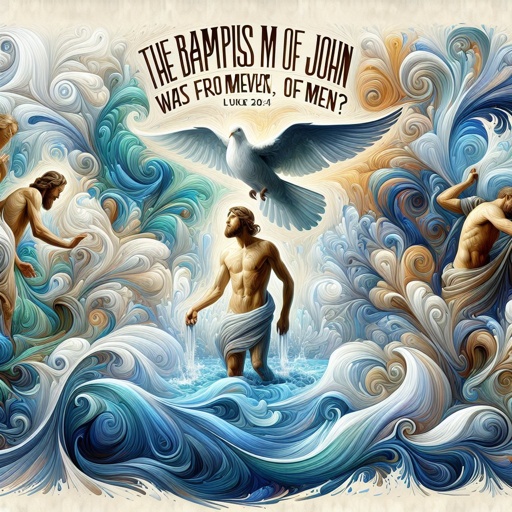
Luke 20:4 - "The baptism of John, was it from heaven, or of men?"

Luke 20:32 - "Last of all the woman died also."

Luke 20:22 - "Is it lawful for us to give tribute unto Caesar, or no?"

Luke 7:33

Luke 7:50

Luke 7:50
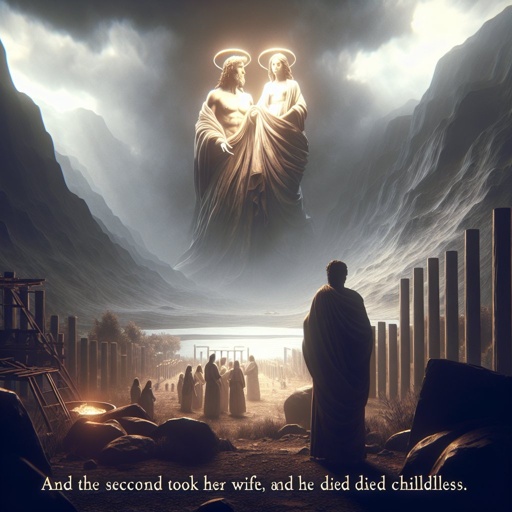
Luke 20:30 - "And the second took her to wife, and he died childless."

Luke 20:40 - "And after that they durst not ask him any question at all."

Luke 20:43 - "Till I make thine enemies thy footstool."

Luke 20:45 - "¶ Then in the audience of all the people he said unto his disciples,"

Revelation 20:7

Revelation 20:7

Revelation 20:7

Luke 20:38 - "For he is not a God of the dead, but of the living: for all live unto him."

Luke 23:20 - "Pilate therefore, willing to release Jesus, spake again to them."

Psalm 20 :7

Genesis 20-7

Psalm 20:7

Revelation 20:7