What does Luke 8:27 mean?
"And when he went forth to land, there met him out of the city a certain man, which had devils long time, and ware no clothes, neither abode in any house, but in the tombs." - Luke 8:27
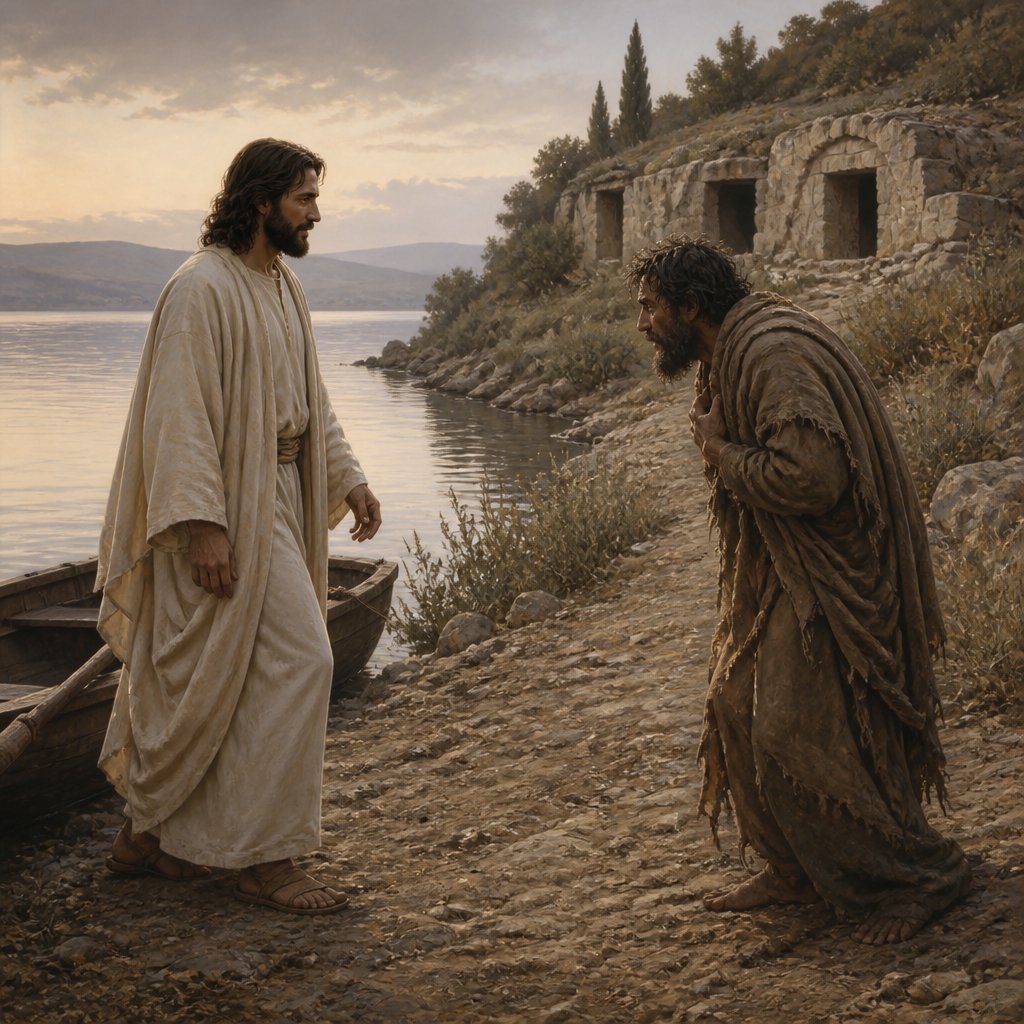
The verse Luke 8:27 from the King James Version of the Bible reads, “And when he went forth to land, there met him out of the city a certain man, which had devils long time, and ware no clothes, neither abode in any house, but in the tombs.” This verse is part of a larger passage that tells the story of Jesus healing a man who had been possessed by demons. The story is commonly known as the Healing of the Gadarene Demoniac.
The passage begins with Jesus and his disciples arriving in the country of the Gadarenes, which was located on the eastern side of the Sea of Galilee. As they stepped onto the land, they were met by a man who had been possessed by demons for a long time. This man was known for his wild and uncontrollable behavior, often being tied up and kept under guard. He lived among the tombs, and he did not wear any clothes. This man was completely isolated from society and lived a tormented existence.
The theme of this passage is the power and authority of Jesus to overcome evil and heal those who are suffering. The man possessed by demons represents the hold that evil and darkness can have over a person’s life. His state of isolation and torment reflects the spiritual and emotional bondage that can come from being under the influence of the enemy. However, when Jesus arrives, he immediately takes control of the situation and commands the demons to leave the man.
This passage also emphasizes the contrast between the kingdom of light and the kingdom of darkness. The man’s physical state of being possessed by demons and living among the tombs symbolizes the darkness and hopelessness of a life without God. Yet, when Jesus arrives, he brings the light of healing and restoration. The man is released from his bondage and is restored to a state of wholeness and sanity.
The response of the people in the area is also significant. When they heard about the man’s healing, they were afraid and asked Jesus to leave their region. This reaction reflects the fear and resistance that can come when faced with the power and authority of Jesus. It also highlights the tension between the spiritual realm and the earthly realm, as the people were more comfortable with the man being isolated and under guard than being healed by Jesus.
Overall, this verse and the larger passage it is a part of provides a powerful example of the transformative power of Jesus. It demonstrates his ability to bring freedom and healing to those who are suffering, regardless of their circumstances. The story serves as a reminder of the hope and restoration that Jesus offers to all who are in need. It also encourages believers to confront the forces of darkness in the world with the authority and power of Jesus.
Have questions about Luke 8:27?
Dive deeper into this scripture with Bible Chat — an AI-powered tool for exploring God's Word through conversation. Ask questions, get context, and grow in your understanding of the Bible.
Get Our Apps


Luke 8:27 Artwork

Luke 8:27 - "And when he went forth to land, there met him out of the city a certain man, which had devils long time, and ware no clothes, neither abode in any house, but in the tombs."
"And when he went forth to land, there met him out of the city a certain man, which had devils long time, and ware no clothes, neither abode in any house, but in the tombs." - Luke 8:27

luke 1:27

luke 6: 27

Luke 10:27

Luke 6: 27-38

Luke 6:27-38

Luke 13:28-27

Luke 13:28-27

Luke 13:28-27

Luke 8:5-8

Psalm 27:8

Psalm 27:8

Luke 18:27 - "And he said, The things which are impossible with men are possible with God."

Luke 21:27 - "And then shall they see the Son of man coming in a cloud with power and great glory."

Mark 8:27 - 35

Exodus 27:1-8

Mark 8:27 - 35

Mark 8:27 - 35

Mark 8:27 - 35

Mark 8:27 - 35

Luke 20:27 - "¶ Then came to him certain of the Sadducees, which deny that there is any resurrection; and they asked him,"

Luke 20:27-38. All people of color.

Luke 8:16

Luke 8:11

Luke 8:17

Luke 8:13

Luke 8:13

Luke 8:13

Luke 23:27 - "¶ And there followed him a great company of people, and of women, which also bewailed and lamented him."