What does Luke 8:28 mean?
"When he saw Jesus, he cried out, and fell down before him, and with a loud voice said, What have I to do with thee, Jesus, thou Son of God most high? I beseech thee, torment me not." - Luke 8:28
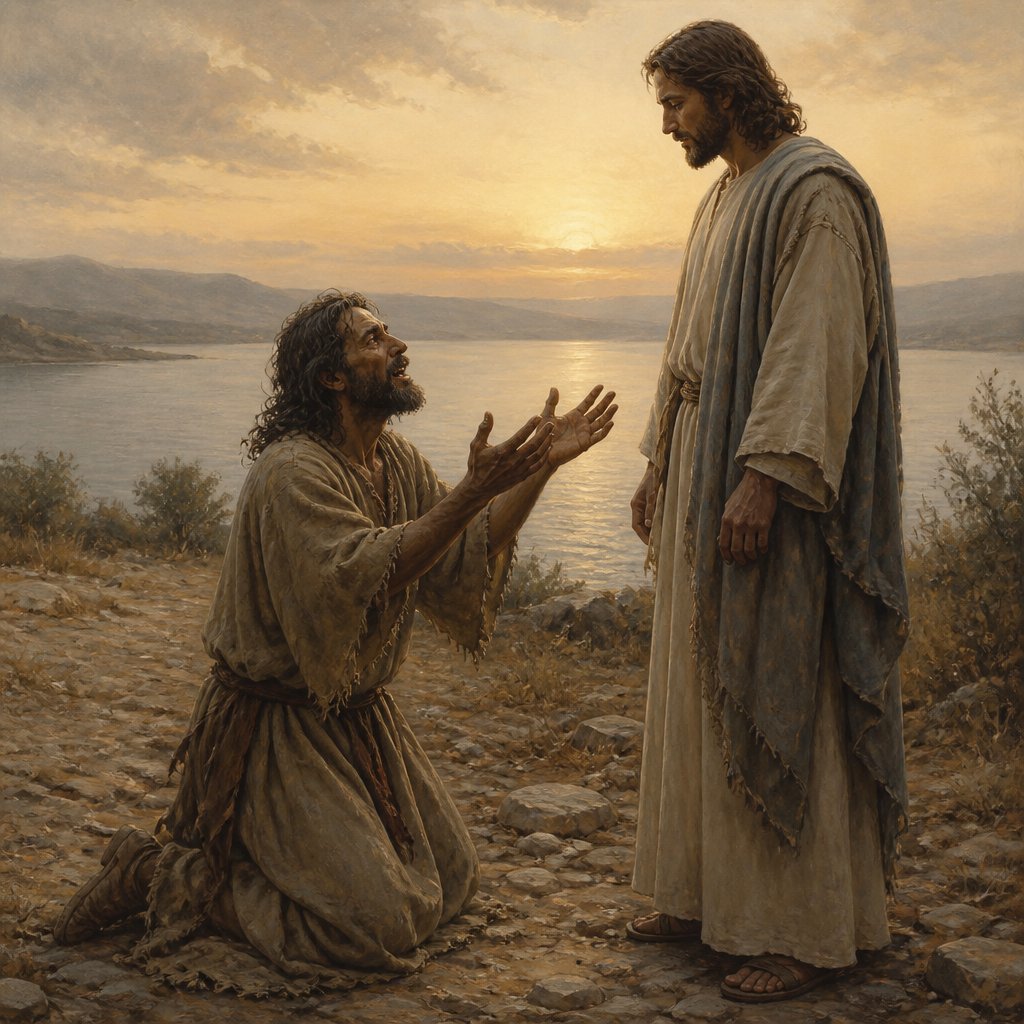
Luke 8:28 in the King James Version (KJV) of the Bible reads: "When he saw Jesus, he cried out, and fell down before him, and with a loud voice said, What have I to do with thee, Jesus, thou Son of God most high? I beseech thee, torment me not."
This passage is part of the larger narrative of the encounter between Jesus and a man possessed by demons in the region of the Gadarenes. The overall context of the passage is significant in understanding its meaning and impact. The story unfolds with Jesus and his disciples arriving by boat in the country of the Gadarenes, which is located on the southeastern shore of the Sea of Galilee.
The specific focus of this passage is on the interaction between Jesus and the man who is possessed by demons. The man, driven by the unclean spirits within him, approaches Jesus and falls down before him. His response, "What have I to do with thee, Jesus, thou Son of God most high? I beseech thee, torment me not," reflects the recognition of Jesus' divine authority and power. The demons within the man acknowledge Jesus as the "Son of God most high," a title that acknowledges Jesus as the ultimate authority and ruler. This acknowledgement serves as a contrast to the prevalent disbelief and rejection of Jesus by others during his ministry.
The mention of torment in the demon's plea to Jesus is also significant. It reveals the fear and apprehension of the demons, acknowledging that Jesus has the power to cast them out and bring about their punishment. This plea for mercy and the acknowledgment of Jesus' power foreshadows the events that unfold, ultimately leading to the deliverance of the man from the torment of demonic possession.
This passage touches on several important themes, the first being the power and authority of Jesus. The demons' acknowledgment of Jesus as the "Son of God most high" underscores his divine nature and ultimate authority over all spiritual forces. This theme of Jesus' authority is a recurring motif throughout the Gospel of Luke and serves to establish Jesus as the central figure of divine power and redemption.
Another theme that emerges from this passage is the reality of spiritual warfare. The presence of demonic possession and the subsequent deliverance by Jesus highlights the spiritual battle between good and evil. The demons' plea for mercy and Jesus' ultimate victory over them symbolize the triumph of good over evil and the redemption that Jesus brings to those who are oppressed by dark forces.
Furthermore, this passage emphasizes the compassionate nature of Jesus. Despite the fear and desperation expressed by the demons, Jesus responds with compassion and mercy, ultimately delivering the man from the torment of possession. This act of deliverance further exemplifies Jesus' mission to bring healing and restoration to those who are oppressed and marginalized.
In addition to these themes, the passage also contains various symbols, such as the demons' recognition of Jesus as the "Son of God most high," which symbolizes Jesus' divine nature and authority. The plea for mercy from the demons represents the brokenness and desperation of those who are oppressed by dark spiritual forces, while Jesus' act of deliverance symbolizes the power of redemption and restoration.
Overall, Luke 8:28 presents a powerful and poignant moment in the ministry of Jesus, revealing his divine authority, compassion, and power to bring deliverance from spiritual oppression. This passage serves as a testament to the transformative and redemptive work of Jesus, reminding believers of his ultimate victory over all spiritual forces and his ability to bring healing and restoration to those in need.
Have questions about Luke 8:28?
Dive deeper into this scripture with Bible Chat — an AI-powered tool for exploring God's Word through conversation. Ask questions, get context, and grow in your understanding of the Bible.
Get Our Apps


Luke 8:28 Artwork

Luke 8:28 - "When he saw Jesus, he cried out, and fell down before him, and with a loud voice said, What have I to do with thee, Jesus, thou Son of God most high? I beseech thee, torment me not."
"When he saw Jesus, he cried out, and fell down before him, and with a loud voice said, What have I to do with thee, Jesus, thou Son of God most high? I beseech thee, torment me not." - Luke 8:28

Luke 20:28

Luke 19:28

luke 13:28-37

Luke 13:28-27

Luke 13:28-27

Luke 9:28-45

Luke 13:28-27

luke 13:28-37

Luke 5:28 - "And he left all, rose up, and followed him."

Luke 22:28 - "Ye are they which have continued with me in my temptations."

matthew 8:28

Romans 8:28

Romans 8:28

Romans 8:28

Romans 8:28

Romans 8:28

Luke 8:5-8

Luke 4:28 - "And all they in the synagogue, when they heard these things, were filled with wrath,"

Luke 2:28 - "Then took he him up in his arms, and blessed God, and said,"

Luke 18:28 - "Then Peter said, Lo, we have left all, and followed thee."

Luke 11:28 - "But he said, Yea rather, blessed are they that hear the word of God, and keep it."

romans 8:26-28

Luke 6:28 - "Bless them that curse you, and pray for them which despitefully use you."

Luke 8:16

Luke 17:28 - "Likewise also as it was in the days of Lot; they did eat, they drank, they bought, they sold, they planted, they builded;"

Luke 15:28 - "And he was angry, and would not go in: therefore came his father out, and intreated him."

Luke 19:28 - "¶ And when he had thus spoken, he went before, ascending up to Jerusalem."

Luke 8:11