What does Malachi 3:10 mean?
“Bring ye all the tithes into the storehouse, that there may be meat in mine house, and prove me now herewith, saith the LORD of hosts, if I will not open you the windows of heaven, and pour you out a blessing, that there shall not be room enough to receive it.” — Malachi 3:10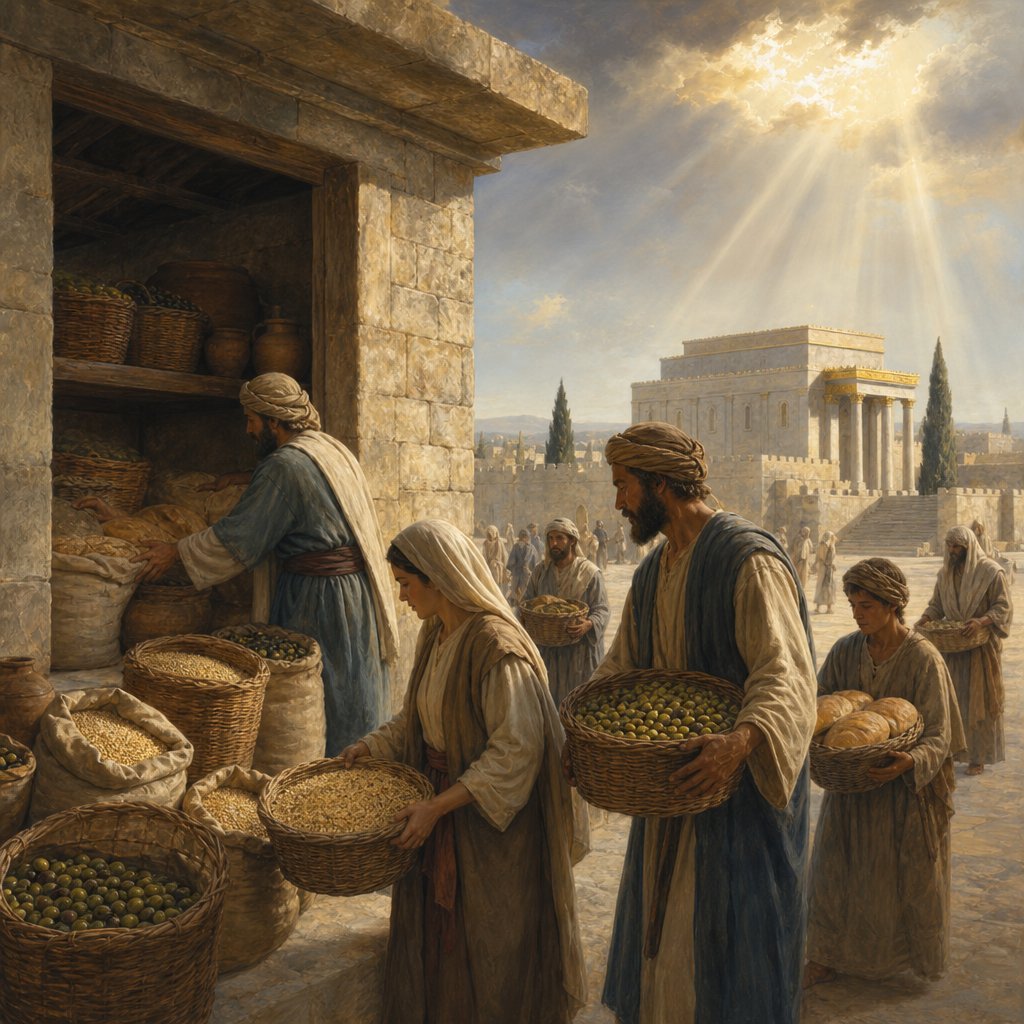
“Bring ye all the tithes into the storehouse, that there may be meat in mine house, and prove me now herewith, saith the LORD of hosts, if I will not open you the windows of heaven, and pour you out a blessing, that there shall not be room enough to receive it.” (Malachi 3:10, KJV)
In Malachi, the LORD is addressing a covenant people who are religious in outward form yet spiritually careless in substance. The verse belongs to a larger rebuke in which God charges Israel with withholding what was due to Him, not merely as a financial shortfall but as a symptom of a deeper breach of trust and reverence. The immediate context includes the accusation, “Will a man rob God? Yet ye have robbed me… In tithes and offerings,” and the consequence, “Ye are cursed with a curse” (Malachi 3:8–9, KJV). Against that backdrop, Malachi 3:10 functions as both a command and an invitation: a call to return to covenant faithfulness and a promise that the LORD remains ready to bless when His people repent and obey.
The command, “Bring ye all the tithes into the storehouse,” draws on Israel’s established worship life under the law, where tithes supported the ministry connected to the house of God and provided for those appointed to serve there. The “storehouse” evokes the chambers associated with the temple provisions, a place where what belonged to God was gathered for God’s purposes. The phrase “all the tithes” is significant: it speaks of completeness rather than partial compliance. In the verse’s logic, withholding part of what is due is not presented as thrift or prudence but as covenant unfaithfulness. The tithe becomes a visible measure of an invisible allegiance: whether the people will honor the LORD first or reserve what is His as a safeguard for themselves.
The purpose clause, “that there may be meat in mine house,” uses “meat” in the older English sense of food or provision. This is not about luxury but about sufficiency for the worshiping community and the service of the sanctuary. God calls the temple “mine house,” emphasizing ownership and relationship. The issue, therefore, is not simply that the poor or the ministers lack; it is that God’s house has been treated as secondary, and the life of worship has been starved by the people’s neglect. Restoring the tithe is portrayed as restoring the health of covenant life, where God’s worship is sustained and God’s appointed order is honored.
Then comes the striking invitation: “and prove me now herewith, saith the LORD of hosts.” Throughout Scripture, God is not a deity to be manipulated or tested in unbelief, yet here He condescends to challenge His people to take Him at His word in a specific covenant matter. “Prove me” is not a license for superstition; it is a gracious summons to trust. The people have evidently been living as though obedience will leave them poorer and vulnerable. God answers that fear by tying obedience to His reliability: if they will return what is His, they will discover that He is not a harsh creditor but a faithful Lord. The title “the LORD of hosts” reinforces the weight of the promise. He is the God of armies, the One with unchallenged resources and authority. The blessing He promises does not arise from the strength of Israel’s economy but from the power and faithfulness of the covenant God.
The imagery that follows is rich with symbolism: “if I will not open you the windows of heaven, and pour you out a blessing.” “Windows of heaven” suggests the sky as God’s storehouse of rain and favor. In an agrarian society, rainfall meant life, harvest, and stability; drought meant collapse. The language recalls other moments where heaven’s “windows” are associated with outpouring from above, and in Malachi it functions as the reversal of judgment. Where disobedience brought scarcity, obedience brings an abundance that only God can send. The phrase “pour you out” intensifies the picture: blessing is not rationed drop by drop but poured, as from a vessel tipped without restraint. Yet the blessing is not merely material; it signifies God’s restored favor, the return of covenant harmony, the sense that God is again “for” His people rather than contending with them.
Finally, “that there shall not be room enough to receive it” expresses overflowing sufficiency—provision exceeding storage, need, and expectation. The language is deliberately excessive, meant to challenge the mentality of scarcity that led to withholding in the first place. The people’s fear says, “If I give, I will lack.” God’s promise says, “If you honor me, you will see that I am able to give beyond what you can contain.” This is not presented as a mechanical formula for personal enrichment, but as a covenant assurance that God’s people do not impoverish themselves by obeying Him. The point is less about indulging desire and more about exposing God’s generosity and faithfulness when His people cease to “rob” Him and instead return to Him in trust.
Taken as a whole, Malachi 3:10 is a call to repentance expressed through a concrete act of obedience, a restoration of rightful worship, and a divine invitation to experience God’s faithfulness. The themes include covenant loyalty, the seriousness of worship, the temptation to fear scarcity, and God’s power to reverse lack with abundance. Its symbolism turns the storehouse into a sign of surrendered priority and the windows of heaven into a sign of divine provision. The verse’s significance lies in its portrayal of God as both holy—who will not ignore robbery against Himself—and gracious—who urges His people to return and then dares them to discover how ready He is to bless when they trust and obey.
Get our apps


Artwork for Malachi 3:10

"Bring ye all the tithes into the storehouse, that there may be meat in mine house, and prove me now herewith, saith the LORD of hosts, if I will not open you the windows of heaven, and pour you out a blessing, that there shall not be room enough to receive it." - Malachi 3:10
!["Bring ye all the tithes into the storehouse, that there may be meat in mine house, and prove me now herewith, saith the LORD of hosts, if I will not open you the windows of heaven, and pour you out a blessing, that [there shall] not [be room] enough [to receive it]." - Malachi 3:10](https://media.bible.art/1e27a872-9f2f-4554-aa9f-4e2ef3765c6c-thumbnail.jpg)
"Bring ye all the tithes into the storehouse, that there may be meat in mine house, and prove me now herewith, saith the LORD of hosts, if I will not open you the windows of heaven, and pour you out a blessing, that [there shall] not [be room] enough [to receive it]." - Malachi 3:10

Malachi 3:10 - "Bring ye all the tithes into the storehouse, that there may be meat in mine house, and prove me now herewith, saith the LORD of hosts, if I will not open you the windows of heaven, and pour you out a blessing, that there shall not be room enough to receive it."

"Bring ye all the tithes into the storehouse, that there may be meat in mine house, and prove me now herewith, saith the LORD of hosts, if I will not open you the windows of heaven, and pour you out a blessing, that there shall not be room enough to receive it." - Malachi 3:10
"Bring ye all the tithes into the storehouse, that there may be meat in mine house, and prove me now herewith, saith the LORD of hosts, if I will not open you the windows of heaven, and pour you out a blessing, that there shall not be room enough to receive it." - Malachi 3:10

Malachi 3:4 - "Then shall the offering of Judah and Jerusalem be pleasant unto the LORD, as in the days of old, and as in former years."

Malachi 3:6 - "For I am the LORD, I change not; therefore ye sons of Jacob are not consumed."

Malachi 3:9 - "Ye are cursed with a curse: for ye have robbed me, even this whole nation."

Malachi 1:3 - "And I hated Esau, and laid his mountains and his heritage waste for the dragons of the wilderness."

Malachi 3:12 - "And all nations shall call you blessed: for ye shall be a delightsome land, saith the LORD of hosts."

Malachi 3:3 - "And he shall sit as a refiner and purifier of silver: and he shall purify the sons of Levi, and purge them as gold and silver, that they may offer unto the LORD an offering in righteousness."

Malachi 3:18 - "Then shall ye return, and discern between the righteous and the wicked, between him that serveth God and him that serveth him not."

Malachi 3:15 - "And now we call the proud happy; yea, they that work wickedness are set up; yea, they that tempt God are even delivered."

Malachi 3:8 - "¶ Will a man rob God? Yet ye have robbed me. But ye say, Wherein have we robbed thee? In tithes and offerings."

Malachi 4:3 - "And ye shall tread down the wicked; for they shall be ashes under the soles of your feet in the day that I shall do this, saith the LORD of hosts."

Malachi 3:2 - "But who may abide the day of his coming? and who shall stand when he appeareth? for he is like a refiner's fire, and like fullers' sope:"

Malachi 2:3 - "Behold, I will corrupt your seed, and spread dung upon your faces, even the dung of your solemn feasts; and one shall take you away with it."

Malachi 3:14 - "Ye have said, It is vain to serve God: and what profit is it that we have kept his ordinance, and that we have walked mournfully before the LORD of hosts?"

Malachi 3:13 - "¶ Your words have been stout against me, saith the LORD. Yet ye say, What have we spoken so much against thee?"

Malachi 2:10 - "Have we not all one father? hath not one God created us? why do we deal treacherously every man against his brother, by profaning the covenant of our fathers?"

Malachi 3:17 - "And they shall be mine, saith the LORD of hosts, in that day when I make up my jewels; and I will spare them, as a man spareth his own son that serveth him."
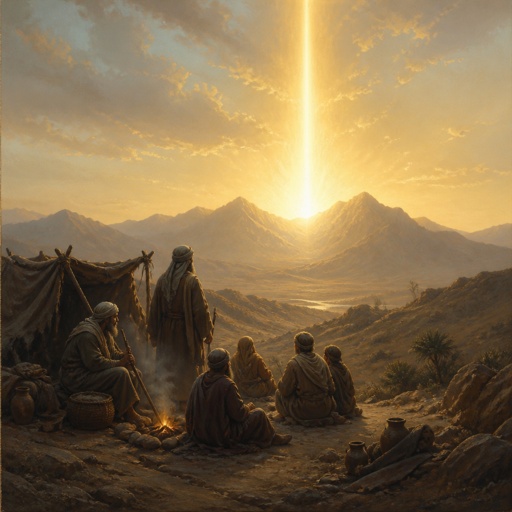
"For I am the LORD, I change not; therefore ye sons of Jacob are not consumed." - Malachi 3:6

Malachi 3:16 - "¶ Then they that feared the LORD spake often one to another: and the LORD hearkened, and heard it, and a book of remembrance was written before him for them that feared the LORD, and that thought upon his name."
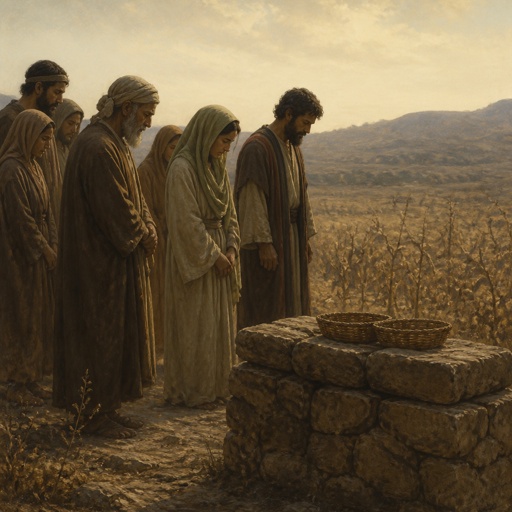
"Ye are cursed with a curse: for ye have robbed me, even this whole nation." - Malachi 3:9

Malachi 3:11 - "And I will rebuke the devourer for your sakes, and he shall not destroy the fruits of your ground; neither shall your vine cast her fruit before the time in the field, saith the LORD of hosts."

Malachi 3:8-10 - "Will a mere mortal rob God? Yet you rob me. But you ask, 'How are we robbing you?' In tithes and offerings. You are under a curse - your whole nation - because you are robbing me. Bring the whole tithe into the storehouse, that there may be food in my house. Test me in this," says the LORD Almighty, "and see if I will not throw open the floodgates of heaven and pour out so much blessing that there will not be room enough to store it."
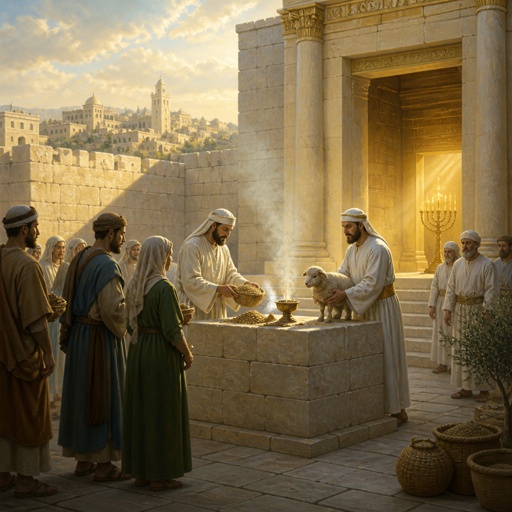
"Then shall the offering of Judah and Jerusalem be pleasant unto the LORD, as in the days of old, and as in former years." - Malachi 3:4
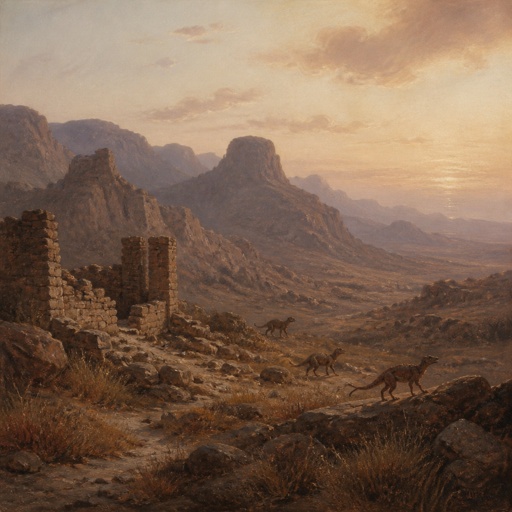
"And I hated Esau, and laid his mountains and his heritage waste for the dragons of the wilderness." - Malachi 1:3
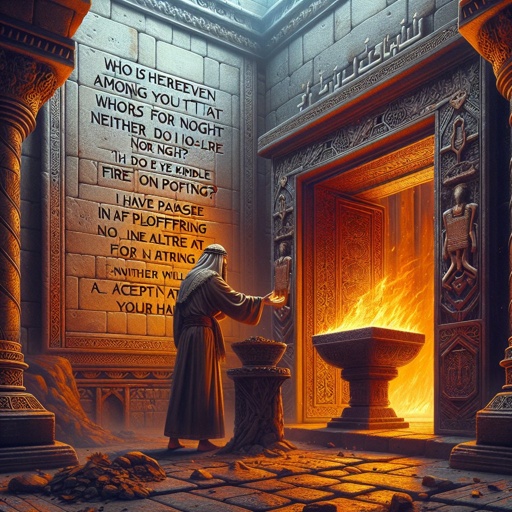
Malachi 1:10 - "Who is there even among you that would shut the doors for nought? neither do ye kindle fire on mine altar for nought. I have no pleasure in you, saith the LORD of hosts, neither will I accept an offering at your hand."
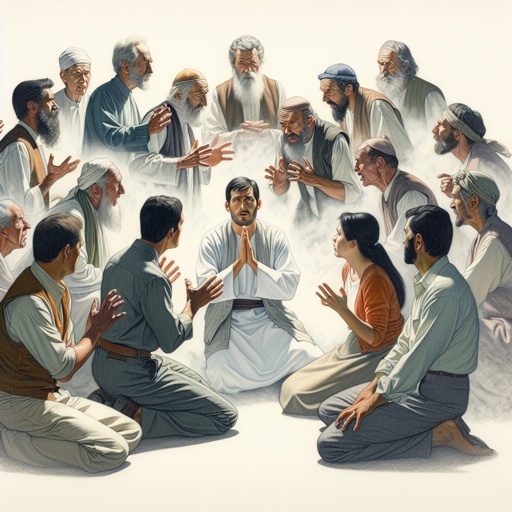
Malachi 3:13 “Your words have been harsh against Me,” Says the LORD, “Yet you say, ‘What have we spoken against You?’