What does Mark 10:20 mean?
“And he answered and said unto him, Master, all these have I observed from my youth.” — Mark 10:20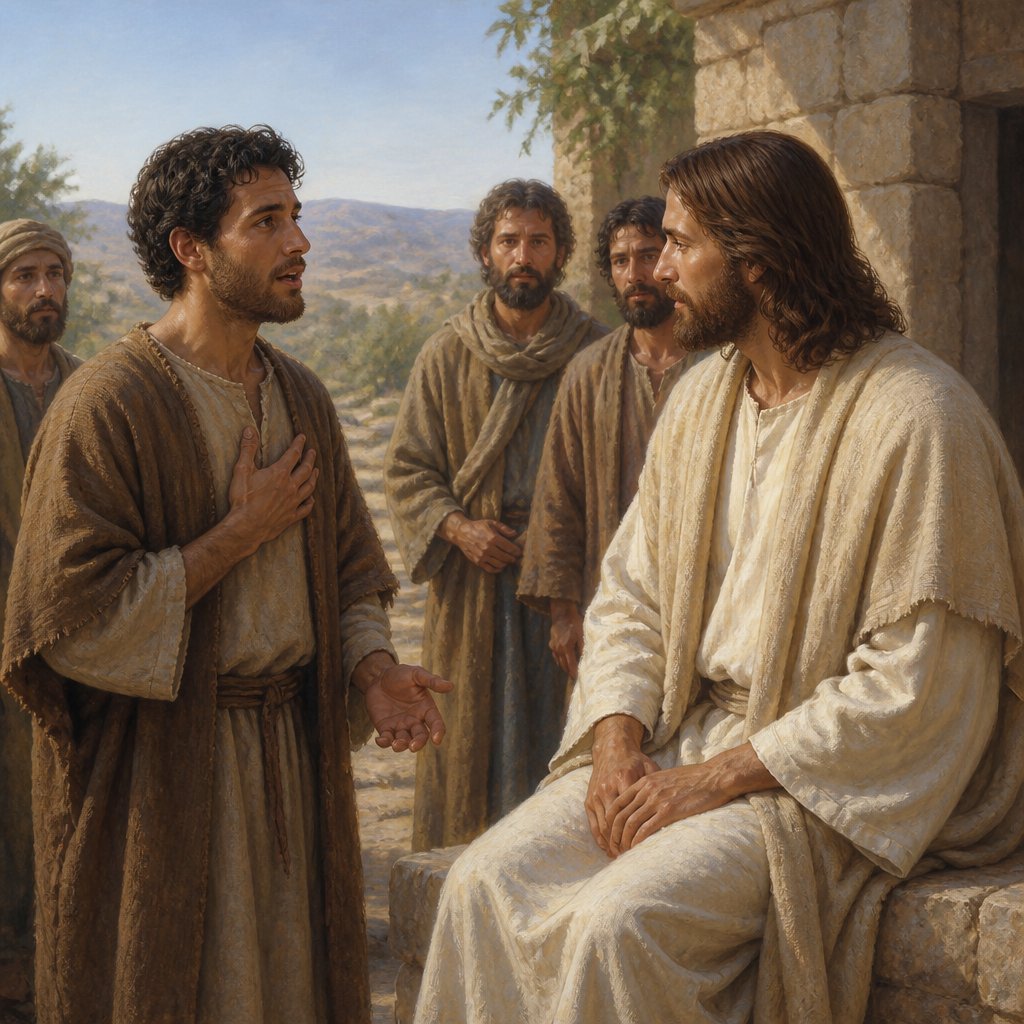
The Bible verse Mark 10:20 in the King James Version (KJV) reads, "And he answered and said unto him, Master, all these have I observed from my youth." This verse is part of a larger passage in which a rich young ruler comes to Jesus and asks what he must do to inherit eternal life. This encounter is found in the Gospels of Matthew, Mark, and Luke, but each account has its own unique details.
In Mark 10:17-22, the rich young ruler approaches Jesus with a question about inheriting eternal life. He addresses Jesus as "Good Master" and asks what he must do to inherit eternal life. In verse 18, Jesus responds by questioning why the ruler has called him "good," and reminds him that only God is truly good. This is an important point, as Jesus is trying to redirect the ruler's attention towards God and away from himself.
After this exchange, Jesus lists several of the Ten Commandments, such as not committing adultery, not killing, not stealing, not bearing false witness, and honoring one's parents, as requirements for inheriting eternal life. The ruler proudly claims to have observed all these commandments since his youth, but he still feels that something is lacking.
This passage raises several important themes, the first of which is the issue of wealth and its potential to hinder one's relationship with God. The rich young ruler is an example of someone who is seemingly righteous and obedient to the law, yet he is unable to completely surrender his heart to God. His wealth has become a stumbling block, as Jesus later advises him to sell all his possessions and give the proceeds to the poor in order to follow him. This demonstrates the idea that earthly wealth can often stand in the way of spiritual wealth and discipleship.
Another theme present in this passage is the concept of righteousness and the inability of human effort to attain salvation. The rich young ruler's claim to have observed the commandments from his youth reveals his self-righteousness and reliance on his own works for salvation. However, Jesus makes it clear that true righteousness comes from God alone and cannot be achieved through human effort or adherence to the law.
The context of this passage is significant, as it occurs within the larger narrative of Jesus' ministry and teachings. Throughout the Gospels, Jesus frequently challenges his listeners to reconsider their priorities and to reevaluate their understanding of righteousness. This encounter with the rich young ruler serves as a powerful illustration of the importance of humility, surrender, and dependence on God for salvation.
Symbolism is also evident in this verse, particularly in the contrast between the young ruler's wealth and his spiritual poverty. The rich young ruler's wealth symbolizes the material possessions and earthly attachments that can prevent people from fully committing themselves to God. By instructing the ruler to sell all his possessions and follow him, Jesus is emphasizing the need for complete surrender and detachment from worldly concerns in order to pursue a deeper relationship with God.
In conclusion, Mark 10:20 in the King James Version offers a profound commentary on the themes of wealth, righteousness, and the need for humility and surrender in the pursuit of eternal life. This passage serves as a powerful reminder of the challenges that can arise when people prioritize earthly riches over spiritual wealth, and the importance of relying on God's grace rather than human effort for salvation.
Get our apps


Artwork for Mark 10:20

Mark 10:20 - "And he answered and said unto him, Master, all these have I observed from my youth."
"And he answered and said unto him, Master, all these have I observed from my youth." - Mark 10:20
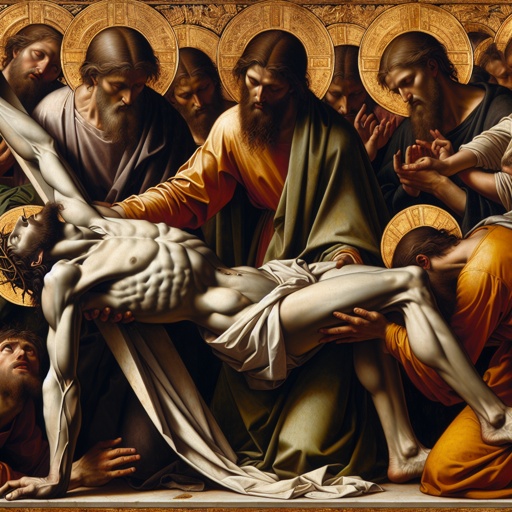
Mark 16:20

Mark 16:20

Mark 16:20

Mark 16:20
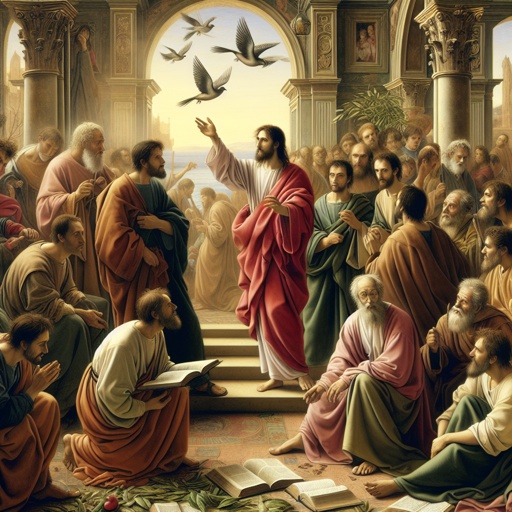
Mark 16:20

Mark 10
Mark 10

1 Samuel 20:20 - "And I will shoot three arrows on the side thereof, as though I shot at a mark."
Mark 10
Mark 10

Mark 2:10
Mark 10:46

Mark 10:31

Mark 10:10 - "And in the house his disciples asked him again of the same matter."
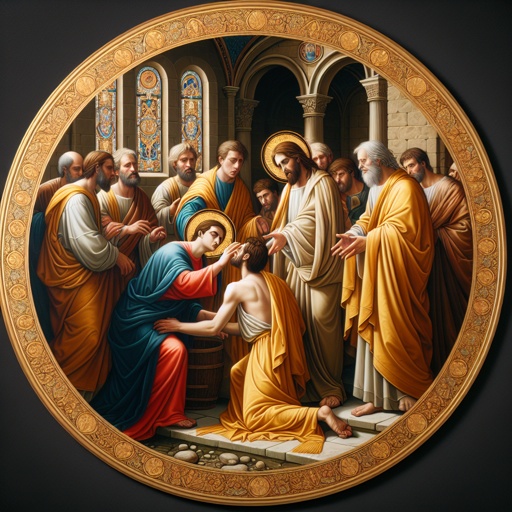
Mark 10:46

Mark 10:46

Mark 10:35-45

Mark 10:17-30

Mark 10:35-45

Mark 10:13–16

Mark 7:20 - "And he said, That which cometh out of the man, that defileth the man."

Mark 10:17-30

Mark 10:35-45

Mark 10:35-45

Mark 11:20 - "¶ And in the morning, as they passed by, they saw the fig tree dried up from the roots."

Mark 3:20 - "And the multitude cometh together again, so that they could not so much as eat bread."

Mark 10:44 - "And whosoever of you will be the chiefest, shall be servant of all."

Mark 14:20 - "And he answered and said unto them, It is one of the twelve, that dippeth with me in the dish."