What does Mark 12:2 mean?
"And at the season he sent to the husbandmen a servant, that he might receive from the husbandmen of the fruit of the vineyard." - Mark 12:2
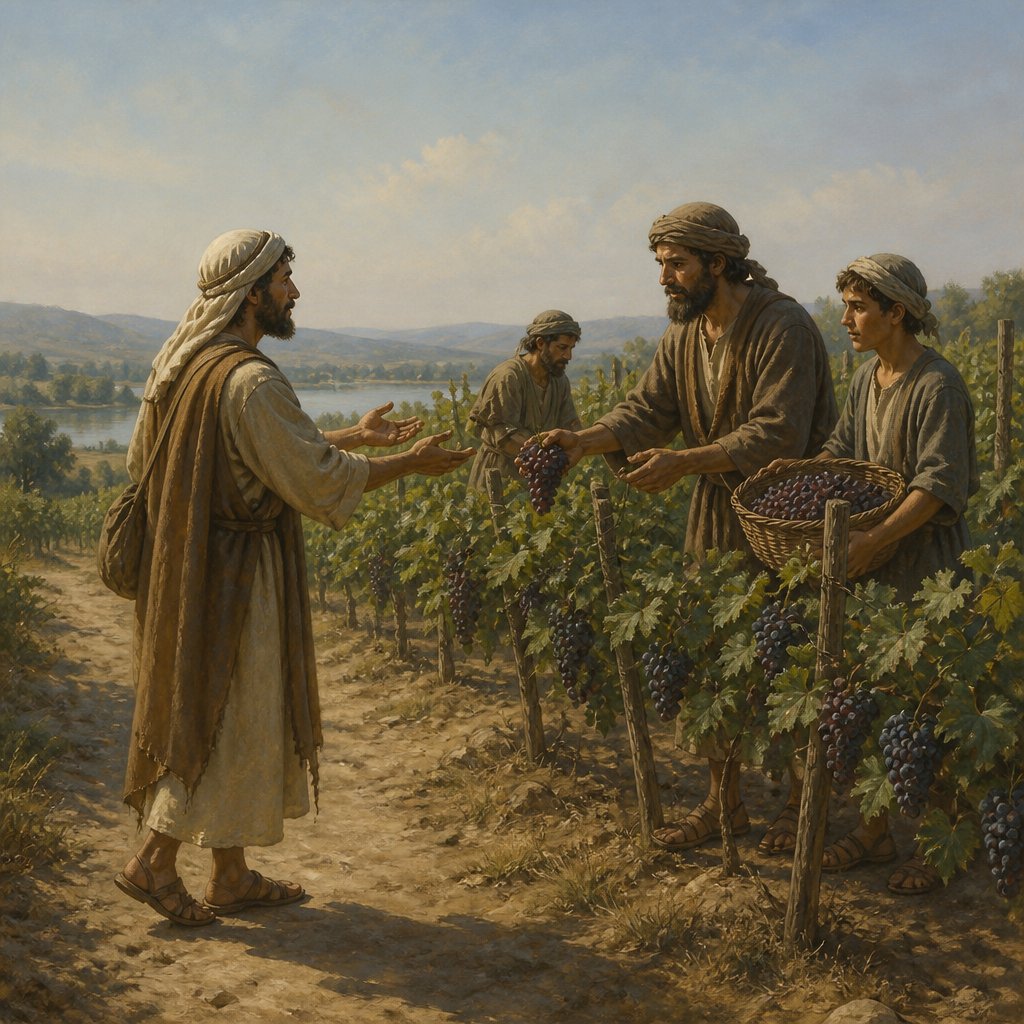
Mark 12:2 in the King James Version (KJV) of the Bible reads, "And at the season he sent to the husbandmen a servant, that he might receive from the husbandmen of the fruit of the vineyard."
This verse is part of a parable told by Jesus Christ to the religious leaders of his time. In this parable, Jesus uses the imagery of a vineyard to convey a spiritual truth to his listeners. The vineyard represents the kingdom of God, and the owner of the vineyard represents God himself. The husbandmen are the religious leaders and caretakers of the vineyard, while the servants are the prophets and messengers that God has sent to his people.
The parable speaks to the rejection and mistreatment of God's messengers by those who were entrusted with the responsibility of caring for God's people. In this specific verse, the owner of the vineyard sends a servant to the husbandmen in order to receive the fruit of the vineyard. The fruit represents the spiritual nourishment and growth that God expects to see in his people. However, instead of receiving the fruit, the servant is mistreated and sent away empty-handed.
This parable can be seen as a critique of the religious leaders of Jesus' time, who were more interested in their own wealth and power than in caring for the spiritual well-being of the people. By rejecting and mistreating God's messengers, they were also rejecting God himself and failing in their responsibilities as caretakers of the vineyard.
The themes present in this parable are numerous and relevant to both the time of Jesus and the present day. The theme of stewardship is central to this parable, as the religious leaders are being called to account for how they have handled the resources and people entrusted to them by God. The theme of rejection also features prominently, as the religious leaders' refusal to acknowledge God's messengers ultimately leads to their own downfall.
Contextually, this parable is part of a series of confrontations between Jesus and the religious leaders of his time. Jesus frequently used parables and other forms of storytelling to convey spiritual truths and critique the actions of those in power. In this case, the parable of the vineyard served as a warning to the religious leaders about the consequences of their actions and a call to repentance and reformation.
Symbolically, the vineyard represents the kingdom of God and the spiritual nourishment and growth that God desires for his people. The owner of the vineyard represents God, while the husbandmen represent the religious leaders who have been entrusted with the care of God's people. The servants symbolize the prophets and messengers sent by God to call the people to faithfulness and obedience.
In conclusion, Mark 12:2 is a powerful and evocative verse that forms part of a larger parable told by Jesus to the religious leaders of his time. Through the imagery of the vineyard, Jesus conveys spiritual truths about stewardship, rejection, and the consequences of failing to fulfill one's responsibilities. This parable continues to be relevant and convicting for readers today, serving as a reminder of the call to faithful stewardship and obedience to God.
Have questions about Mark 12:2?
Dive deeper into this scripture with Bible Chat — an AI-powered tool for exploring God's Word through conversation. Ask questions, get context, and grow in your understanding of the Bible.
Get Our Apps


Mark 12:2 Artwork
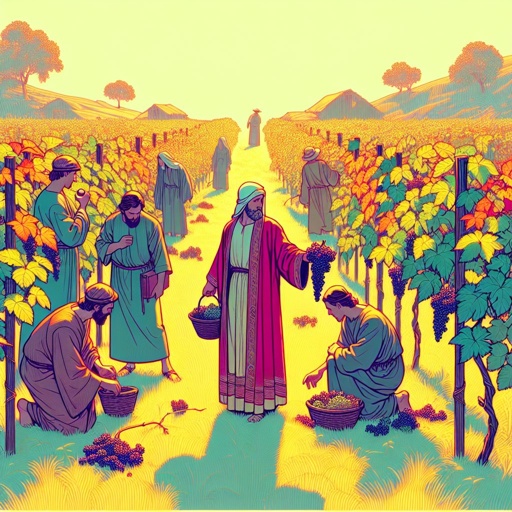
Mark 12:2 - "And at the season he sent to the husbandmen a servant, that he might receive from the husbandmen of the fruit of the vineyard."
"And at the season he sent to the husbandmen a servant, that he might receive from the husbandmen of the fruit of the vineyard." - Mark 12:2

mark 2:1-12

Mark 2:1-12

Mark 12:8

Mark 12:8

Mark 15:12

Mark 2:12 - "And immediately he arose, took up the bed, and went forth before them all; insomuch that they were all amazed, and glorified God, saying, We never saw it on this fashion."

Mark 12:41 - 44
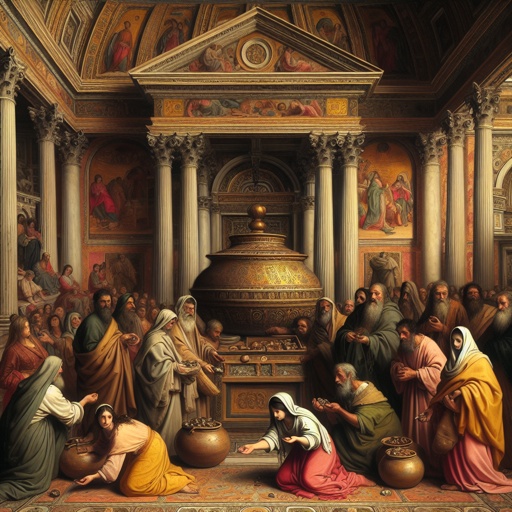
Mark 12:41 - 44

Mark 12:41 - 44

Mark 12:41 - 44

Mark 12:41 - 44

Mark 12:11 - "This was the Lord's doing, and it is marvellous in our eyes?"

Mark 1:12 - "And immediately the Spirit driveth him into the wilderness."

Mark 12:39 - "And the chief seats in the synagogues, and the uppermost rooms at feasts:"
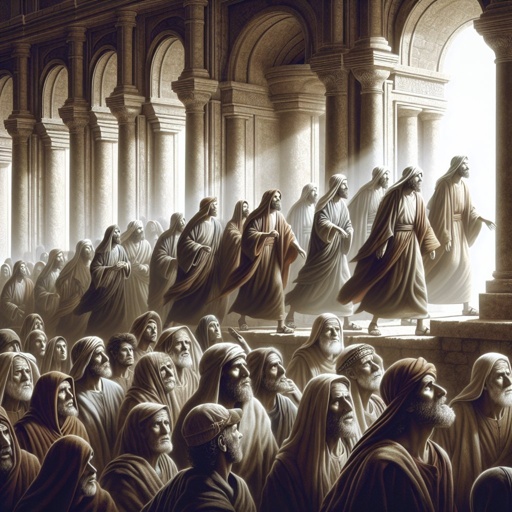
Mark 6:12 - "And they went out, and preached that men should repent."

Mark 2:2

Mark 3:12 - "And he straitly charged them that they should not make him known."

Mark 12:3 - "And they caught him, and beat him, and sent him away empty."

Acts 12:12 - "And when he had considered the thing, he came to the house of Mary the mother of John, whose surname was Mark; where many were gathered together praying."

Mark 12:12 - "And they sought to lay hold on him, but feared the people: for they knew that he had spoken the parable against them: and they left him, and went their way."

Mark 11:12 - "¶ And on the morrow, when they were come from Bethany, he was hungry:"

Mark 12:8 - "And they took him, and killed him, and cast him out of the vineyard."

Lamentations 3:12 - "He hath bent his bow, and set me as a mark for the arrow."

Mark 2

Mark 2

Mark 12:18 - "¶ Then come unto him the Sadducees, which say there is no resurrection; and they asked him, saying,"

Mark 12:13 - "¶ And they send unto him certain of the Pharisees and of the Herodians, to catch him in his words."

Mark 12:27 - "He is not the God of the dead, but the God of the living: ye therefore do greatly err."