What does Mark 12:23 mean?
“In the resurrection therefore, when they shall rise, whose wife shall she be of them? for the seven had her to wife.” — Mark 12:23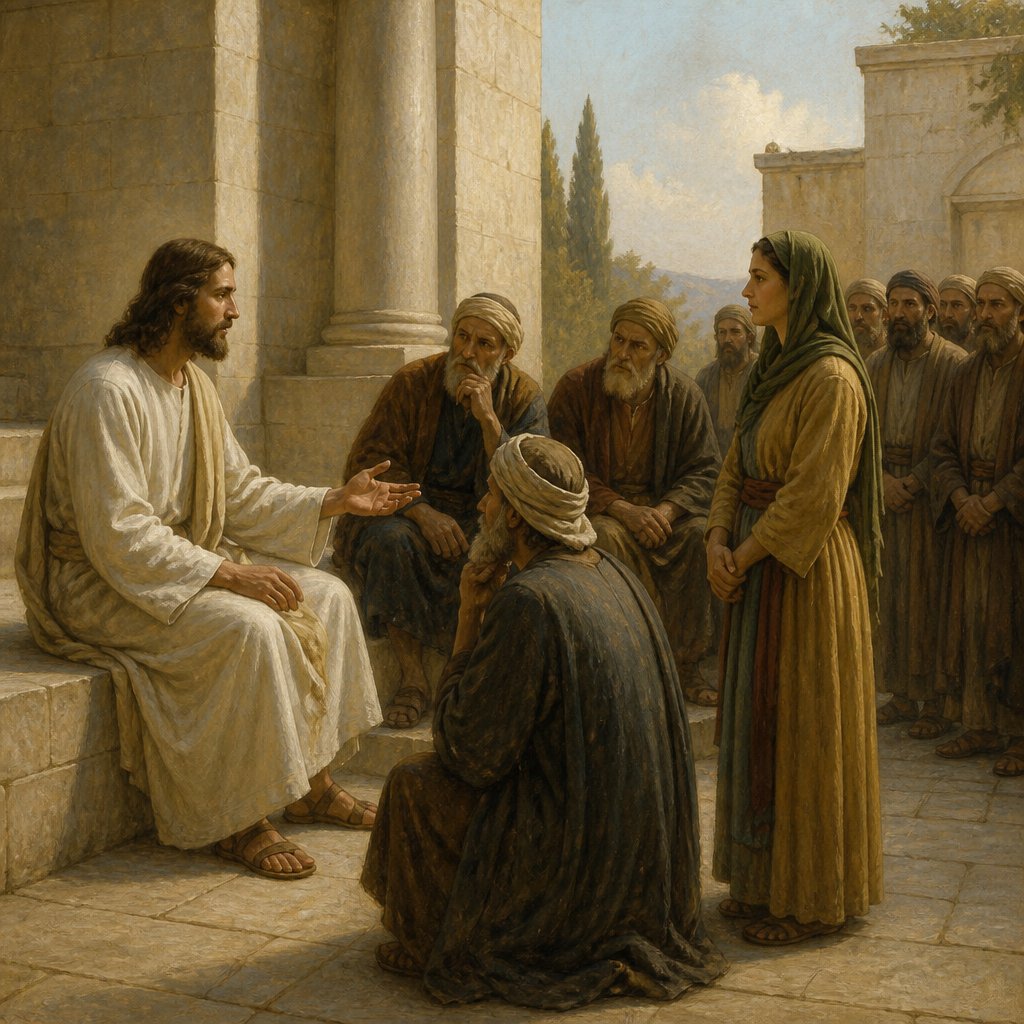
Mark 12:23 in the King James Version of the Bible reads, "In the resurrection therefore, when they shall rise, whose wife shall she be of them? for the seven had her to wife." This verse is part of a larger passage in which the Sadducees, a sect of Jewish religious leaders, are questioning Jesus about the resurrection.
To fully understand the significance of this verse, it is important to first understand the context in which it was spoken. In verses 18-27 of Mark 12, the Sadducees present Jesus with a hypothetical scenario about a woman who is married to seven different brothers, each of whom dies without leaving any children. The Sadducees ask Jesus whose wife the woman will be at the resurrection, implying that the concept of resurrection itself is absurd and illogical. However, Jesus responds by explaining that marriage is a temporary institution that applies only to earthly life, and that in the resurrection, people will be like the angels in heaven and will not be married.
The deeper meaning of this passage lies in Jesus' response to the Sadducees, and the theological truths that it conveys. One key theme present in this verse is the concept of the resurrection. The Sadducees, who did not believe in the resurrection, were using this hypothetical scenario to challenge Jesus' teaching on this fundamental tenet of the faith. However, by addressing their question and asserting that there will be a resurrection, Jesus reaffirms the truth of the resurrection and its importance in the Christian faith.
Another theme that emerges from this verse is the nature of marriage. Jesus' response to the Sadducees' question about the woman and her seven husbands serves as a teaching moment about the temporary nature of earthly institutions, including marriage. Jesus makes it clear that in the resurrection, relationships as we know them on earth will not be the same, and that individuals will not be bound by the same earthly constraints and obligations. This serves as a reminder that our focus should be on spiritual matters and our relationship with God, rather than earthly concerns.
Symbolism is also present in this verse, as the number seven holds significant biblical meaning. In the Bible, the number seven is often associated with completion, perfection, and the divine. The fact that the woman in the Sadducees' hypothetical scenario was married to seven different men may symbolize the completeness and finality of the earthly institution of marriage, which will no longer apply in the resurrection.
In summary, Mark 12:23 in the King James Version of the Bible is a part of a larger passage in which Jesus addresses the question of the resurrection and the nature of marriage. This verse carries themes of the reality of the resurrection, the temporary nature of earthly institutions, and the symbolic meaning of the number seven. It serves as a reminder for believers to focus on eternal, spiritual matters rather than getting caught up in earthly concerns.
Get our apps


Artwork for Mark 12:23

Mark 12:23 - "In the resurrection therefore, when they shall rise, whose wife shall she be of them? for the seven had her to wife."
"In the resurrection therefore, when they shall rise, whose wife shall she be of them? for the seven had her to wife." - Mark 12:23

Genesis 1:2 3

Mark 12:8

Mark 12:8

Mark 15:12

Mark 1:23 - "And there was in their synagogue a man with an unclean spirit; and he cried out,"

Mark 15:23 - "And they gave him to drink wine mingled with myrrh: but he received it not."

Mark 7:23 - "All these evil things come from within, and defile the man."

mark 2:1-12

Mark 12:41 - 44
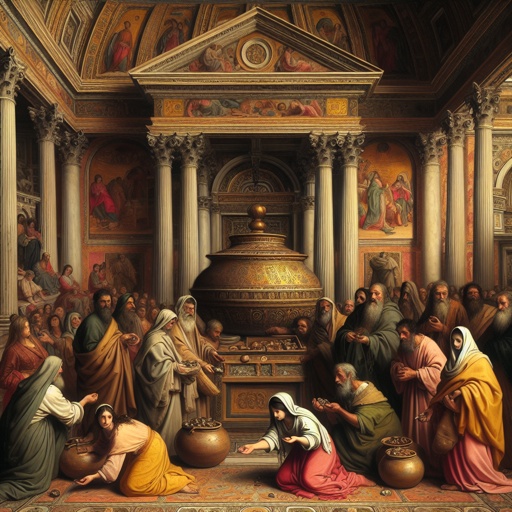
Mark 12:41 - 44

Mark 4:23 - "If any man have ears to hear, let him hear."

Mark 12:41 - 44

Mark 2:1-12

Mark 12:41 - 44

Mark 12:41 - 44

Mark 12:11 - "This was the Lord's doing, and it is marvellous in our eyes?"

Mark 13:23 - "But take ye heed: behold, I have foretold you all things."

Mark 1:12 - "And immediately the Spirit driveth him into the wilderness."

Mark 12:39 - "And the chief seats in the synagogues, and the uppermost rooms at feasts:"
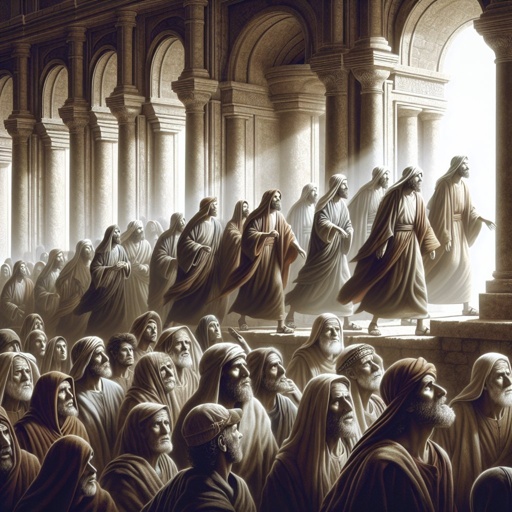
Mark 6:12 - "And they went out, and preached that men should repent."

Mark 9:23 - "Jesus said unto him, If thou canst believe, all things are possible to him that believeth."

Matthew 23:12

Genesis 23-12

Matthew 23:12

Mark 3:12 - "And he straitly charged them that they should not make him known."

Mark 12:3 - "And they caught him, and beat him, and sent him away empty."

Mark 14:23 - "And he took the cup, and when he had given thanks, he gave it to them: and they all drank of it."

Acts 12:12 - "And when he had considered the thing, he came to the house of Mary the mother of John, whose surname was Mark; where many were gathered together praying."