What does Mark 14:12 mean?
“And the first day of unleavened bread, when they killed the passover, his disciples said unto him, Where wilt thou that we go and prepare that thou mayest eat the passover?” — Mark 14:12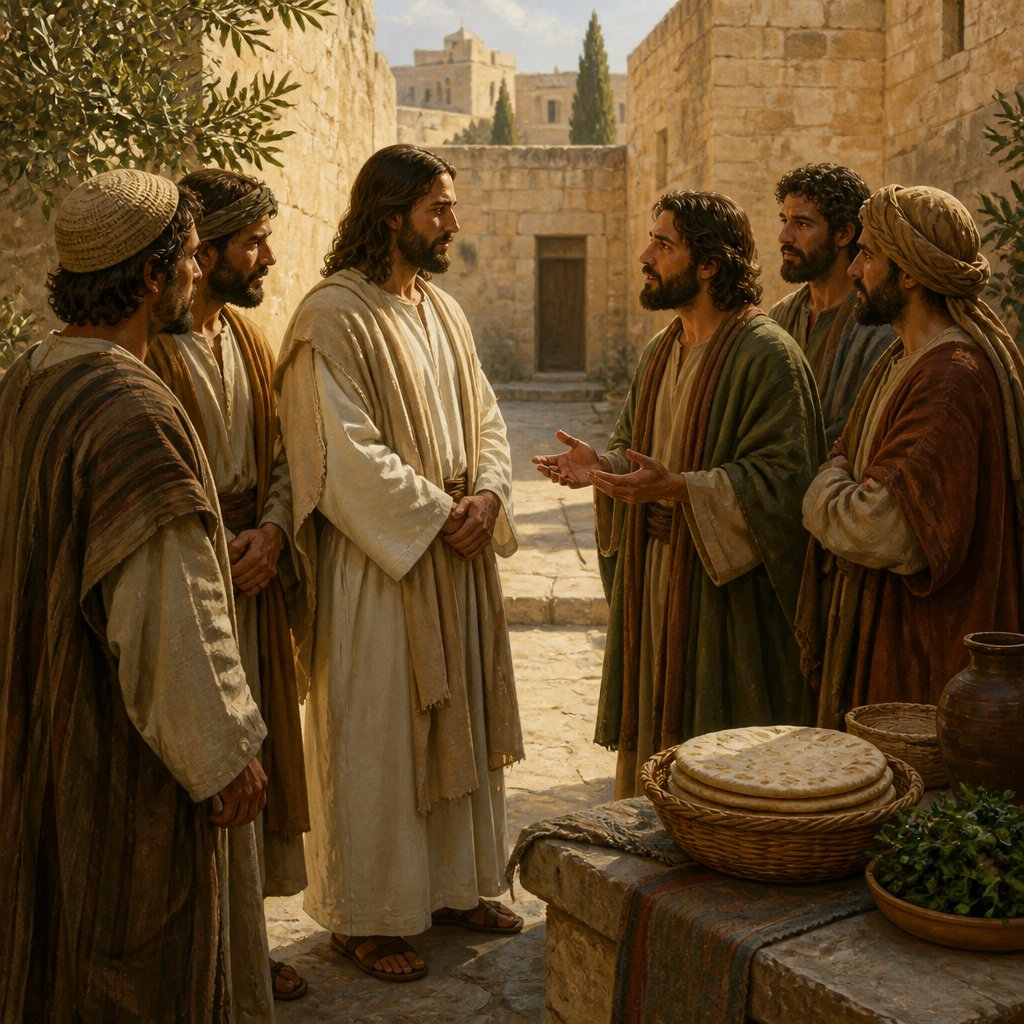
The verse Mark 14:12 in the King James Version of the Bible reads, "And the first day of unleavened bread, when they killed the passover, his disciples said unto him, Where wilt thou that we go and prepare that thou mayest eat the passover?"
This verse takes place during the final days of Jesus' life, as he and his disciples prepare to celebrate the Passover, a significant Jewish holiday that commemorates the Israelites' liberation from slavery in ancient Egypt. The unleavened bread, also known as matzah, is a central element of the Passover meal, symbolizing the haste with which the Israelites left Egypt and the absence of fermentation, which represents the purity of the Exodus.
In this passage, Jesus and his disciples are making preparations for the observance of the Passover. The disciples are inquiring about the location where the Passover meal will take place, demonstrating their willingness to follow and serve Jesus. This event is significant because it marks the beginning of the events that will lead to Jesus' crucifixion and ultimately, his resurrection.
One of the key themes of this verse is obedience and preparation. The disciples' question to Jesus reflects their readiness to fulfill his instructions and their desire to participate in the Passover observance. This shows their obedience to Jesus as their leader and teacher. It also serves as a reminder to believers to be prepared and willing to follow Jesus' guidance in their own lives.
The context of this verse is important to consider. During the Passover meal, Jesus institutes the practice of communion, which is a central sacrament in Christianity. He uses the bread and wine to symbolize his body and blood, foreshadowing his sacrifice on the cross. In this way, the Passover meal takes on profound theological significance, as it becomes a symbol of the new covenant that Jesus establishes through his death and resurrection.
Additionally, the symbolism of the Passover itself is rich and meaningful. The lamb that was sacrificed during the Passover is a powerful foreshadowing of Jesus as the sacrificial lamb who takes away the sins of the world. The unleavened bread also holds symbolic significance, representing the purity and sinlessness of Jesus Christ.
In a broader sense, this verse also speaks to the importance of tradition and remembrance in the Christian faith. The Passover was an important tradition for the Jewish people, commemorating their deliverance from slavery and oppression. In the same way, the observance of the Lord's Supper serves as a way for Christians to remember and celebrate the sacrifice of Jesus Christ and the freedom from sin that it brings.
Overall, Mark 14:12 is a significant verse that captures the atmosphere of anticipation and preparation surrounding the Passover meal and Jesus' impending sacrifice. It also holds layers of meaning in its symbolism, pointing towards the larger narrative of Jesus' redemptive work and the establishment of the new covenant. This verse serves as a reminder of the obedience and devotion of Jesus' disciples, as well as the profound theological significance of the Passover and its connection to the Christian faith.
Get our apps


Artwork for Mark 14:12

Mark 14:12 - "¶ And the first day of unleavened bread, when they killed the passover, his disciples said unto him, Where wilt thou that we go and prepare that thou mayest eat the passover?"
"¶ And the first day of unleavened bread, when they killed the passover, his disciples said unto him, Where wilt thou that we go and prepare that thou mayest eat the passover?" - Mark 14:12

Mark 14:12-26 - "On the first day of the Festival of Unleavened Bread, when it was customary to sacrifice the Passover lamb, Jesus’ disciples asked him, “Where do you want us to go and make preparations for you to eat the Passover?” So he sent two of his disciples, telling them, “Go into the city, and a man carrying a jar of water will meet you. Follow him. Say to the owner of the house he enters, ‘The Teacher asks: Where is my guest room, where I may eat the Passover with my disciples?’ He will show you a large room upstairs, furnished and ready. Make preparations for us there.” The disciples left, went into the city and found things just as Jesus had told them. So they prepared the Passover. When evening came, Jesus arrived with the Twelve. While they were reclining at the table eating, he said, “Truly I tell you, one of you will betray me—one who is eating with me.” They were saddened, and one by one they said to him, “Surely you don’t mean me?” “It is one of the Twelve,” he replied, “one who dips bread into the bowl with me. The Son of Man will go just as it is written about him. But woe to that man who betrays the Son of Man! It would be better for him if he had not been born.” While they were eating, Jesus took bread, and when he had given thanks, he broke it and gave it to his disciples, saying, “Take it; this is my body.” Then he took a cup, and when he had given thanks, he gave it to them, and they all drank from it. “This is my blood of the covenant, which is poured out for many,” he said to them. “Truly I tell you, I will not drink again from the fruit of the vine until that day when I drink it new in the kingdom of God.” When they had sung a hymn, they went out to the Mount of Olives."
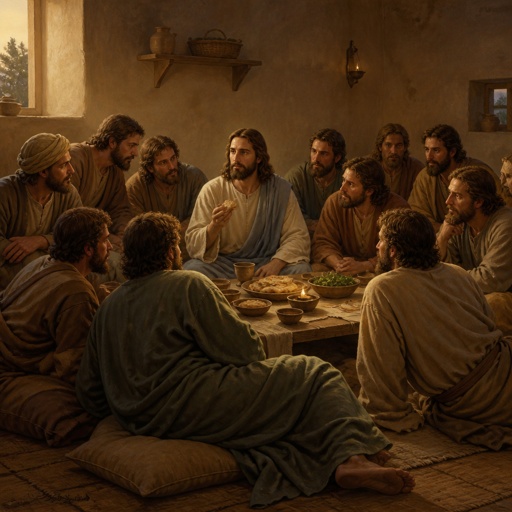
"On the first day of the Festival of Unleavened Bread, when it was customary to sacrifice the Passover lamb, Jesus’ disciples asked him, “Where do you want us to go and make preparations for you to eat the Passover?” So he sent two of his disciples, telling them, “Go into the city, and a man carrying a jar of water will meet you. Follow him. Say to the owner of the house he enters, ‘The Teacher asks: Where is my guest room, where I may eat the Passover with my disciples?’ He will show you a large room upstairs, furnished and ready. Make preparations for us there.” The disciples left, went into the city and found things just as Jesus had told them. So they prepared the Passover. When evening came, Jesus arrived with the Twelve. While they were reclining at the table eating, he said, “Truly I tell you, one of you will betray me—one who is eating with me.” They were saddened, and one by one they said to him, “Surely you don’t mean me?” “It is one of the Twelve,” he replied, “one who dips bread into the bowl with me. The Son of Man will go just as it is written about him. But woe to that man who betrays the Son of Man! It would be better for him if he had not been born.” While they were eating, Jesus took bread, and when he had given thanks, he broke it and gave it to his disciples, saying, “Take it; this is my body.” Then he took a cup, and when he had given thanks, he gave it to them, and they all drank from it. “This is my blood of the covenant, which is poured out for many,” he said to them. “Truly I tell you, I will not drink again from the fruit of the vine until that day when I drink it new in the kingdom of God.” When they had sung a hymn, they went out to the Mount of Olives." - Mark 14:12-26

Mark 12:14 - "And when they were come, they say unto him, Master, we know that thou art true, and carest for no man: for thou regardest not the person of men, but teachest the way of God in truth: Is it lawful to give tribute to Caesar, or not?"
Mark 14:51

Mark 12:8

Mark 12:8

Mark 15:12

Mark 4:14 - "¶ The sower soweth the word."

Mark 14:17 - "And in the evening he cometh with the twelve."

Mark 14:50 - "And they all forsook him, and fled."

mark 2:1-12

Mark 12:41 - 44
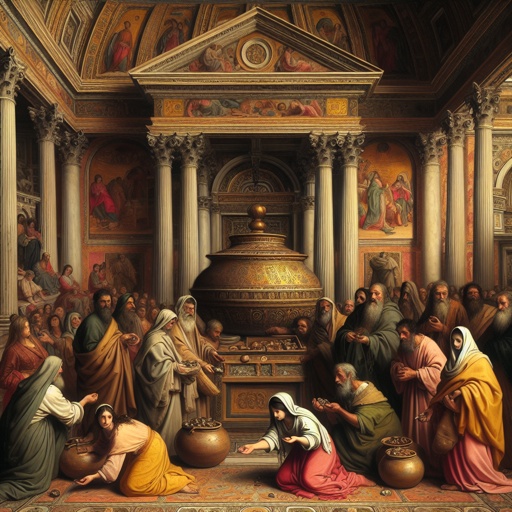
Mark 12:41 - 44

Mark 12:41 - 44

Mark 2:1-12

Mark 12:41 - 44

Mark 12:41 - 44

Mark 14:46 - "¶ And they laid their hands on him, and took him."

Mark 12:11 - "This was the Lord's doing, and it is marvellous in our eyes?"

Mark 1:12 - "And immediately the Spirit driveth him into the wilderness."

Mark 14:59 - "But neither so did their witness agree together."

Mark 14:2 - "But they said, Not on the feast day, lest there be an uproar of the people."

"¶ The sower soweth the word." - Mark 4:14

Mark 12:39 - "And the chief seats in the synagogues, and the uppermost rooms at feasts:"
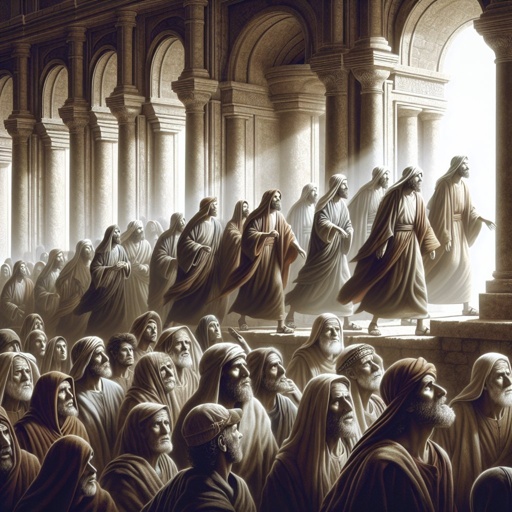
Mark 6:12 - "And they went out, and preached that men should repent."

Mark 14:39 - "And again he went away, and prayed, and spake the same words."

Mark 14:57 - "And there arose certain, and bare false witness against him, saying,"

Mark 15:12-14 - "And Pilate answered and said again unto them, What will ye then that I shall do unto him whom ye call the King of the Jews? And they cried out again, Crucify him. Then Pilate said unto them, Why, what evil hath he done? And they cried out the more exceedingly, Crucify him."