What does Mark 14:20 mean?
“And he answered and said unto them, It is one of the twelve, that dippeth with me in the dish.” — Mark 14:20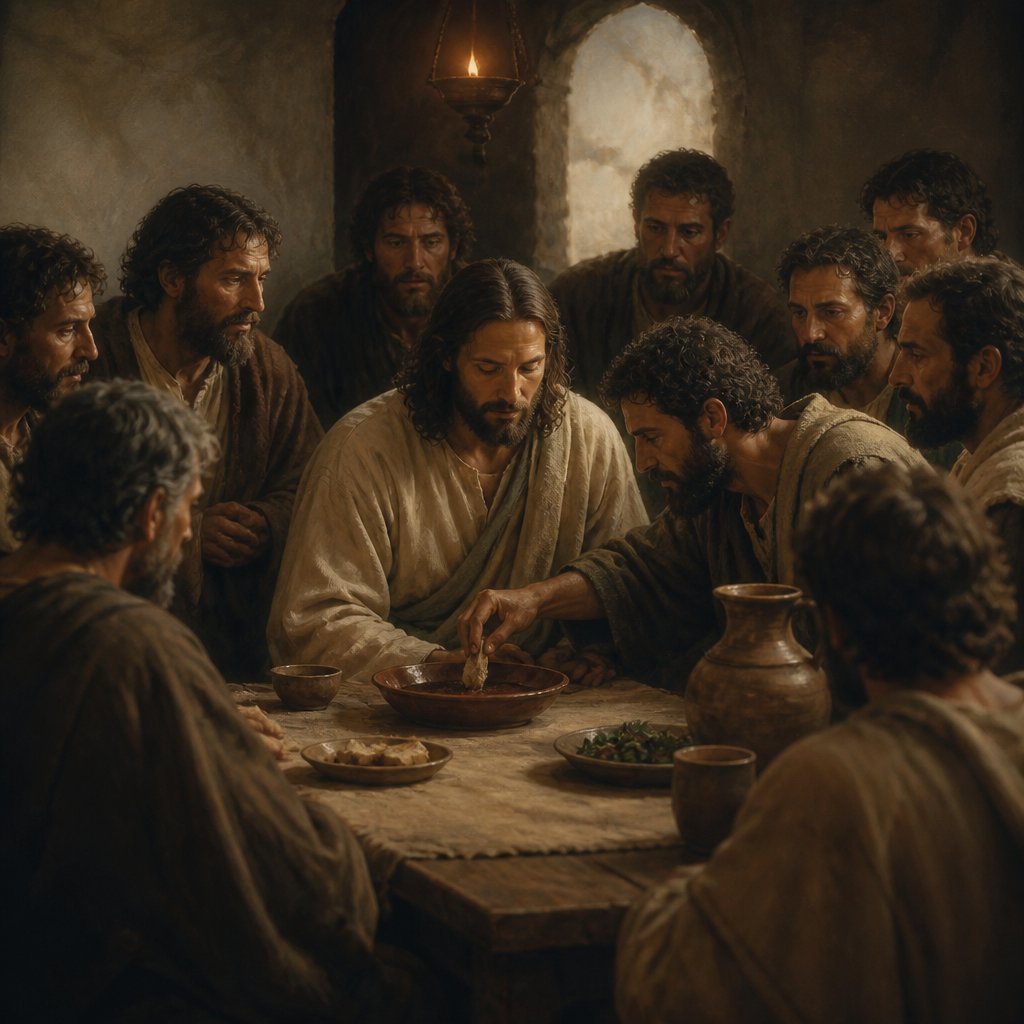
Mark 14:20 (KJV) reads, "And he answered and said unto them, It is one of the twelve, that dippeth with me in the dish."
This verse is a part of the account of the Last Supper, where Jesus shares a final meal with his disciples before his crucifixion. In this particular verse, Jesus predicts his betrayal by one of the twelve apostles who have been eating with him. This betrayal is later revealed to be by Judas Iscariot, one of Jesus' closest followers.
The theme of betrayal is a central focus of this verse and the surrounding passages. It highlights the complex nature of human relationships and the pain of betrayal, even among those who are supposed to be united in faith and purpose. This betrayal sets the stage for Jesus' arrest and ultimately his sacrifice on the cross.
The context of this verse is crucial to understanding its significance. The Last Supper was a poignant and symbolic event, where Jesus shared bread and wine with his disciples, telling them that the bread represented his body and the wine his blood, given for the forgiveness of sins. It was a moment of intense emotion and significance, as Jesus prepared his followers for the trials and tribulations that were to come.
The symbolism in this verse is profound. The act of dipping bread in a dish was a common practice at meals during this time. However, in this context, it takes on a much deeper meaning. The dipping of bread with someone was a sign of friendship and trust. By using this specific action to identify his betrayer, Jesus is highlighting the deep betrayal of someone he had shared so much with. This simple gesture becomes a powerful symbol of the betrayal that Jesus is about to face.
Furthermore, this verse also speaks to the omniscience of Jesus. He not only knows that he will be betrayed, but he also knows the identity of his betrayer. This demonstrates the divine knowledge and insight of Jesus, as well as the depth of his understanding of human nature.
The action of dipping bread in the dish also echoes the ancient Jewish tradition of sharing a meal with someone as a sign of fellowship and trust. In the Old Testament, sharing a meal with someone was a significant act of friendship and loyalty. However, in this case, the betrayal is all the more poignant because it involves someone so intimately connected to Jesus and his ministry.
Overall, Mark 14:20 is a powerful and poignant verse that captures the moment of betrayal within the Last Supper. It speaks to the themes of betrayal, friendship, trust, and divine knowledge, and serves as a poignant reminder of the complexity of human relationships. This verse also sets the stage for the events that will unfold in the following days, leading to Jesus' crucifixion and resurrection.
Get our apps


Artwork for Mark 14:20

Mark 14:20 - "And he answered and said unto them, It is one of the twelve, that dippeth with me in the dish."
"And he answered and said unto them, It is one of the twelve, that dippeth with me in the dish." - Mark 14:20

Philippians 4:14-20

Mark 16:20
Mark 16:20

Mark 16:20

Mark 16:20
Mark 16:20

1 Samuel 20:20 - "And I will shoot three arrows on the side thereof, as though I shot at a mark."
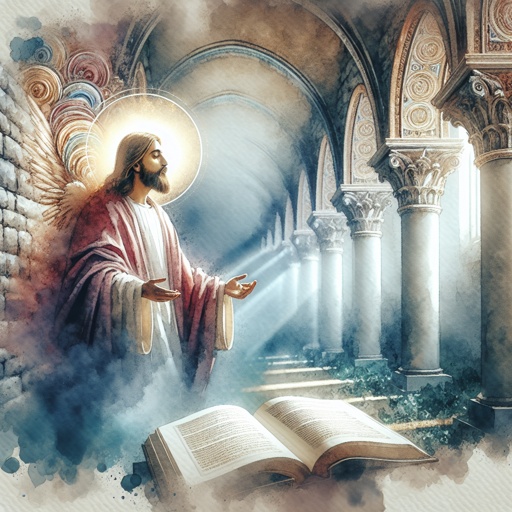
Mark 14:51

Mark 4:14 - "¶ The sower soweth the word."

Mark 14:17 - "And in the evening he cometh with the twelve."

Mark 14:50 - "And they all forsook him, and fled."

Mark 7:20 - "And he said, That which cometh out of the man, that defileth the man."

Mark 14:46 - "¶ And they laid their hands on him, and took him."

Mark 11:20 - "¶ And in the morning, as they passed by, they saw the fig tree dried up from the roots."

Mark 14:59 - "But neither so did their witness agree together."

Mark 14:2 - "But they said, Not on the feast day, lest there be an uproar of the people."

Mark 3:20 - "And the multitude cometh together again, so that they could not so much as eat bread."

"¶ The sower soweth the word." - Mark 4:14

Mark 14:39 - "And again he went away, and prayed, and spake the same words."

Mark 14:57 - "And there arose certain, and bare false witness against him, saying,"

Mark 12:20 - "Now there were seven brethren: and the first took a wife, and dying left no seed."

Mark 14:26 - "¶ And when they had sung an hymn, they went out into the mount of Olives."

Mark 14:66 - "¶ And as Peter was beneath in the palace, there cometh one of the maids of the high priest:"

Mark 14:52 - "And he left the linen cloth, and fled from them naked."

John 20:14

Exodus 20:14
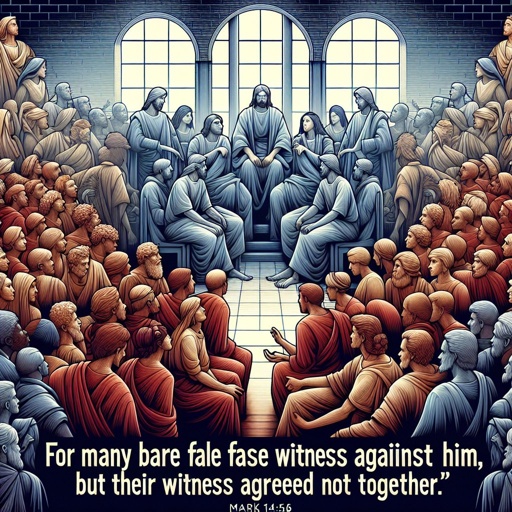
Mark 14:56 - "For many bare false witness against him, but their witness agreed not together."

Mark 14:14 - "And wheresoever he shall go in, say ye to the goodman of the house, The Master saith, Where is the guestchamber, where I shall eat the passover with my disciples?"