What does Mark 15:34 mean?
"And at the ninth hour Jesus cried with a loud voice, saying, Eloi, Eloi, lama sabachthani? which is, being interpreted, My God, my God, why hast thou forsaken me?" - Mark 15:34
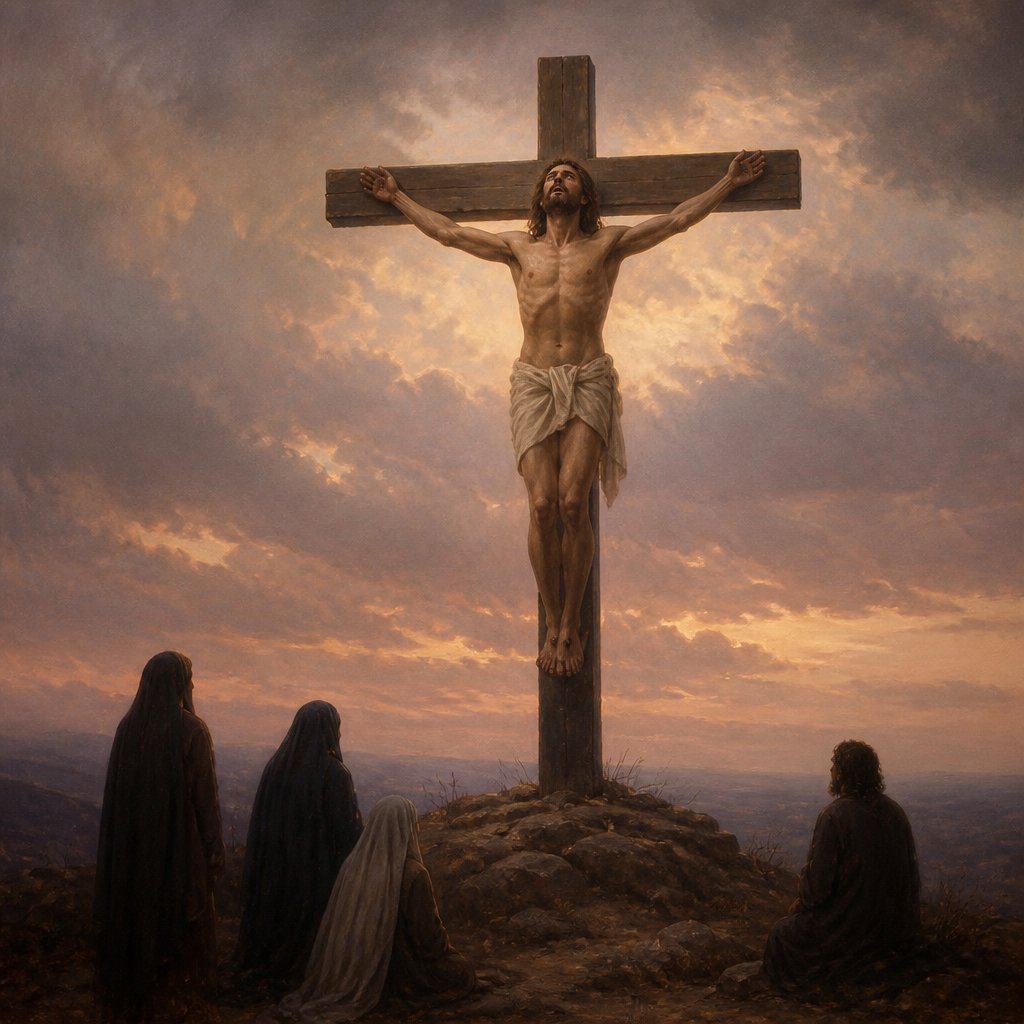
The verse Mark 15:34 in the King James Version of the Bible states, "And at the ninth hour Jesus cried with a loud voice, saying, Eloi, Eloi, lama sabachthani? which is, being interpreted, My God, my God, why hast thou forsaken me?" This verse is a pivotal moment in the crucifixion story of Jesus Christ, and it holds significant meaning for Christians around the world.
First, it is important to understand the context of this verse. Jesus has been on the cross for several hours, enduring unimaginable physical and emotional pain. The ninth hour refers to 3 o'clock in the afternoon, and it was at this moment that Jesus utters this cry. The fact that Jesus cried out with a loud voice emphasizes the intensity of his suffering and the depth of his despair.
The words that Jesus spoke, "Eloi, Eloi, lama sabachthani," are Aramaic, the language that Jesus and his disciples would have spoken. The immediate interpretation of these words, "My God, my God, why hast thou forsaken me," reveals the anguish and desolation that Jesus was experiencing. In this moment, Jesus, who is fully human as well as fully divine, is expressing the agony of feeling abandoned and separated from God.
The symbolism and significance of this verse are profound. The phrase "My God, my God, why hast thou forsaken me" echoes Psalm 22:1, which is a prophetic psalm that vividly describes the suffering and redemption of the Messiah. By quoting this psalm, Jesus is not only expressing his own anguish but also identifying himself as the fulfillment of this Messianic prophecy.
This moment on the cross is a reflection of the profound mystery of the Incarnation, the belief that Jesus, as the Son of God, took on human flesh and experienced the full range of human emotions and suffering. In his cry, Jesus demonstrates the reality of his humanity, experiencing the depths of despair and feeling the weight of sin and separation from God.
Furthermore, Jesus' cry from the cross also carries theological significance. In that moment, Jesus took upon himself the sin of the world, bearing the separation and alienation that sin causes. In his abandonment, he becomes the ultimate atoning sacrifice, offering himself for the forgiveness of humanity's sins. This act of self-sacrifice becomes the cornerstone of Christian faith, demonstrating God's love and grace toward humanity.
The themes of redemption, suffering, and divine abandonment are central to the Christian faith, and Mark 15:34 encapsulates these themes in a powerful and poignant manner. It serves as a reminder of the depth of God's love for humanity, as well as the cost of that love. It also invites believers to contemplate the mystery of Jesus' suffering and the significance of his sacrifice for their own lives.
In conclusion, Mark 15:34 in the King James Version of the Bible is a verse that holds immense theological and spiritual weight. It captures the intense suffering and sacrificial love of Jesus Christ, as well as the fulfillment of Old Testament prophecy. It is a verse that invites believers to contemplate the depths of God's love and the profound mystery of the Incarnation. It stands as a powerful symbol of hope, redemption, and the unshakable faithfulness of God.
Have questions about Mark 15:34?
Dive deeper into this scripture with Bible Chat — an AI-powered tool for exploring God's Word through conversation. Ask questions, get context, and grow in your understanding of the Bible.
Get Our Apps


Mark 15:34 Artwork

Mark 15:34 - "And at the ninth hour Jesus cried with a loud voice, saying, Eloi, Eloi, lama sabachthani? which is, being interpreted, My God, my God, why hast thou forsaken me?"
"And at the ninth hour Jesus cried with a loud voice, saying, Eloi, Eloi, lama sabachthani? which is, being interpreted, My God, my God, why hast thou forsaken me?" - Mark 15:34

Mark 3:31-34

Mark 15:33-34 - "At noon, darkness came over the whole land until three in the afternoon. And at three in the afternoon Jesus cried out in a loud voice, “Eloi, Eloi, lema sabachthani?” (which means “My God, my God, why have you forsaken me?”)."

Mark 9:34 - "But they held their peace: for by the way they had disputed among themselves, who should be the greatest."

Mark 7:34 - "And looking up to heaven, he sighed, and saith unto him, Ephphatha, that is, Be opened."

Joshua 15:34 - "And Zanoah, and En-gannim, Tappuah, and Enam,"
Mark 14:34 - "And saith unto them, My soul is exceeding sorrowful unto death: tarry ye here, and watch."

Mark 15:12

Acts 15:34 - "Notwithstanding it pleased Silas to abide there still."

Mark 3:34 - "And he looked round about on them which sat about him, and said, Behold my mother and my brethren!"

Mark 4:34 - "But without a parable spake he not unto them: and when they were alone, he expounded all things to his disciples."

Mark 5:34 - "And he said unto her, Daughter, thy faith hath made thee whole; go in peace, and be whole of thy plague."

Mark 15:25 - "And it was the third hour, and they crucified him."

Mark 15:13 - "And they cried out again, Crucify him."

Mark 1:34 - "And he healed many that were sick of divers diseases, and cast out many devils; and suffered not the devils to speak, because they knew him."

Psalms 34:15 - "The eyes of the LORD are upon the righteous, and his ears are open unto their cry."

Job 15:34 - "For the congregation of hypocrites shall be desolate, and fire shall consume the tabernacles of bribery."
Mark 15:18 - "And began to salute him, Hail, King of the Jews!"

Numbers 15:34 - "And they put him in ward, because it was not declared what should be done to him."

Mark 15:47 - "And Mary Magdalene and Mary the mother of Joses beheld where he was laid."

Mark 15:30 - "Save thyself, and come down from the cross."

Mark 15:28 - "And the scripture was fulfilled, which saith, And he was numbered with the transgressors."

Mark 3:15 - "And to have power to heal sicknesses, and to cast out devils:"

Mark 15:5 - "But Jesus yet answered nothing; so that Pilate marvelled."

Genesis 34:15 - "But in this will we consent unto you: If ye will be as we be, that every male of you be circumcised;"

1 Samuel 15:34 - "¶ Then Samuel went to Ramah; and Saul went up to his house to Gibeah of Saul."

Job 34:15 - "All flesh shall perish together, and man shall turn again unto dust."

Mark 15:26 - "And the superscription of his accusation was written over, THE KING OF THE JEWS."

Mark 15:38 - "And the veil of the temple was rent in twain from the top to the bottom."