What does Mark 15:7 mean?
“And there was one named Barabbas, which lay bound with them that had made insurrection with him, who had committed murder in the insurrection.” — Mark 15:7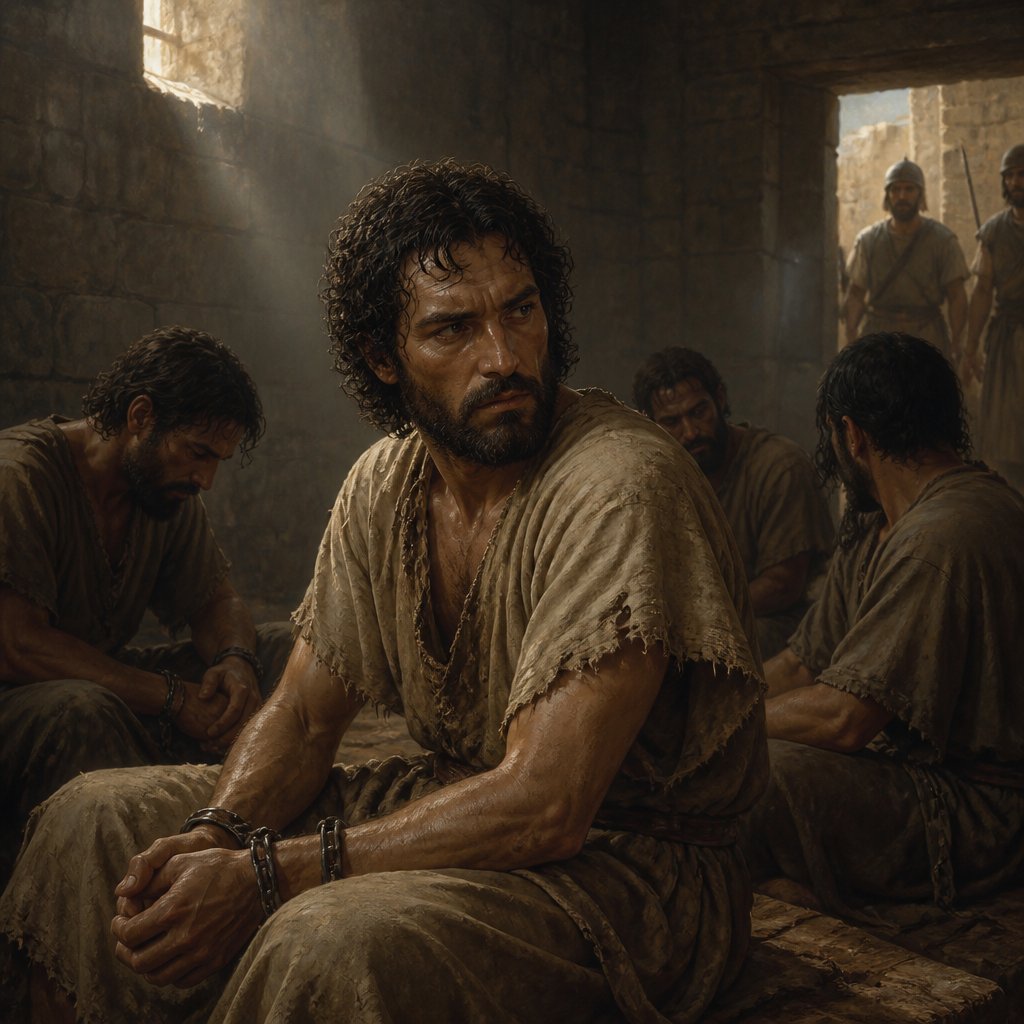
The Bible verse Mark 15:7 from the King James Version (KJV) states, "And there was one named Barabbas, which lay bound with them that had made insurrection with him, who had committed murder in the insurrection."
This verse is a part of the larger narrative of the trial and crucifixion of Jesus Christ. It takes place in the Gospel of Mark, which is the second book of the New Testament. This verse sets the stage for a pivotal moment in the story, as it introduces Barabbas, a notorious criminal, and sets up the contrast between him and Jesus.
The context of this verse is that Jesus has been falsely accused and brought before the Roman governor, Pilate, for trial. Pilate is facing pressure from the Jewish religious leaders to have Jesus executed, despite finding no fault in him. In an attempt to appease the crowd, Pilate offers to release a prisoner to them as part of the Passover tradition. The crowd is given the choice between Jesus, who is referred to as the "King of the Jews," and Barabbas, a rebel and murderer. The crowd, influenced by the religious leaders, chooses to have Barabbas released and Jesus crucified.
This pivotal moment in the narrative holds several important themes. One of the central themes is the contrast between innocence and guilt. Jesus, the innocent and blameless Son of God, is unjustly condemned and sentenced to death, while Barabbas, a guilty and violent criminal, is set free. This stark dichotomy highlights the unjust nature of the events surrounding Jesus' trial and crucifixion. It also serves as a powerful illustration of the concept of substitutionary atonement, as Jesus willingly takes the place of Barabbas, and by extension, all of humanity, in bearing the punishment for sin.
Another theme present in this verse is the idea of the human condition and the choice between good and evil. The crowd's decision to release Barabbas instead of Jesus reflects the fallen nature of humanity and the propensity for making choices that are contrary to God's will. The choice between the innocent Jesus and the guilty Barabbas serves as a reminder of the moral and spiritual implications of our decisions and the need for redemption and salvation.
Symbolism also plays a significant role in this verse. Barabbas can be seen as a symbolic representation of humanity, bound by sin and in need of release. Jesus, on the other hand, represents the ultimate sacrifice and source of liberation from sin and death. The act of releasing Barabbas in exchange for Jesus' crucifixion can be interpreted as a foreshadowing of the redemptive work of Christ on the cross, where he takes on the sins of the world and offers freedom and salvation to all who believe in him.
In conclusion, Mark 15:7 from the King James Version is a verse that holds profound theological significance and serves as a crucial point in the narrative of Jesus' trial and crucifixion. Through its themes of innocence and guilt, the human condition, and its powerful symbolism, this verse encapsulates the foundational principles of Christian faith and the redemptive work of Jesus Christ. It serves as a poignant reminder of the extent of God's love and the sacrifice made for the salvation of humanity.
Get our apps


Artwork for Mark 15:7

Mark 15:7 - "And there was one named Barabbas, which lay bound with them that had made insurrection with him, who had committed murder in the insurrection."
"And there was one named Barabbas, which lay bound with them that had made insurrection with him, who had committed murder in the insurrection." - Mark 15:7

Mark 7:15 - "There is nothing from without a man, that entering into him can defile him: but the things which come out of him, those are they that defile the man."

Mark 15:12

Mark 13:7

Mark 13:7

Mark 8:7

Mark 13:7

Mark 15:25 - "And it was the third hour, and they crucified him."

Mark 15:13 - "And they cried out again, Crucify him."

Mark 7:7 - "Howbeit in vain do they worship me, teaching for doctrines the commandments of men."
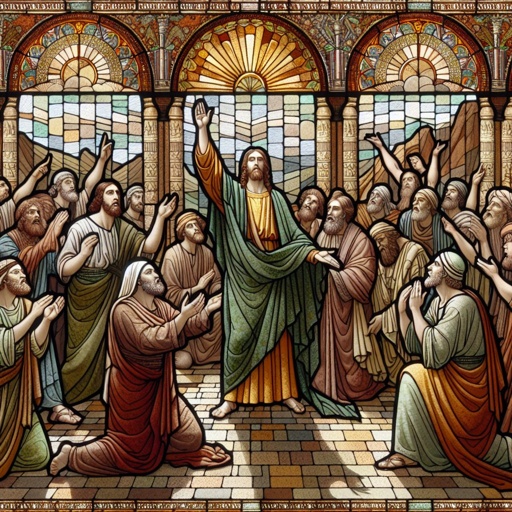
Mark 15:18 - "And began to salute him, Hail, King of the Jews!"

Mark 15:47 - "And Mary Magdalene and Mary the mother of Joses beheld where he was laid."

Mark 15:30 - "Save thyself, and come down from the cross."

Mark 7:31-37

Mark 7:31-37

Mark 15:28 - "And the scripture was fulfilled, which saith, And he was numbered with the transgressors."

Mark 3:15 - "And to have power to heal sicknesses, and to cast out devils:"

Mark 15:5 - "But Jesus yet answered nothing; so that Pilate marvelled."

Mark 15:26 - "And the superscription of his accusation was written over, THE KING OF THE JEWS."

Mark 15:38 - "And the veil of the temple was rent in twain from the top to the bottom."

Mark 15:37 - "And Jesus cried with a loud voice, and gave up the ghost."

Mark 15:45 - "And when he knew it of the centurion, he gave the body to Joseph."

Mark 6:15 - "Others said, That it is Elias. And others said, That it is a prophet, or as one of the prophets."

Mark 15:15 - "¶ And so Pilate, willing to content the people, released Barabbas unto them, and delivered Jesus, when he had scourged him, to be crucified."
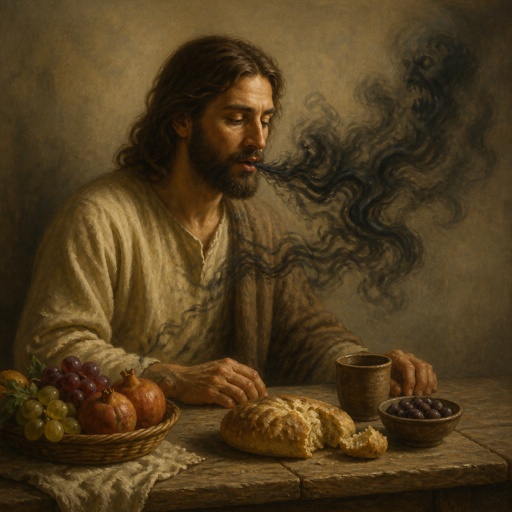
"There is nothing from without a man, that entering into him can defile him: but the things which come out of him, those are they that defile the man." - Mark 7:15

Mark 15:23 - "And they gave him to drink wine mingled with myrrh: but he received it not."

Acts 15:37 - "And Barnabas determined to take with them John, whose surname was Mark."

Mark 15:10 - "For he knew that the chief priests had delivered him for envy."

Mark 15:3 - "And the chief priests accused him of many things: but he answered nothing."