What does Mark 16:2 mean?
"And very early in the morning the first day of the week, they came unto the sepulchre at the rising of the sun." - Mark 16:2
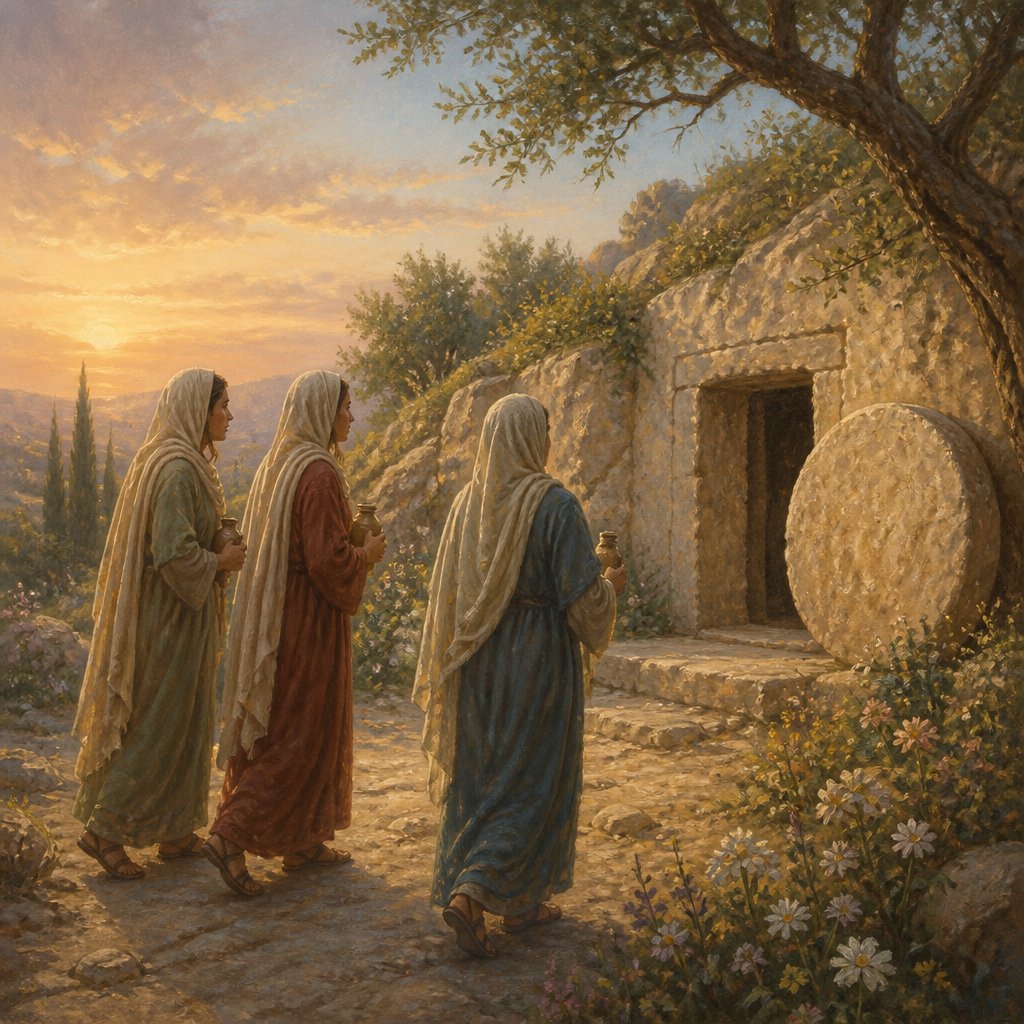
Mark 16:2 from the King James Version (KJV) of the Bible reads, "And very early in the morning the first day of the week, they came unto the sepulchre at the rising of the sun."
This verse is part of the story of the resurrection of Jesus Christ, a pivotal event in the New Testament and in the Christian faith. It takes place on Easter Sunday, the first day of the week, and begins with the women who had followed Jesus during his ministry, coming to the tomb where he had been laid after his crucifixion. This verse sets the scene for the dramatic events that follow, and is a poignant reminder of the hope and joy that the resurrection of Jesus brings to believers.
The context of this verse is important for understanding its significance. In the preceding verses, we learn that Jesus had been crucified and buried in a tomb, and that a large stone had been rolled in front of the entrance. The women, Mary Magdalene, Mary the mother of James, and Salome, had purchased spices to anoint Jesus's body, and they arrived at the tomb very early in the morning. The rising of the sun signifies the beginning of a new day, and foreshadows the momentous event that is about to unfold.
The themes present in this verse are hope, faith, and the victory of life over death. The women who come to the sepulchre are filled with grief and sadness, but they also carry out an act of devotion and love for Jesus. Their actions demonstrate their faith in him, even after his death, and their hope that somehow, they will be able to honor and care for his body. The rising of the sun symbolizes the dawning of a new era, and the beginning of a journey from mourning and despair to joy and triumph.
The symbolism in this verse is also significant. The sepulchre represents the place of death, and the stone that had been rolled in front of it is a physical barrier that seems impenetrable. The rising of the sun symbolizes the arrival of light and the dispelling of darkness. It is a powerful image of the resurrection and the victory of life over death. The women coming to the tomb at this moment illustrates their commitment and love for Jesus, and their willingness to confront the reality of his death in order to honor him.
In the broader context of the Easter story, this verse foreshadows the miraculous event that is about to occur. As the women arrive at the sepulchre, they encounter an angel who tells them that Jesus has risen from the dead. This news fills them with astonishment and joy, and they become the first witnesses to the resurrection. The verse serves as a prelude to the awe-inspiring revelation that follows, and marks the beginning of the most important event in Christian faith.
In conclusion, Mark 16:2 from the King James Version of the Bible carries profound themes of hope, faith, and the victory of life over death. Its context within the Easter story and its symbolism of the rising sun make it a poignant and powerful reflection on the resurrection of Jesus Christ. It serves as a reminder of the transformative power of this event, and the hope and joy that it brings to believers.
Have questions about Mark 16:2?
Dive deeper into this scripture with Bible Chat — an AI-powered tool for exploring God's Word through conversation. Ask questions, get context, and grow in your understanding of the Bible.
Get Our Apps


Mark 16:2 Artwork

Mark 16:2 - "And very early in the morning the first day of the week, they came unto the sepulchre at the rising of the sun."
"And very early in the morning the first day of the week, they came unto the sepulchre at the rising of the sun." - Mark 16:2

Mark 16:1-2

Mark 2:16 - "And when the scribes and Pharisees saw him eat with publicans and sinners, they said unto his disciples, How is it that he eateth and drinketh with publicans and sinners?"

Mark 16:20
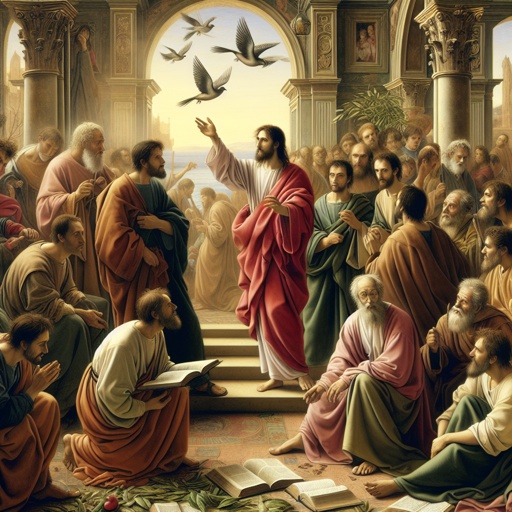
Mark 16:20

Mark 16:20
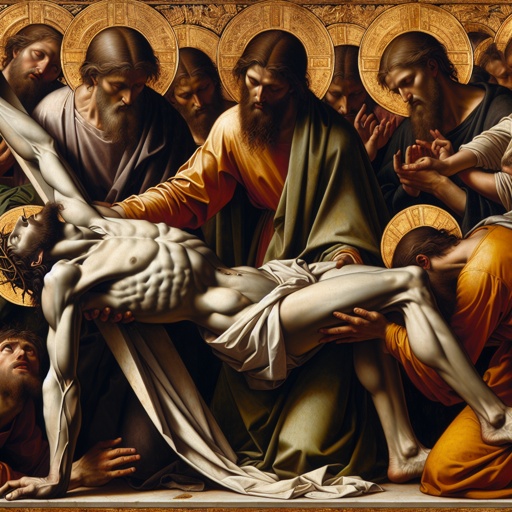
Mark 16:20

Mark 16:20

2 Timothy 3:16

Revelation 16:2

Mark 16:6-8

Mark 16:4-5

Mark 16:4-5

Mark 16:6-8

Mark 16:4-5

Mark 10:13–16

Mark 16:6-8

Revelation 16:2 - "And the first went, and poured out his vial upon the earth; and there fell a noisome and grievous sore upon the men which had the mark of the beast, and upon them which worshipped his image."

Mark 3:16 - "And Simon he surnamed Peter;"

african american mark 16:11

african american mary magdalene, mark 16: 9

Mark 9:16 - "And he asked the scribes, What question ye with them?"

Mark 16:13 - "And they went and told it unto the residue: neither believed they them."

Mark 7:16 - "If any man have ears to hear, let him hear."

Mark 8:16 - "And they reasoned among themselves, saying, It is because we have no bread."

Mark 16:4 - "And when they looked, they saw that the stone was rolled away: for it was very great."

Mark 16:10 - "And she went and told them that had been with him, as they mourned and wept."

Mark 2:2

"And Simon he surnamed Peter;" - Mark 3:16