What does Mark 3:3 mean?
“And he saith unto the man which had the withered hand, Stand forth.” — Mark 3:3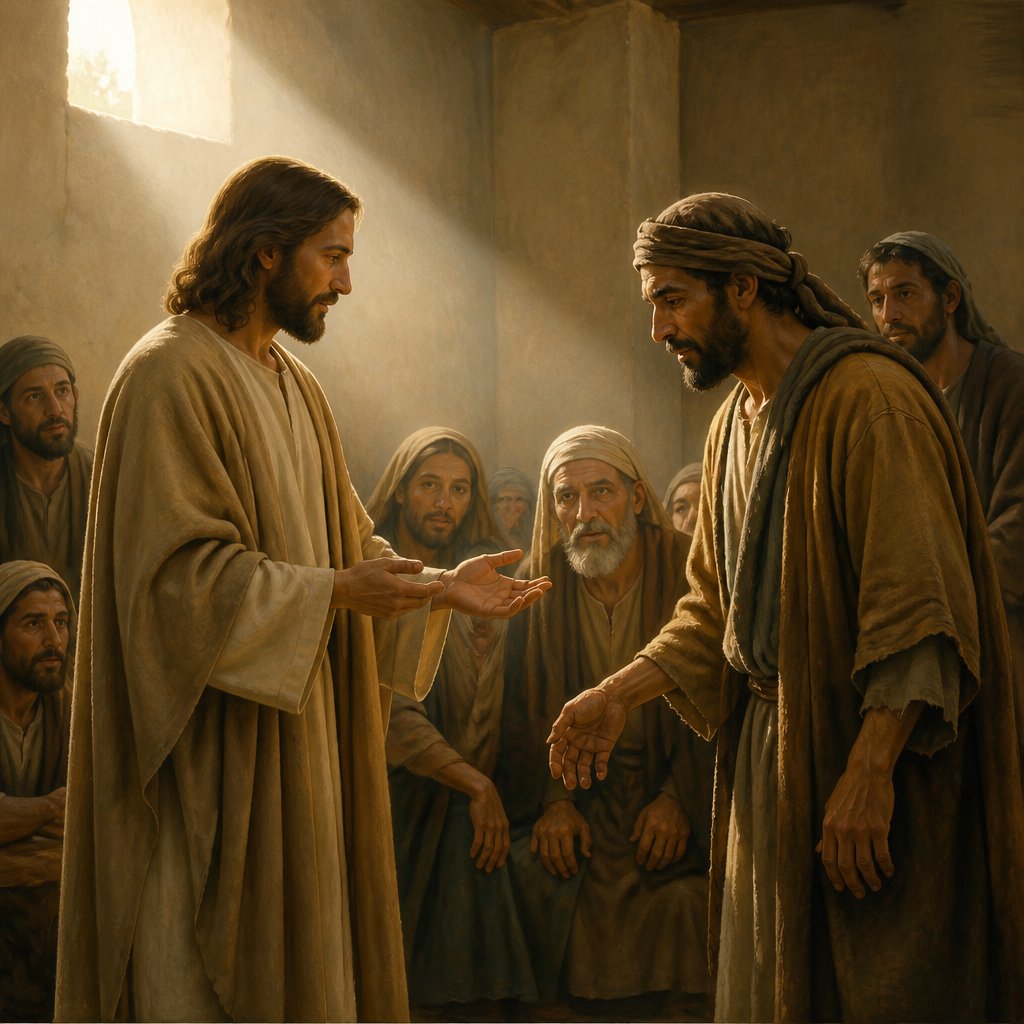
In Mark 3:3, the King James Version (KJV) of the Bible states, "And he saith unto the man which had the withered hand, Stand forth." This verse is part of a larger passage in the Gospel of Mark that describes an interaction between Jesus and the Pharisees on the Sabbath day. The Pharisees were watching Jesus closely to see if he would heal on the Sabbath, as they considered this to be a violation of the Sabbath law. Jesus, knowing their thoughts, called forward a man who had a withered hand and asked the Pharisees whether it was lawful to do good on the Sabbath day or to do evil, to save a life or to kill. The Pharisees remained silent, and Jesus, feeling anger and grief at their hardness of heart, healed the man's hand.
This passage carries several important themes and messages. Firstly, it speaks to Jesus' authority and power to heal. In calling the man forward and healing him, Jesus demonstrated his compassion and ability to restore life and wholeness. This act of healing also highlights Jesus' willingness to defy the established religious norms in order to show mercy and love to those in need.
Additionally, this passage emphasizes the theme of salvation and liberation. The man with the withered hand represents all those who are physically, spiritually, or emotionally afflicted. Jesus' healing of his hand symbolizes the liberation and restoration that he offers to all who come to him in faith. It is a reminder that through Jesus, we can find freedom from our afflictions and experience true wholeness.
The conflict with the Pharisees in this passage also speaks to the tension between religious legalism and the grace of God. The Pharisees were focused on upholding strict Sabbath laws and traditions, but Jesus challenged their narrow understanding of the Sabbath and revealed the deeper purpose of God's law - to show mercy and compassion. This serves as a powerful reminder that God's grace and love cannot be confined by human rules and regulations.
The interactions between Jesus and the Pharisees in this passage shed light on the theme of hardness of heart. The Pharisees, although witnessing Jesus' miraculous healing, remained stubborn and unyielding in their opposition to him. This demonstrates the danger of spiritual pride and self-righteousness, which can blind people to the truth and harden their hearts against God's work in the world.
Symbolically, the withered hand can be seen as representative of anything in our lives that is broken, weak, or in need of restoration. It may symbolize physical illness, emotional pain, or spiritual bondage. Jesus' act of healing the man's hand serves as a powerful symbol of the transformative power of Christ's love and the possibility of redemption and renewal in every aspect of our lives.
In conclusion, Mark 3:3 and the surrounding passage in the Gospel of Mark convey important messages about Jesus' authority and compassion, the themes of salvation and liberation, the tension between legalism and grace, the danger of hardness of heart, and the symbolic power of healing and restoration. This passage serves as an invitation to come to Jesus with our brokenness and find hope and healing in him. It is a reminder of his limitless power to bring wholeness and freedom to all who come to him in faith.
Get our apps


Artwork for Mark 3:3

Mark 3:3 - "And he saith unto the man which had the withered hand, Stand forth."
"And he saith unto the man which had the withered hand, Stand forth." - Mark 3:3

Mark 3:31-34

Mark 3:16 - "And Simon he surnamed Peter;"

Mark 4:3 - "Hearken; Behold, there went out a sower to sow:"

Mark 3:30 - "Because they said, He hath an unclean spirit."

Mark 3:15 - "And to have power to heal sicknesses, and to cast out devils:"

Mark 3:24 - "And if a kingdom be divided against itself, that kingdom cannot stand."

Mark 3:25 - "And if a house be divided against itself, that house cannot stand."

Mark 3:19 - "And Judas Iscariot, which also betrayed him: and they went into an house."

Mark 3:12 - "And he straitly charged them that they should not make him known."

Mark 12:3 - "And they caught him, and beat him, and sent him away empty."

Mark 3:33 - "And he answered them, saying, Who is my mother, or my brethren?"

Lamentations 3:12 - "He hath bent his bow, and set me as a mark for the arrow."

Mark 3:1 - "And he entered again into the synagogue; and there was a man there which had a withered hand."

Mark 15:3 - "And the chief priests accused him of many things: but he answered nothing."

Philippians 3:14 - "I press toward the mark for the prize of the high calling of God in Christ Jesus."

Psalms 130:3 - "If thou, LORD, shouldest mark iniquities, O Lord, who shall stand?"

Mark 3:20 - "And the multitude cometh together again, so that they could not so much as eat bread."

"And Simon he surnamed Peter;" - Mark 3:16

Mark 2:3 - "And they come unto him, bringing one sick of the palsy, which was borne of four."

Mark 3:35 - "For whosoever shall do the will of God, the same is my brother, and my sister, and mother."

Mark 10:3 - "And he answered and said unto them, What did Moses command you?"

Mark 3:14 - "And he ordained twelve, that they should be with him, and that he might send them forth to preach,"

Mark 7:3 - "For the Pharisees, and all the Jews, except they wash their hands oft, eat not, holding the tradition of the elders."

Mark 5:3 - "Who had his dwelling among the tombs; and no man could bind him, no, not with chains:"

Mark 3:26 - "And if Satan rise up against himself, and be divided, he cannot stand, but hath an end."

Mark 3:18 - "And Andrew, and Philip, and Bartholomew, and Matthew, and Thomas, and James the son of Alphaeus, and Thaddaeus, and Simon the Canaanite,"
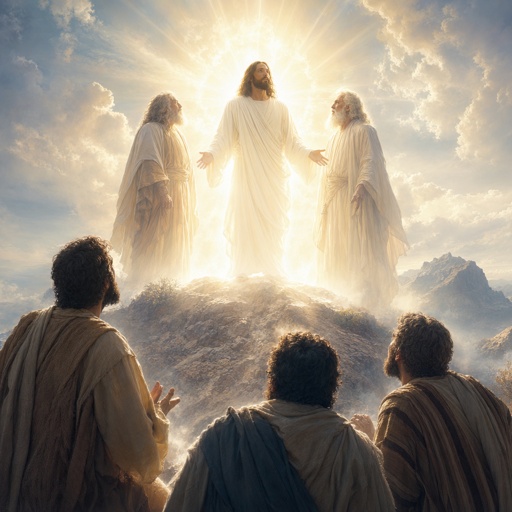
"And his raiment became shining, exceeding white as snow; so as no fuller on earth can white them." - Mark 9:3

Mark 3:31 - "¶ There came then his brethren and his mother, and, standing without, sent unto him, calling him."