What does Mark 6:46 mean?
“And when he had sent them away, he departed into a mountain to pray.” — Mark 6:46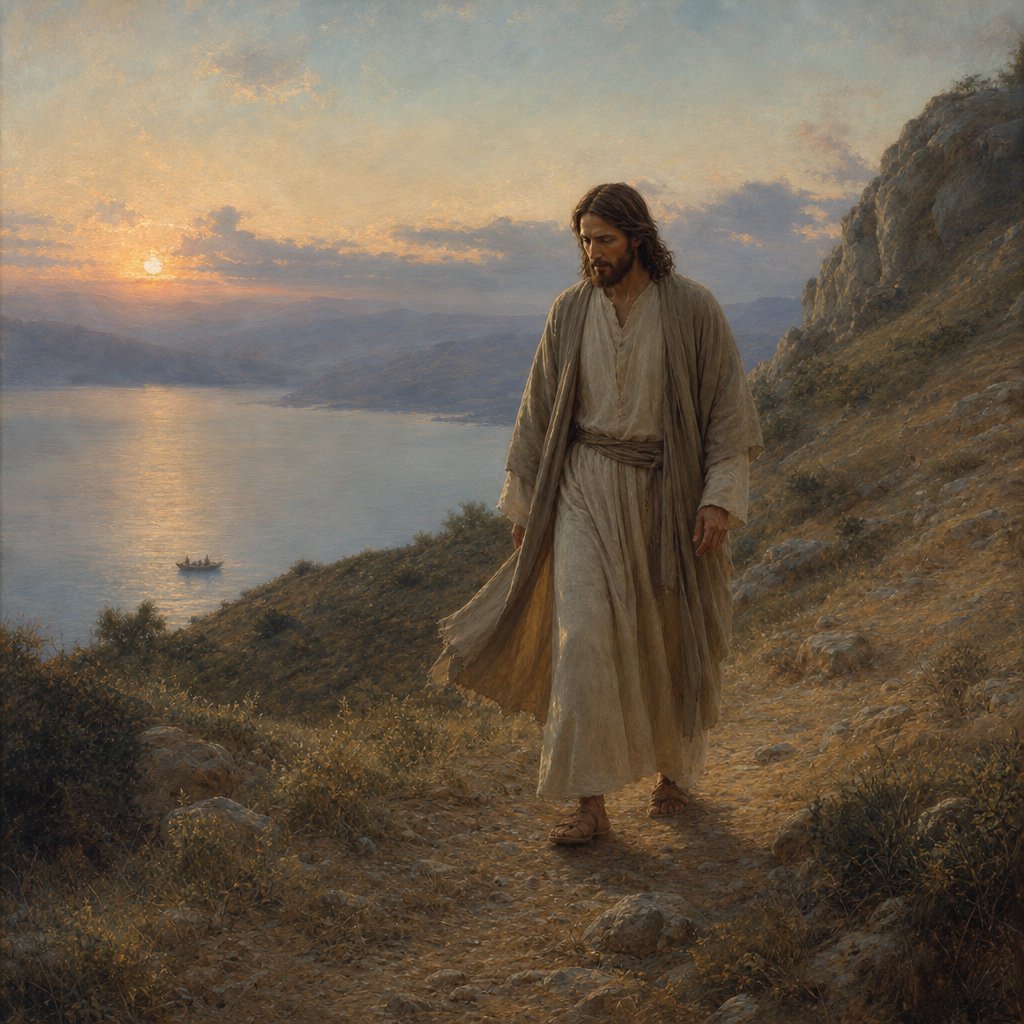
Mark 6:46 in the King James Version reads, “And when he had sent them away, he departed into a mountain to pray.” In its plain sense the verse is simple: after dismissing the crowd, Jesus withdraws alone to a mountain for prayer. Yet in Mark’s telling this small sentence carries the weight of the whole scene around it, revealing who Jesus is, how he serves, and how he walks between public power and private communion with God.
The immediate context is the feeding of the five thousand. Jesus has taken “five loaves, and two fishes,” looked up to heaven, blessed, broken, and given, and the multitude has eaten and been filled (Mark 6:41–42). A miracle has just occurred in full view of the people, and it has happened through Jesus’ hands. In many hearts, such a sign could kindle excitement, misunderstanding, or even a desire to seize the moment for purely earthly conclusions about his identity and mission. Mark places Jesus’ withdrawal to prayer right after he “sent them away,” meaning the crowds, and after he directed his disciples in a purposeful way. The verse therefore functions as a hinge: the public miracle ends, and a private act begins; the feeding gives way to the later scene of the disciples “toiling in rowing” on the sea and Jesus coming unto them (Mark 6:47–48). Mark 6:46 is the quiet center between those events, showing that what follows is not random but is framed by Jesus’ deliberate separation and prayer.
The “mountain” is not merely geography. In Scripture, the mountain often signifies a place of nearness to God, height above the press of the world, and a setting where divine purposes are clarified. In Mark’s narrative, Jesus repeatedly withdraws for communion and to order his ministry, but the mountain intensifies the symbolism. It is a place of solitude, and it sets Jesus apart from the crowd’s expectations. He has just satisfied physical hunger on the plain; now he ascends, as it were, to attend to the will of the Father. The movement from the multitude to the mountain carries the idea that the works of power are not ends in themselves. They flow from a deeper source: dependence, obedience, and communion.
The verse also highlights Jesus’ intentional boundaries. “When he had sent them away” shows authority and purposeful dismissal. He does not remain to bask in acclaim; he disperses the crowd. He is not driven by the momentum of the miracle, but directs the moment. Mark’s Gospel often portrays the pressure of the crowds and the urgency of events, yet here Jesus slows the narrative with a deliberate act. He sends away, and he departs. That rhythm suggests that true ministry is not sustained by public demand but by private prayer.
Prayer here is not presented as a mere habit, but as the proper response to both triumph and strain. Just before the feeding, Jesus had compassion because the people were “as sheep not having a shepherd” (Mark 6:34). He has borne the weight of their need, taught them “many things,” and fed them. After such giving, he returns to prayer. The verse therefore points to the theme that compassion is sustained by communion with God. It also implies that miraculous provision does not make prayer unnecessary; rather, it makes prayer more fitting, because the miracle itself rests on the Father’s will and power.
In Mark’s sequence, this moment of prayer also becomes a kind of hidden bridge to what happens on the sea. Mark tells us that evening came, “the ship was in the midst of the sea, and he alone on the land,” and that Jesus “saw them toiling in rowing” (Mark 6:47–48). Mark 6:46 sets up that contrast: Jesus is alone, elevated, praying; the disciples are on the waters, struggling, exposed. The narrative suggests more than physical distance. It shows that even when the disciples are out on the sea and Jesus is not visibly with them, he is not absent from them. The one who departs to pray is the one who sees. Prayer, in this setting, is tied to watchfulness and care. Jesus’ solitude is not abandonment; it is the posture from which he still perceives and acts for his own.
There is also a subtle theological balance in this verse. Mark has just displayed Jesus’ divine power in feeding thousands. Yet Mark 6:46 shows Jesus in the humble posture of a man of prayer. The verse preserves both truths: Jesus acts with authority and provides beyond human ability, and Jesus also withdraws and prays. The Son is not portrayed as independent of the Father, but as living in communion with him. In a Gospel that emphasizes Jesus’ deeds, this line quietly insists that his works are grounded in his relationship with God.
The act of going “into a mountain” to pray can also be read as a picture of separation before further revelation. After this prayer, Jesus will come “unto them, walking upon the sea” (Mark 6:48). Mark 6:46 stands between bread multiplied and waters subdued. The mountain and the sea form a symbolic pair: the stable height and the restless deep; the place of quiet prayer and the place of strenuous labor. Between them stands Jesus, who prays on the mountain and then comes across the sea. The verse thus participates in Mark’s larger theme that Jesus is Lord over both the needs of the multitude and the chaos that overwhelms the disciples, and that his lordship is exercised in the pattern of prayerful obedience rather than worldly display.
In sum, Mark 6:46 signifies more than Jesus taking a moment alone. It shows him deliberately dismissing public excitement, retreating to a place associated with nearness to God, and grounding mighty works in communion with the Father. It frames the miracle of provision and the coming deliverance on the sea with the truth that the center of Jesus’ mission is not spectacle but prayer, not crowd-pressure but divine purpose, not self-exaltation but obedient fellowship with God.
Get our apps


Artwork for Mark 6:46

Mark 6:46 - "And when he had sent them away, he departed into a mountain to pray."

"And when he had sent them away, he departed into a mountain to pray." - Mark 6:46

"And when he had sent them away, he departed into a mountain to pray." - Mark 6:46
Mark 10:46
Mark 10:46

Mark 10:46

Mark 9:46 - "Where their worm dieth not, and the fire is not quenched."

Mark 14:46 - "¶ And they laid their hands on him, and took him."

"Where their worm dieth not, and the fire is not quenched." - Mark 9:46

"¶ And they laid their hands on him, and took him." - Mark 14:46

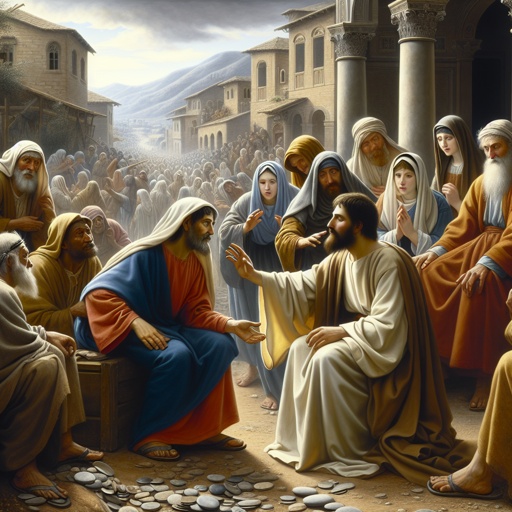
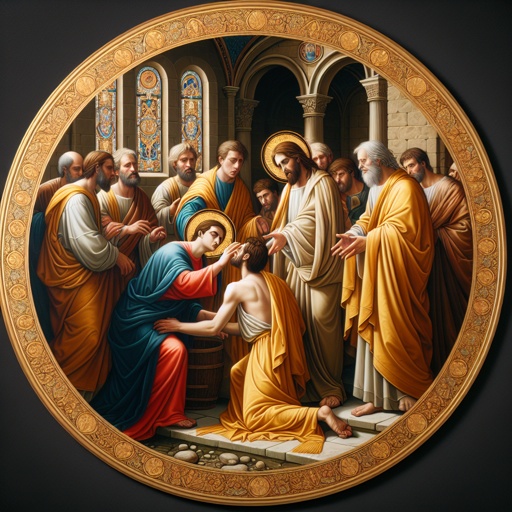
Mark 10:46 (KJVA) 46 And they came to Jericho: and as he went out of Jericho with his disciples and a great number of people, blind Bartimaeus, the son of Timaeus, sat by the highway side begging.

Mark 10:46 - "¶ And they came to Jericho: and as he went out of Jericho with his disciples and a great number of people, blind Bartimaeus, the son of Timaeus, sat by the highway side begging."

1 Chronicles 6:46 - "The son of Amzi, the son of Bani, the son of Shamer,"

Psalms 46:6 - "The heathen raged, the kingdoms were moved: he uttered his voice, the earth melted."

Mark 6:1-6
John 6:46 - "Not that any man hath seen the Father, save he which is of God, he hath seen the Father."

Mark 15:46 - "And he bought fine linen, and took him down, and wrapped him in the linen, and laid him in a sepulchre which was hewn out of a rock, and rolled a stone unto the door of the sepulchre."

Luke 6:46 - "¶ And why call ye me, Lord, Lord, and do not the things which I say?"

Mark 10:46 Now they came to Jericho. As He went out of Jericho with His disciples and a great multitude, blind Bartimaeus, the son of Timaeus, sat by the road begging.

Isaiah 46:6 - "They lavish gold out of the bag, and weigh silver in the balance, and hire a goldsmith; and he maketh it a god: they fall down, yea, they worship."

Ezekiel 46:6 - "And in the day of the new moon it shall be a young bullock without blemish, and six lambs, and a ram: they shall be without blemish."

Genesis 46:6 - "And they took their cattle, and their goods, which they had gotten in the land of Canaan, and came into Egypt, Jacob, and all his seed with him:"

Jeremiah 46:6 - "Let not the swift flee away, nor the mighty man escape; they shall stumble, and fall toward the north by the river Euphrates."

Mark 16:6-8

Mark 16:6-8

Mark 6:6 - "And he marvelled because of their unbelief. And he went round about the villages, teaching."

Mark 16:6-8
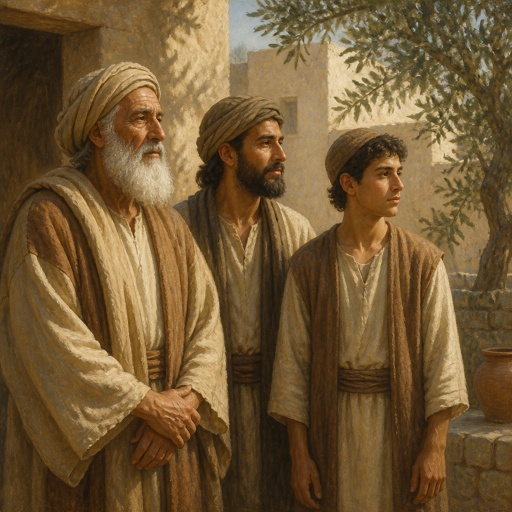
"The son of Amzi, the son of Bani, the son of Shamer," - 1 Chronicles 6:46
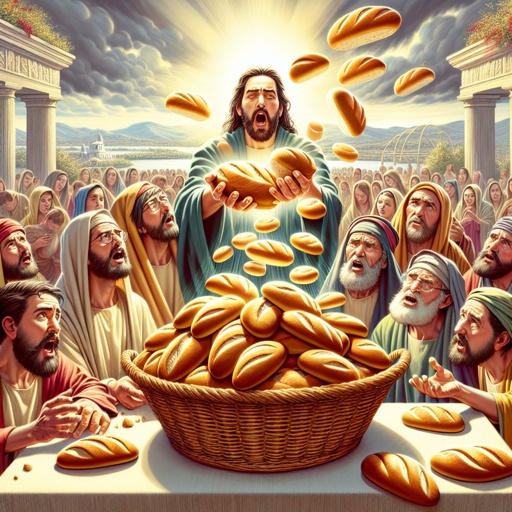
Mark 6:52 - "For they considered not the miracle of the loaves: for their heart was hardened."

Mark 6:32 - "And they departed into a desert place by ship privately."