What does Mark 7:28 mean?
“And she answered and said unto him, Yes, Lord: yet the dogs under the table eat of the children’s crumbs.” — Mark 7:28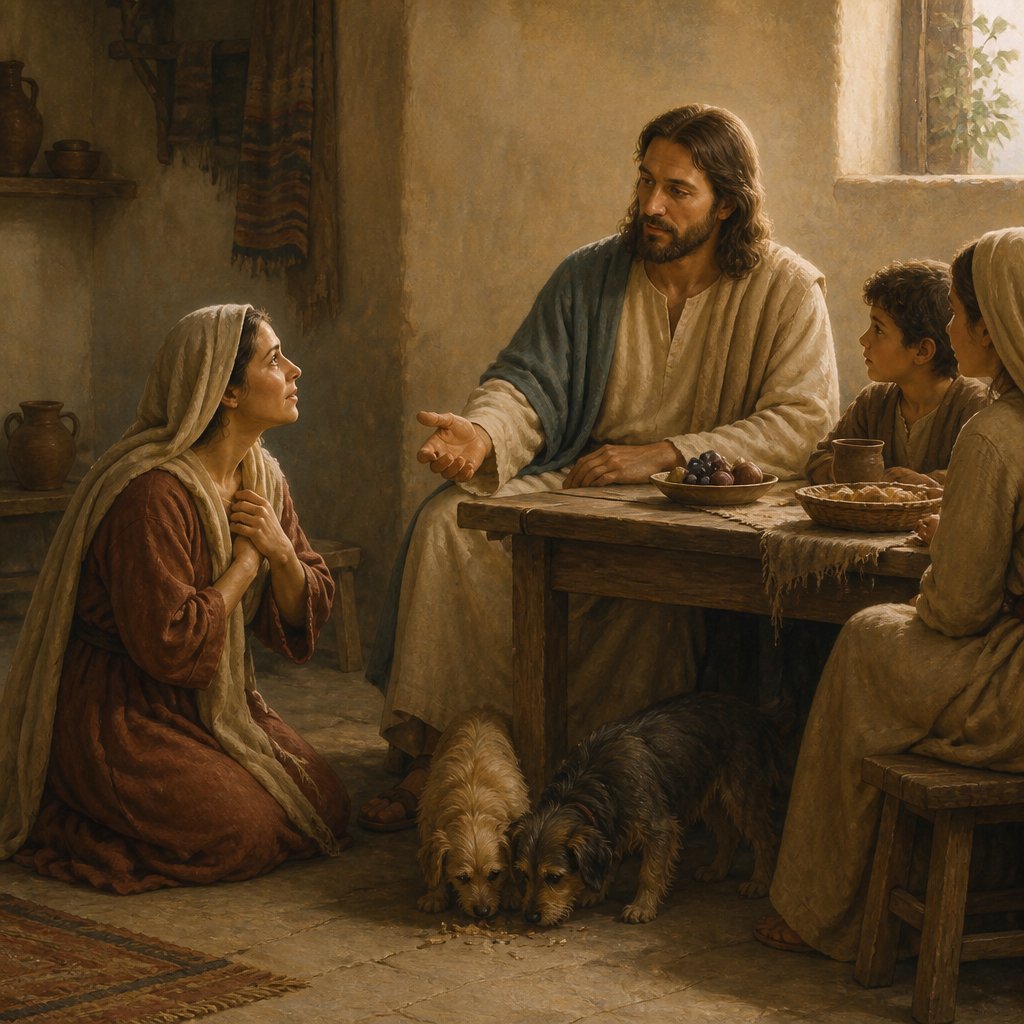
Mark 7:28 - "And she answered and said unto him, Yes, Lord: yet the dogs under the table eat of the children's crumbs."
This verse is part of a story in the New Testament where Jesus encounters a Syrophoenician woman who comes to Him seeking healing for her daughter. The woman, despite being a Gentile, shows great faith in Jesus and is ultimately rewarded for her persistence and faith.
In this verse, the woman acknowledges the cultural boundaries between Jews and Gentiles by referring to herself and her people as dogs under the table, while recognizing the privilege of the Jews as the "children" who partake of the bread at the table. However, she also expresses her belief in the abundance of Jesus' grace, even the "crumbs" of which would be sufficient to bring healing to her daughter.
The themes present in this verse include faith, humility, and the inclusivity of Jesus' ministry. The woman's response demonstrates her unwavering faith in Jesus' ability to heal, despite the obstacles of cultural and religious differences. Her humility is evident in her willingness to accept even the smallest gesture or blessing from Jesus, as she believes that even the "crumbs" of His grace are enough to bring healing and restoration. This reflects the idea that Jesus' message and love are not meant exclusively for a certain group of people, but are available to all who approach Him with sincere faith and humility.
The context of this verse is important for understanding its significance. At the time, the Jews considered Gentiles to be unclean and unworthy of receiving God's blessings. This encounter between Jesus and the Syrophoenician woman challenges this belief and illustrates the universal nature of Jesus' ministry. Through this interaction, Jesus shows that His love and power are not limited by cultural or religious boundaries. This is a powerful message of inclusivity and demonstrates Jesus' willingness to embrace and bless all who come to Him in faith.
The symbolism in this verse is rich and profound. The table represents the abundance of God's blessings and the children symbolize the Jewish people who were considered the privileged recipients of these blessings. The dogs, in this context, symbolize the Gentiles who were seen as outsiders and unworthy of God's grace. However, the woman's response challenges this notion by affirming her belief in the abundance of Jesus' grace and her willingness to accept even the smallest portion of it.
This verse also symbolizes the idea of divine abundance and generosity. The crumbs that fall from the table represent the overflow of blessings from God, and the woman's faith in the healing power of even these crumbs illustrates the limitless nature of God's grace. This challenges the idea of scarcity and exclusivity in terms of God's blessings, emphasizing that His love and healing are available to all who seek Him in faith.
In conclusion, Mark 7:28 is a powerful and insightful verse that highlights the themes of faith, humility, and inclusivity in Jesus' ministry. The context and symbolism of this verse provide a deeper understanding of its significance in the larger narrative of the New Testament. It serves as a reminder of the universal nature of God's love and the accessibility of His blessings to all who approach Him with sincere faith and humility.
Get our apps


Artwork for Mark 7:28

Mark 7:28 - "And she answered and said unto him, Yes, Lord: yet the dogs under the table eat of the children's crumbs."
"And she answered and said unto him, Yes, Lord: yet the dogs under the table eat of the children's crumbs." - Mark 7:28

Mark 13:28-37

Mark 13:28-37

Mark 13:28-37

Mark 13:28-37

Mark 2:28 - "Therefore the Son of man is Lord also of the sabbath."

Mark 15:28 - "And the scripture was fulfilled, which saith, And he was numbered with the transgressors."

Mark 14:28 - "But after that I am risen, I will go before you into Galilee."

Mark 8:28 - "And they answered, John the Baptist: but some say, Elias; and others, One of the prophets."

Mark 6:28 - "And brought his head in a charger, and gave it to the damsel: and the damsel gave it to her mother."

Mark 5:28 - "For she said, If I may touch but his clothes, I shall be whole."

Mark 13:7

Mark 1:28 - "And immediately his fame spread abroad throughout all the region round about Galilee."

Mark 13:7

Mark 8:7

Mark 13:7

Mark 4:28 - "For the earth bringeth forth fruit of herself; first the blade, then the ear, after that the full corn in the ear."

Mark 7:7 - "Howbeit in vain do they worship me, teaching for doctrines the commandments of men."

Mark 10:28 - "¶ Then Peter began to say unto him, Lo, we have left all, and have followed thee."

Mark 7:31-37

Mark 7:31-37

Mark 11:28 - "And say unto him, By what authority doest thou these things? and who gave thee this authority to do these things?"

"Therefore the Son of man is Lord also of the sabbath." - Mark 2:28

Mark 9:28 - "And when he was come into the house, his disciples asked him privately, Why could not we cast him out?"

"And the scripture was fulfilled, which saith, And he was numbered with the transgressors." - Mark 15:28

Mark 2:27-28 - "And he said unto them, The sabbath was made for man, and not man for the sabbath: Therefore the Son of man is Lord also of the sabbath."

1 Samuel 28:7

Mark 3:28 - "Verily I say unto you, All sins shall be forgiven unto the sons of men, and blasphemies wherewith soever they shall blaspheme:"

Mark 7:7 (KJVA) 7 Howbeit in vain do they worship me, teaching for doctrines the commandments of men.