What does Mark 7:31 mean?
“And again, departing from the coasts of Tyre and Sidon, he came unto the sea of Galilee, through the midst of the coasts of Decapolis.” — Mark 7:31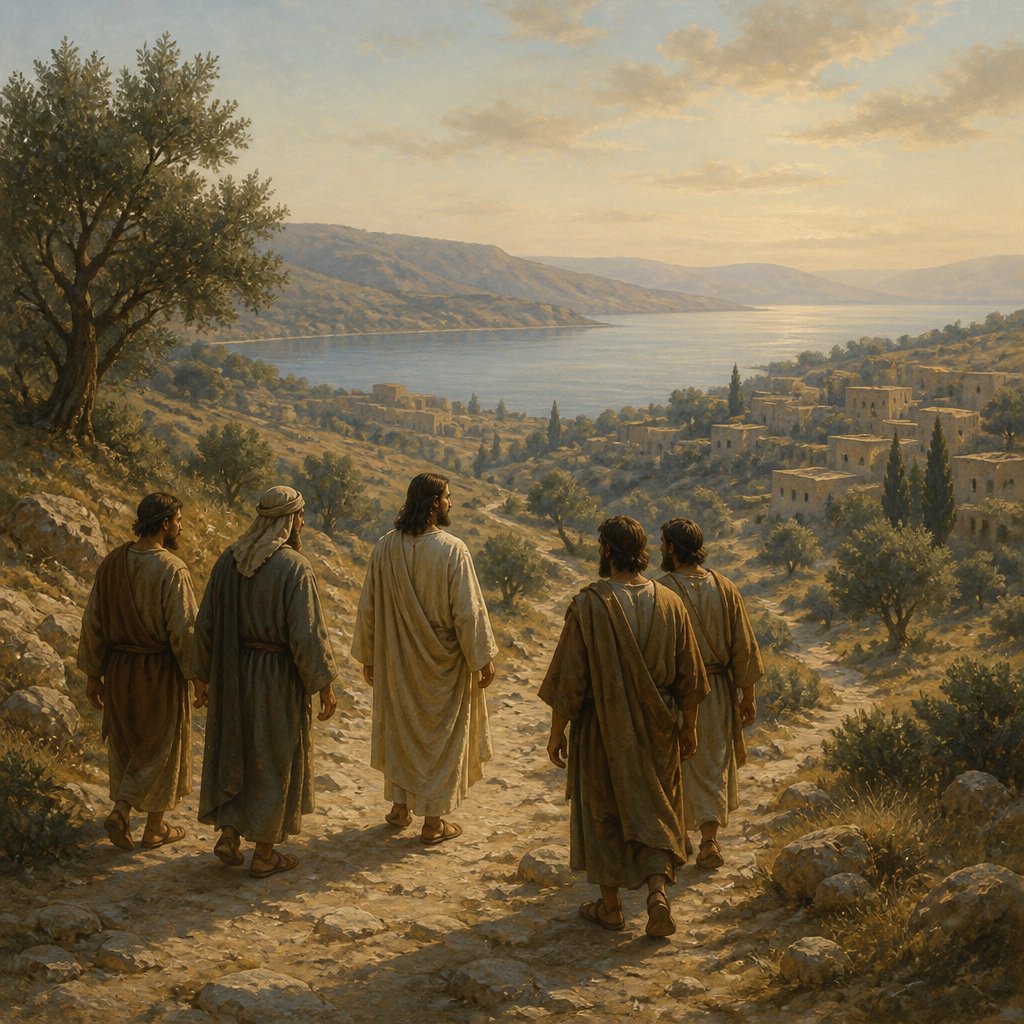
The Bible verse Mark 7:31 from the King James Version (KJV) reads, "And again, departing from the coasts of Tyre and Sidon, he came unto the sea of Galilee, through the midst of the coasts of Decapolis."
In order to fully understand the meaning and significance of this verse, it is important to consider the context in which it is found. In the preceding verses of Mark 7, Jesus is engaging in a discussion with the Pharisees and scribes about the concept of purity. The Pharisees had questioned why Jesus' disciples did not follow the tradition of washing their hands before eating, as was customary among the Jews. In response, Jesus rebuked the Pharisees for adhering to mere human tradition and neglecting the commandments of God. He emphasized that true purity comes from the heart, not external rituals.
Following this confrontation, Jesus departs from the region of Tyre and Sidon, Gentile territories where he had performed miracles and encountered strong faith. The sea of Galilee, or Lake Tiberias, was a significant location in Jesus' ministry, as it was the setting for many of his miracles and teachings.
As Jesus travels through the midst of the coasts of Decapolis, he continues to demonstrate his compassion and power through his interactions with the people. This region was primarily inhabited by Gentiles, and Jesus' presence there signifies his ministry to all people, regardless of their ethnic or cultural background. His mission was to bring salvation and healing to all nations, in fulfillment of the prophetic promise that all the nations of the earth would be blessed through the seed of Abraham (Genesis 22:18).
The verse also highlights the geographical dimension of Jesus' ministry. His movements through different regions reflect his purpose to reach out to diverse communities and individuals, transcending boundaries and barriers. This underscores the universal scope of Jesus' message and his mission to reconcile humanity with God.
Symbolically, the sea of Galilee and the coasts of Decapolis can also be seen as representations of the human condition. The sea, often associated with chaos and uncertainty in the Bible, may symbolize the tumultuous nature of human existence. In contrast, the coasts of Decapolis may symbolize the opportunity for transformation and healing, as Jesus brings his message of hope and restoration to these regions.
Overall, Mark 7:31 captures the essence of Jesus' ministry, illustrating his compassion, inclusivity, and commitment to bring salvation to all people. It emphasizes the significance of his mission in transcending cultural and geographical barriers, and his ultimate goal to bring about spiritual renewal and healing for humanity. It also serves as a reminder for believers to embrace the universal nature of the gospel and to engage in mission and outreach to diverse communities, following the example set by Jesus during his earthly ministry.
Get our apps


Artwork for Mark 7:31

Mark 7:31-37

Mark 7:31-37

Mark 7:31 - "¶ And again, departing from the coasts of Tyre and Sidon, he came unto the sea of Galilee, through the midst of the coasts of Decapolis."
"¶ And again, departing from the coasts of Tyre and Sidon, he came unto the sea of Galilee, through the midst of the coasts of Decapolis." - Mark 7:31
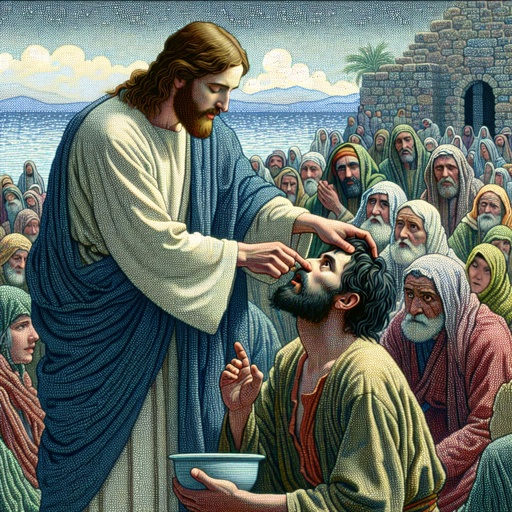
Mark 7:31-37 Then Jesus left the area of Tyre and went through Sidon. He went down to the Sea of Galilee and into the area known as the Ten Cities. There some people brought a man to Jesus. The man was deaf and could hardly speak. They begged Jesus to place his hand on the man. Jesus took the man to one side, away from the crowd. He put his fingers into the man’s ears. Then he spit and touched the man’s tongue. Jesus looked up to heaven. With a deep sigh, he said to the man, “Ephphatha!” That means “Be opened!” The man’s ears were opened. His tongue was freed up, and he began to speak clearly. Jesus ordered the people not to tell anyone. But the more he did so, the more they kept talking about it. People were really amazed. “He has done everything well,” they said. “He even makes deaf people able to hear. And he makes those who can’t speak able to talk.”

Mark 7:31-37 Then Jesus left the area of Tyre and went through Sidon. He went down to the Sea of Galilee and into the area known as the Ten Cities. There some people brought a man to Jesus. The man was deaf and could hardly speak. They begged Jesus to place his hand on the man. Jesus took the man to one side, away from the crowd. He put his fingers into the man’s ears. Then he spit and touched the man’s tongue. Jesus looked up to heaven. With a deep sigh, he said to the man, “Ephphatha!” That means “Be opened!” The man’s ears were opened. His tongue was freed up, and he began to speak clearly. Jesus ordered the people not to tell anyone. But the more he did so, the more they kept talking about it. People were really amazed. “He has done everything well,” they said. “He even makes deaf people able to hear. And he makes those who can’t speak able to talk.”

Mark 7:31-37 Then Jesus left the area of Tyre and went through Sidon. He went down to the Sea of Galilee and into the area known as the Ten Cities. There some people brought a man to Jesus. The man was deaf and could hardly speak. They begged Jesus to place his hand on the man. Jesus took the man to one side, away from the crowd. He put his fingers into the man’s ears. Then he spit and touched the man’s tongue. Jesus looked up to heaven. With a deep sigh, he said to the man, “Ephphatha!” That means “Be opened!” The man’s ears were opened. His tongue was freed up, and he began to speak clearly. Jesus ordered the people not to tell anyone. But the more he did so, the more they kept talking about it. People were really amazed. “He has done everything well,” they said. “He even makes deaf people able to hear. And he makes those who can’t speak able to talk.”

Mark 7:31-37 Then Jesus left the area of Tyre and went through Sidon. He went down to the Sea of Galilee and into the area known as the Ten Cities. There some people brought a man to Jesus. The man was deaf and could hardly speak. They begged Jesus to place his hand on the man. Jesus took the man to one side, away from the crowd. He put his fingers into the man’s ears. Then he spit and touched the man’s tongue. Jesus looked up to heaven. With a deep sigh, he said to the man, “Ephphatha!” That means “Be opened!” The man’s ears were opened. His tongue was freed up, and he began to speak clearly. Jesus ordered the people not to tell anyone. But the more he did so, the more they kept talking about it. People were really amazed. “He has done everything well,” they said. “He even makes deaf people able to hear. And he makes those who can’t speak able to talk.”

Mark 10:31

Mark 3:31-34

Mark 10:31 - "But many that are first shall be last; and the last first."

Mark 13:31 - "Heaven and earth shall pass away: but my words shall not pass away."

Mark 3:31 - "¶ There came then his brethren and his mother, and, standing without, sent unto him, calling him."

Job 33:31 - "Mark well, O Job, hearken unto me: hold thy peace, and I will speak."

Mark 4:31 - "It is like a grain of mustard seed, which, when it is sown in the earth, is less than all the seeds that be in the earth:"

Mark 13:7

Mark 12:31 - "And the second is like, namely this, Thou shalt love thy neighbour as thyself. There is none other commandment greater than these."

Mark 13:7

Mark 8:7

Mark 13:7

"But many that are first shall be last; and the last first." - Mark 10:31

Mark 11:31 - "And they reasoned with themselves, saying, If we shall say, From heaven; he will say, Why then did ye not believe him?"

Mark 5:31 - "And his disciples said unto him, Thou seest the multitude thronging thee, and sayest thou, Who touched me?"

Mark 7:7 - "Howbeit in vain do they worship me, teaching for doctrines the commandments of men."

Mark 15:31 - "Likewise also the chief priests mocking said among themselves with the scribes, He saved others; himself he cannot save."

Mark 1:31 - "And he came and took her by the hand, and lifted her up; and immediately the fever left her, and she ministered unto them."

Mark 14:31 - "But he spake the more vehemently, If I should die with thee, I will not deny thee in any wise. Likewise also said they all."

Nehemiah 7:31 - "The men of Michmas, an hundred and twenty and two."

Mark 7:7 (KJVA) 7 Howbeit in vain do they worship me, teaching for doctrines the commandments of men.

Mark 7:7 (KJVA) 7 Howbeit in vain do they worship me, teaching for doctrines the commandments of men.