What does Mark 8:1 mean?
“In those days the multitude being very great, and having nothing to eat, Jesus called his disciples unto him, and saith unto them,” — Mark 8:1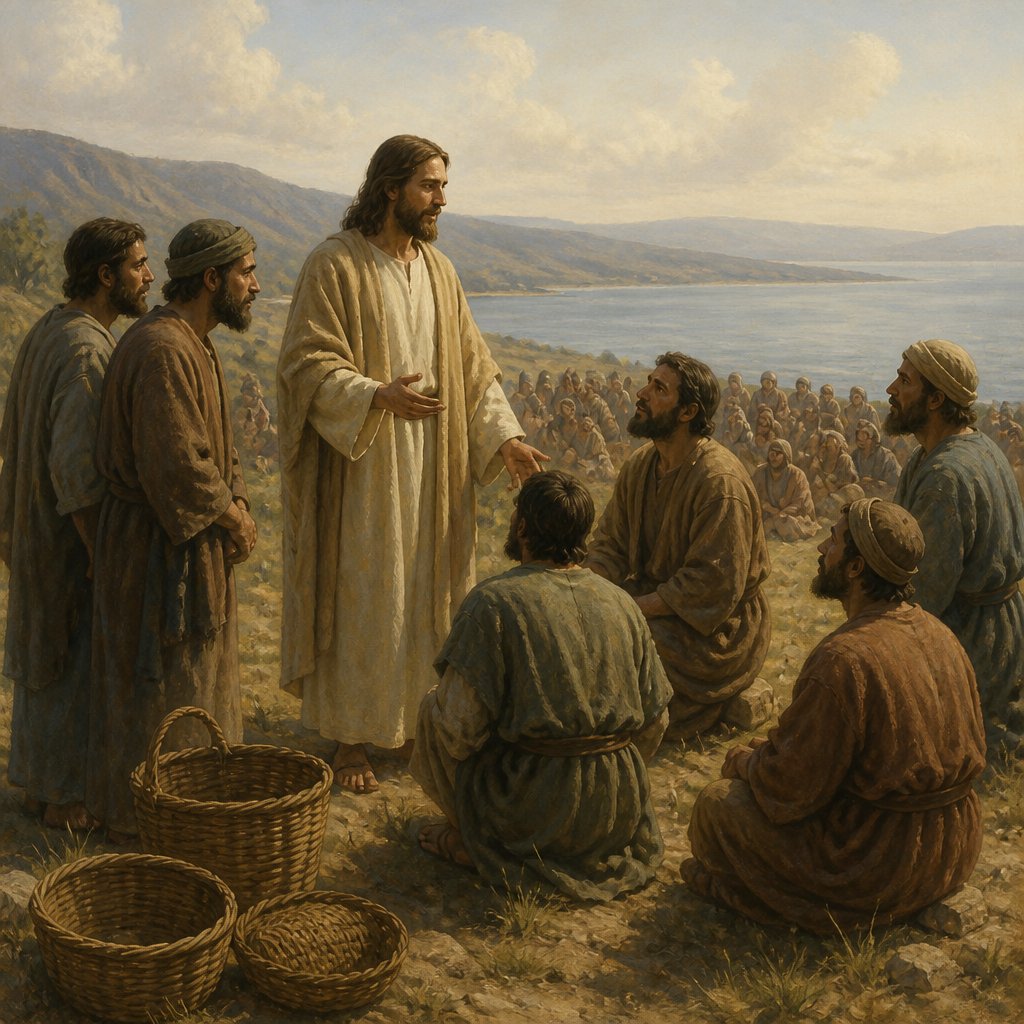
The Bible verse Mark 8:1 in the King James Version (KJV) reads, "In those days the multitude being very great, and having nothing to eat, Jesus called his disciples unto him, and saith unto them,"I have compassion on the multitude, because they have now been with me three days, and have nothing to eat." This passage takes place in the Gospel of Mark, in the New Testament of the Bible, and is a pivotal moment in the ministry of Jesus Christ.
The context of this verse is important in understanding its significance. Prior to this passage, Jesus had been performing numerous miracles and teaching his disciples and the crowds that followed him. In Mark 6, Jesus feeds the 5,000 with only five loaves of bread and two fish, demonstrating his power and compassion to provide for the physical needs of those who followed him. In Mark 7, Jesus heals a deaf and mute man, further demonstrating his miraculous abilities. The passage in Mark 8:1 occurs after these events, as Jesus has continued to gather a large following, with the multitude being very great.
One of the themes present in this verse is the compassionate nature of Jesus. He sees the multitude, who have been with him for three days, and recognizes their physical need for food. Despite the disciples’ lack of resources, Jesus takes the initiative to address the situation, showing his care and concern for the people who have followed him. This theme of compassion is central to the ministry of Jesus and is a recurring motif throughout the Gospels.
The significance of the number three is also worth noting in this passage. The fact that the multitude had been with Jesus for three days emphasizes their dedication and commitment to following him. It also parallels the three days that Jesus would later spend in the tomb before being resurrected, further foreshadowing the pivotal events of his crucifixion and resurrection.
The symbolism in this verse is important to unpack as well. The physical hunger of the multitude can be seen as symbolic of their spiritual hunger for the word of God. Jesus recognizes their need for sustenance and acts to provide for it, mirroring his role as the bread of life who satisfies the spiritual hunger of all who come to him. This parallels the earlier event in Mark 6 where Jesus miraculously feeds the 5,000, demonstrating his ability to provide for the needs of his followers.
Additionally, the disciples' lack of resources highlights their reliance on Jesus for provision. This serves as a reminder that our own human efforts are insufficient, and we must look to Jesus as the ultimate source of sustenance and provision in our lives. This theme of dependence on Christ is a central aspect of the Christian faith and is exemplified in this passage.
In conclusion, Mark 8:1 in the King James Version provides a rich and multi-layered account of Jesus’ compassion, the dedication of his followers, and the provision he offers to meet their needs. Through its themes of compassion, dedication, and provision, as well as its symbolic significance, this verse serves as a powerful reminder of Jesus’ role as the bread of life and the ultimate source of sustenance for all who come to him. It is a testament to his compassion and care for those who follow him, and a poignant illustration of his ability to meet our physical and spiritual needs.
Get our apps


Artwork for Mark 8:1

Mark 8:1 - "In those days the multitude being very great, and having nothing to eat, Jesus called his disciples unto him, and saith unto them,"
"In those days the multitude being very great, and having nothing to eat, Jesus called his disciples unto him, and saith unto them," - Mark 8:1

Mark 1:8 - "I indeed have baptized you with water: but he shall baptize you with the Holy Ghost."

Mark 8:35

Mark 8:35

Mark 12:8

Mark 13:8

Mark 13:8

Mark 8:35

Mark 13:8

Mark 8:7

Mark 8:35

Mark 12:8

Mark 2:8

Mark 8:27 - 35

Mark 8:27 - 35

Mark 16:6-8

Mark 8:27 - 35

Mark 8:27 - 35

Mark 16:6-8

Mark 8:27 - 35

Mark 16:6-8

Mark 8:8 - "So they did eat, and were filled: and they took up of the broken meat that was left seven baskets."

Mark 8:30 - "And he charged them that they should tell no man of him."

Mark 8:37 - "Or what shall a man give in exchange for his soul?"

Mark 8:16 - "And they reasoned among themselves, saying, It is because we have no bread."

"I indeed have baptized you with water: but he shall baptize you with the Holy Ghost." - Mark 1:8

Mark 8:21 - "And he said unto them, How is it that ye do not understand?"

Mark 12:8 - "And they took him, and killed him, and cast him out of the vineyard."

Mark 10:8 - "And they twain shall be one flesh: so then they are no more twain, but one flesh."