What does Mark 8:29 mean?
“And he saith unto them, But whom say ye that I am? And Peter answereth and saith unto him, Thou art the Christ.” — Mark 8:29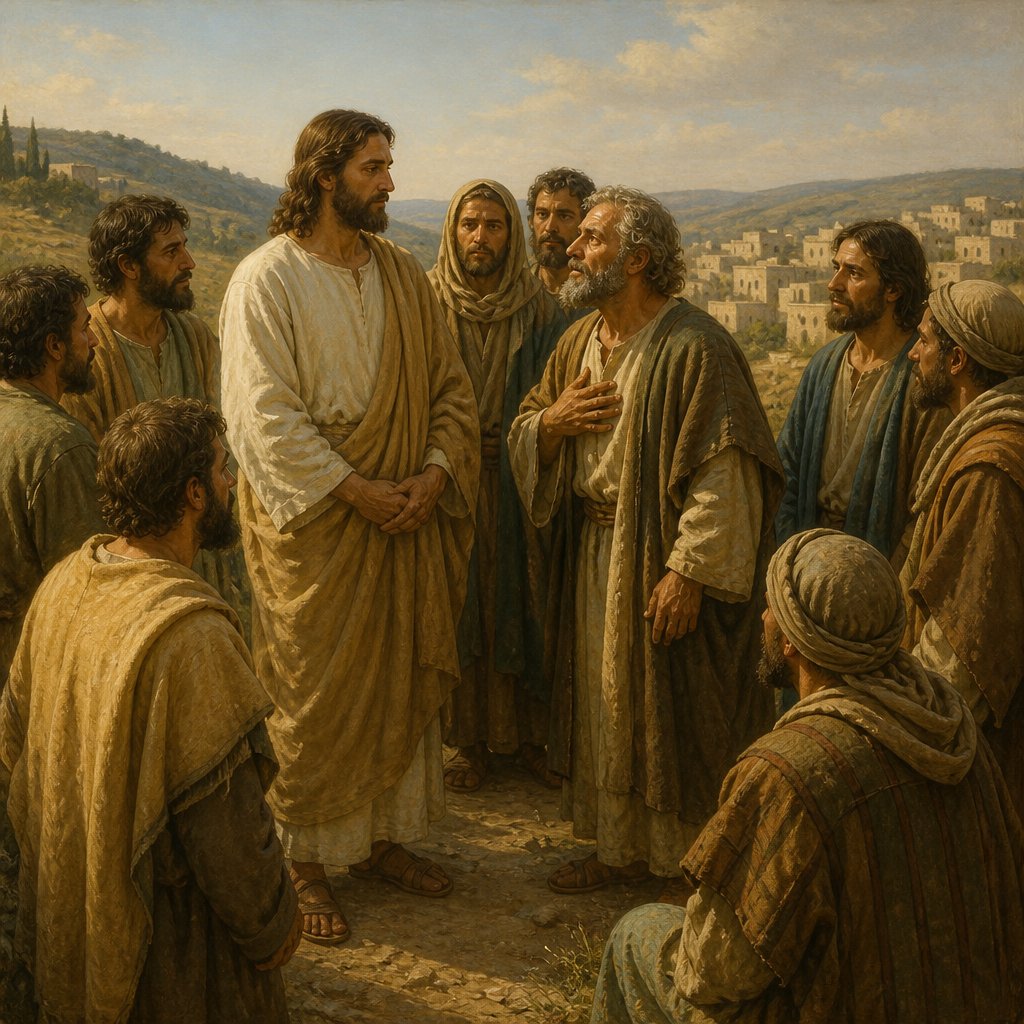
In the King James Version of the Bible, Mark 8:29 reads, "And he saith unto them, But whom say ye that I am? And Peter answereth and saith unto him, Thou art the Christ." This verse is a pivotal moment in the Gospel of Mark, as it represents the first time that one of Jesus' disciples openly acknowledges him as the Messiah.
The context of this verse is important to understand its significance. Prior to Peter's declaration, Jesus asks his disciples who people say that he is. They reply with various answers, such as John the Baptist, Elijah, or one of the prophets. Then Jesus poses the question directly to his disciples, asking them who they believe him to be. It is Peter who answers on behalf of the group, proclaiming, "Thou art the Christ." In this moment, Peter affirms his belief that Jesus is the long-awaited Messiah, the Anointed One who was prophesied to come and save the people of Israel.
The theme of identity is central to this verse, as it revolves around the question of Jesus' true nature and purpose. Throughout the Gospel of Mark, there is a sense of mystery surrounding Jesus' identity. He performs miracles, teaches with authority, and displays a deep spiritual awareness, leading people to wonder about his true nature. This verse serves as a turning point in the narrative, as Peter's confession marks a significant moment of clarity and revelation. It is the first time that one of Jesus' disciples openly acknowledges him as the Christ, signaling a deepening understanding of Jesus' divine nature.
The symbolism in this verse is rich and layered. The title "Christ" itself holds significant symbolic meaning, as it is the Greek equivalent of the Hebrew title "Messiah." Both terms carry the weight of centuries of Jewish hope and expectation for a deliverer who would rescue the people from oppression and establish God's kingdom on earth. When Peter identifies Jesus as the Christ, he is affirming his belief in Jesus as the fulfillment of these ancient prophecies and the embodiment of God's redemptive plan.
Furthermore, Peter's confession serves as a symbolic representation of faith. In that moment, Peter acts as a representative of all those who would come to believe in Jesus as the Messiah. His declaration signifies a crucial moment of recognition and acceptance, as well as a willingness to follow Jesus in his role as the Christ. This theme of faith and discipleship is further explored in the subsequent verses, as Jesus goes on to explain the implications of his identity as the Christ and the sacrifices that will be required of those who choose to follow him.
Overall, Mark 8:29 holds deep theological significance within the larger narrative of the Gospel of Mark. It serves as a pivotal moment of recognition and affirmation of Jesus' true identity as the Christ, while also highlighting the themes of faith, discipleship, and the fulfillment of divine prophecy. In this verse, Peter's confession stands as a symbol of the hope and belief that Jesus inspired in his followers, and it serves as a foundational declaration of the Christian faith.
Get our apps


Artwork for Mark 8:29

Mark 8:29 - "And he saith unto them, But whom say ye that I am? And Peter answereth and saith unto him, Thou art the Christ."
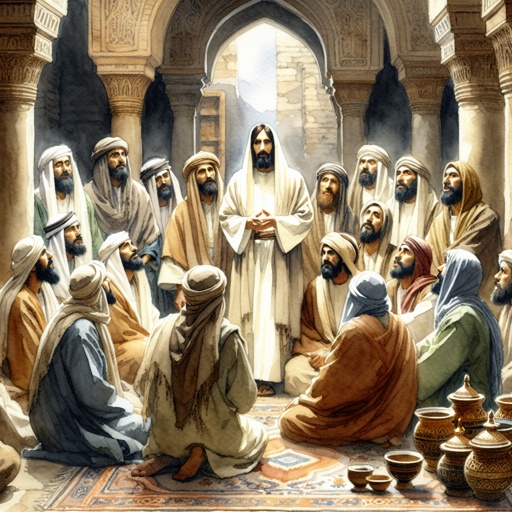
‘But you,’ Jesus asked them, ‘Who do you say I am?’ (Mk 8:29)

Peter said, ‘You are the Christ!’ And Jesus gave them strict orders not to tell anyone about him. (Mk 8:29)
"And he saith unto them, But whom say ye that I am? And Peter answereth and saith unto him, Thou art the Christ." - Mark 8:29

Mark 14:29 - "But Peter said unto him, Although all shall be offended, yet will not I."

Mark 6:29 - "And when his disciples heard of it, they came and took up his corpse, and laid it in a tomb."

Mark 8:35

Mark 8:35

Mark 12:8

Mark 13:8
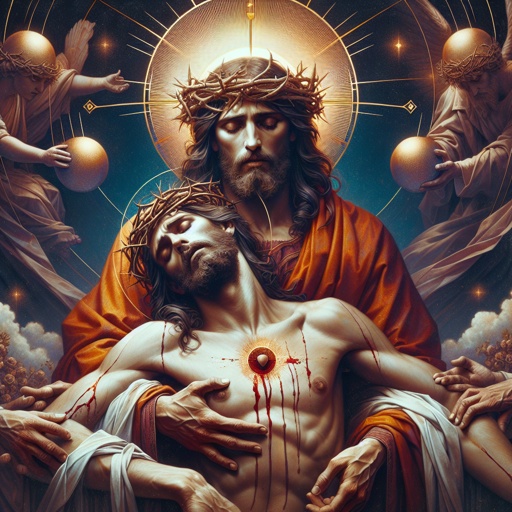
Mark 13:8

Mark 4:29 - "But when the fruit is brought forth, immediately he putteth in the sickle, because the harvest is come."

Mark 9:29 - "And he said unto them, This kind can come forth by nothing, but by prayer and fasting."

Mark 8:35

Mark 13:8

Mark 8:7

Mark 8:35

Mark 12:8

Mark 2:8

Mark 1:29 - "And forthwith, when they were come out of the synagogue, they entered into the house of Simon and Andrew, with James and John."

Genesis 29-8

Romans 8:29

Mark 5:29 - "And straightway the fountain of her blood was dried up; and she felt in her body that she was healed of that plague."

Mark 7:29 - "And he said unto her, For this saying go thy way; the devil is gone out of thy daughter."

Mark 15:29 - "And they that passed by railed on him, wagging their heads, and saying, Ah, thou that destroyest the temple, and buildest it in three days,"

Mark 8:27 - 35

Mark 8:27 - 35

Mark 16:6-8

Mark 8:27 - 35

Mark 8:27 - 35