What does Mark 9:3 mean?
“And his raiment became shining, exceeding white as snow; so as no fuller on earth can white them.” — Mark 9:3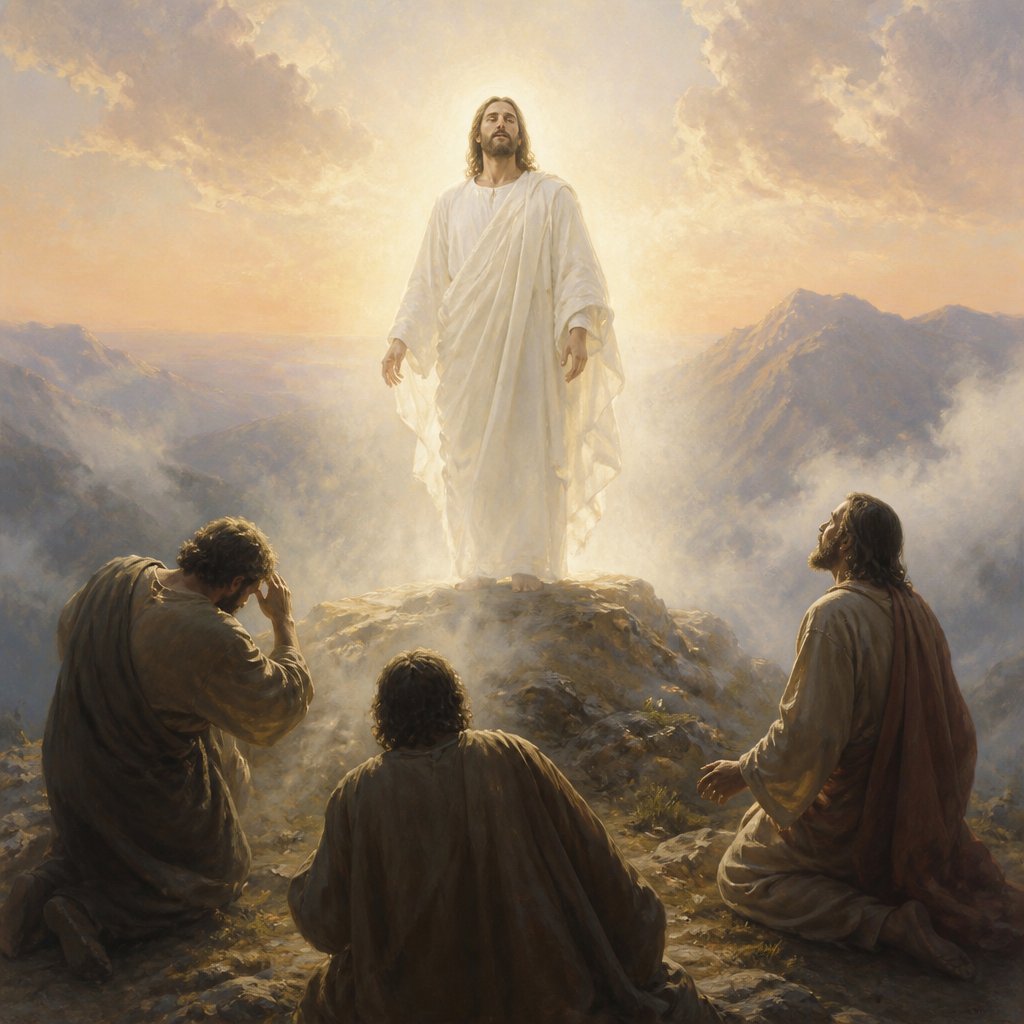
Mark 9:3 in the KJV reads, “And his raiment became shining, exceeding white as snow; so as no fuller on earth can white them.” The verse belongs to the account of the transfiguration of Jesus, a moment in which His hidden glory is briefly unveiled before chosen witnesses. In context, Mark says that Jesus “taketh with him Peter, and James, and John, and leadeth them up into an high mountain apart by themselves” and then “he was transfigured before them” (Mark 9:2). Mark 9:3 is the vivid description of what that transfiguration looked like, focusing on Jesus’ “raiment,” His clothing, as it becomes impossibly radiant and pure.
The immediate meaning is that something other than ordinary earthly light or cleanliness is being revealed. Mark describes the clothing as “shining” and “exceeding white as snow,” then adds a comparison drawn from everyday life: “so as no fuller on earth can white them.” A fuller was a cleaner and finisher of cloth, someone who could make garments bright through washing and processing. By insisting that no fuller “on earth” could produce such whiteness, the verse deliberately pushes the reader beyond natural explanation. This is not merely Jesus appearing well-dressed or illuminated by sunlight; it is a supernatural manifestation, a holiness and glory that cannot be manufactured by human skill. The phrase “on earth” matters because it contrasts earthly processes with heavenly reality: what appears is not achieved from below but bestowed from above.
The theme of revealed glory runs through the whole scene. Mark’s Gospel often presents Jesus as the true Christ while also showing that His identity is not fully grasped until the proper time. The transfiguration functions as an unveiling: the disciples are given a glimpse of who Jesus truly is, not only in His humility but in His majesty. Mark 9:3, by centering on the dazzling whiteness of His raiment, communicates purity, victory, and divine splendor. In Scripture, white garments commonly signify cleanness, righteousness, and heavenly honor. Here, the whiteness is “exceeding,” surpassing the best that earth can produce, as though to say that the righteousness and glory on display are not simply moral improvement or ceremonial cleanliness but the radiance belonging to the Son in relation to God.
The symbolism of clothing itself is significant. Raiment is outward and visible, and in this moment Jesus’ outward appearance corresponds to His inner reality. The disciples have known Him in ordinary form, walking dusty roads and eating with them, yet Mark 9:3 indicates that His ordinary appearance was not the limit of His person. The transformation of the raiment points to an identity that exceeds what human eyes usually perceive. The imagery of whiteness “as snow” stresses purity and brilliance, but also evokes an almost unapproachable brightness. Snow is a natural picture of whiteness known to all; Mark chooses it because it communicates both beauty and stark clarity. Yet he immediately surpasses even that comparison by adding that no earthly fuller can match it, guarding the reader from thinking it is merely an especially bright natural white.
This verse also serves the wider narrative purpose of strengthening the disciples for what is coming. The transfiguration occurs after Jesus begins to speak plainly about suffering and death. Just before this, Jesus teaches about self-denial and taking up the cross (Mark 8:34–38), and He speaks of “the Son of man” coming “in the glory of his Father with the holy angels” (Mark 8:38). Mark 9:3 is a foretaste of that promised glory. It stands as a divine counterweight to the scandal of the cross: the One who will suffer is not defeated in essence; His suffering is not the collapse of His identity but part of His mission. The shining raiment functions like a glimpse behind the veil, revealing that humiliation will not be the final word.
The transfiguration also has strong connections to Old Testament patterns of God’s presence. In the broader passage, Moses and Elias appear with Jesus (Mark 9:4), and a cloud overshadows them with a voice declaring, “This is my beloved Son: hear him” (Mark 9:7). Mark 9:3’s brightness fits into that atmosphere of divine revelation, akin to moments when God’s presence is associated with glory and overwhelming light. The disciples are not merely seeing a miracle; they are standing in a scene of revelation in which Jesus is shown as the beloved Son, and His glory is depicted in tangible, visible terms.
In significance, then, Mark 9:3 is not a decorative detail but a theological sign. It declares that Jesus’ glory is real, heavenly, and incomparable; that His holiness is not a human attainment but a divine reality; and that the path of suffering He will walk does not negate His majesty. The raiment “exceeding white as snow” tells the reader that in Jesus the world is encountering more than a prophet or teacher. The impossible whiteness—beyond what any “fuller on earth” can achieve—signals that what is being revealed is of God, and that the disciples’ understanding of Jesus must expand to include His transcendent glory as well as His coming suffering.
Get our apps


Artwork for Mark 9:3
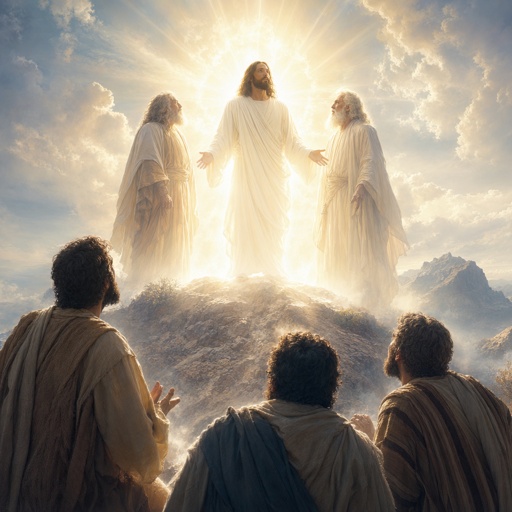
"And his raiment became shining, exceeding white as snow; so as no fuller on earth can white them." - Mark 9:3

Mark 9:3 - "And his raiment became shining, exceeding white as snow; so as no fuller on earth can white them."
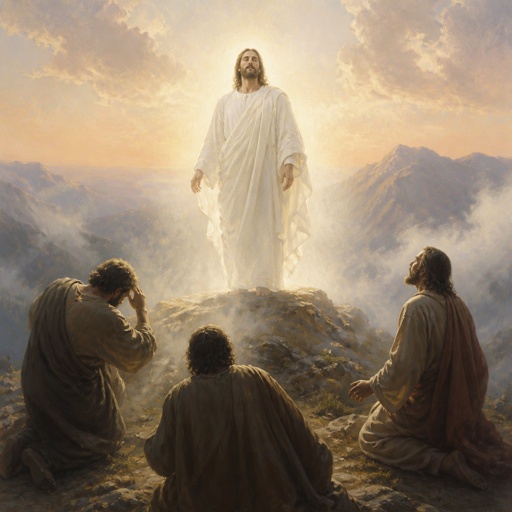
"And his raiment became shining, exceeding white as snow; so as no fuller on earth can white them." - Mark 9:3

Mark 3:9 - "And he spake to his disciples, that a small ship should wait on him because of the multitude, lest they should throng him."

Mark 9:2 Show only 4 people Show a mountain area According to Mark 9:2

Mark 2:9

Mark 9:2 Show only 4 people and one of them is Jesus Show a mountain area According to Mark 9:2

Mark 9:38

Mark 2:9

Mark 9:36-37

Mark 9:48 - "Where their worm dieth not, and the fire is not quenched."

Mark 6:9 - "But be shod with sandals; and not put on two coats."

Mark 9:40 - "For he that is not against us is on our part."

Mark 9:46 - "Where their worm dieth not, and the fire is not quenched."

Mark 9:44 - "Where their worm dieth not, and the fire is not quenched."

Mark 3:3 - "And he saith unto the man which had the withered hand, Stand forth."
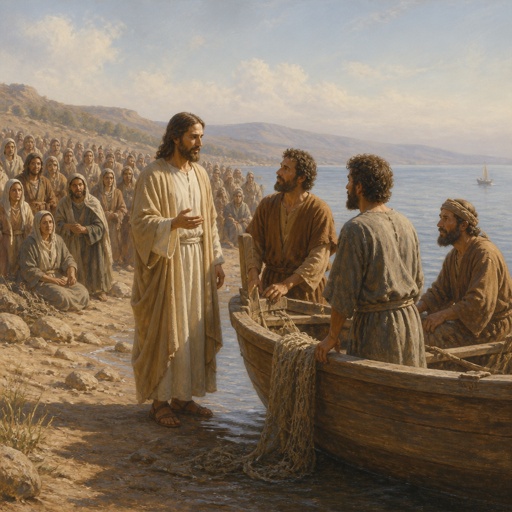
"And he spake to his disciples, that a small ship should wait on him because of the multitude, lest they should throng him." - Mark 3:9

Mark 3:31-34

Mark 9:32 - "But they understood not that saying, and were afraid to ask him."

Mark 3:16 - "And Simon he surnamed Peter;"

african american mary magdalene, mark 16: 9

Mark 9:16 - "And he asked the scribes, What question ye with them?"

Mark 9:6 - "For he wist not what to say; for they were sore afraid."

Mark 9:4 - "And there appeared unto them Elias with Moses: and they were talking with Jesus."

Mark 9:2 Do not show Jesus' face Show only 4 people including Jesus Show a mountain area therefore, show only 4 people in a mountain area and for one of them don't show the face. Mark 9:2

Mark 4:3 - "Hearken; Behold, there went out a sower to sow:"

Mark 9:27 - "But Jesus took him by the hand, and lifted him up; and he arose."

Mark 3:30 - "Because they said, He hath an unclean spirit."

Mark 3:15 - "And to have power to heal sicknesses, and to cast out devils:"

Mark 9:49 - "For every one shall be salted with fire, and every sacrifice shall be salted with salt."