What does Mark 9:5 mean?
"And Peter answered and said to Jesus, Master, it is good for us to be here: and let us make three tabernacles; one for thee, and one for Moses, and one for Elias." - Mark 9:5
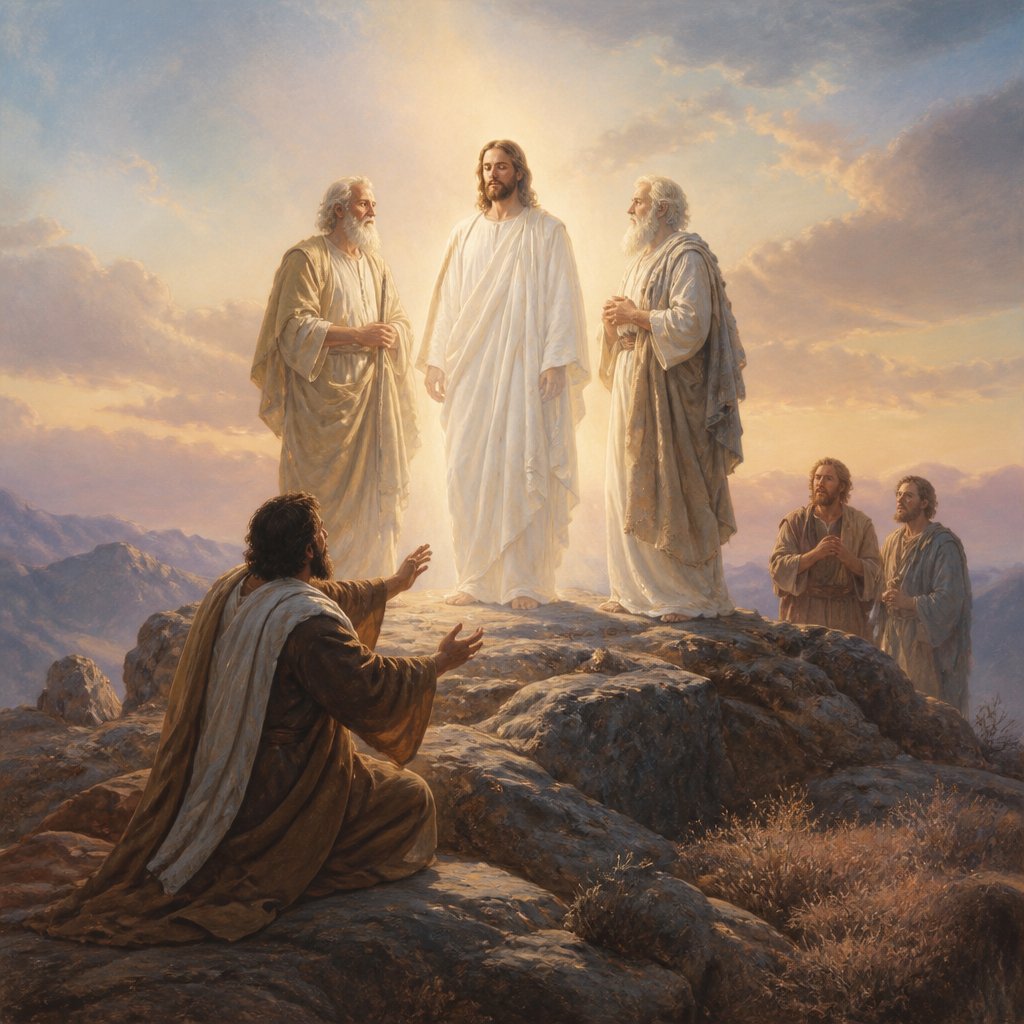
Mark 9:5 (KJV) reads: "And Peter answered and said to Jesus, Master, it is good for us to be here: and let us make three tabernacles; one for thee, and one for Moses, and one for Elias."
In this verse, Peter is responding to the Transfiguration of Jesus, which is a pivotal event in the New Testament. The Transfiguration is described in the three Synoptic Gospels: Matthew, Mark, and Luke. It is an event in which Jesus' appearance is transformed, and he is seen conversing with Moses and Elijah. This event is significant because it marks a turning point in Jesus' ministry and reveals his divine nature to his disciples.
In Mark 9:5, Peter's response to the Transfiguration is one of awe and reverence. He addresses Jesus as "Master," acknowledging his authority and greatness. Peter's suggestion to make three tabernacles for Jesus, Moses, and Elijah reflects his desire to honor and reverence these three figures. It also indicates Peter's desire to prolong the experience and savor the presence of these revered individuals.
One of the key themes in Mark 9:5 is the concept of divine revelation. The Transfiguration is a moment of divine revelation in which Jesus' true nature is revealed to his disciples. The presence of Moses and Elijah, representing the Law and the Prophets, further emphasizes the divine authority and continuity of Jesus' ministry. Peter's response underscores the disciples' struggle to comprehend the full significance of this revelation.
The context of Mark 9:5 is crucial to understanding its deeper meaning. Prior to this verse, Jesus had foretold his suffering, death, and resurrection, which had deeply troubled his disciples. The Transfiguration serves as a confirmation of Jesus' divinity and a source of encouragement for the disciples as they grapple with the challenges ahead. Additionally, the presence of Moses and Elijah connects Jesus to the prophetic tradition and affirms his role as the fulfillment of the Old Testament prophecies.
Symbolism plays a significant role in Mark 9:5. The tabernacles suggested by Peter symbolize a desire for permanence and stability. Peter's proposal reflects a human inclination to cling to spiritual experiences and establish tangible markers of divine encounters. However, Jesus' transfiguration is a fleeting, transcendent moment that cannot be contained or replicated in earthly tabernacles.
Furthermore, the presence of Moses and Elijah carries profound symbolism. Moses represents the Law given to Israel, while Elijah embodies the prophetic tradition. Their presence with Jesus signifies his fulfillment of the Law and the Prophets, as well as his continuity with the Jewish tradition. The Transfiguration serves as a bridge between the Old Testament and the New Testament, affirming Jesus' role as the long-awaited Messiah.
In conclusion, Mark 9:5 captures Peter's response to the Transfiguration, a pivotal event that reveals Jesus' divine nature and connects him to the prophetic tradition. The verse addresses themes of divine revelation, disciples' struggle for understanding, and the fulfillment of Old Testament prophecies. Through symbolism and context, Mark 9:5 underscores the significance of the Transfiguration as a transformative and illuminating moment in Jesus' ministry. It serves as a profound affirmation of Jesus' identity and mission, as well as a source of hope and encouragement for his followers.
Have questions about Mark 9:5?
Dive deeper into this scripture with Bible Chat — an AI-powered tool for exploring God's Word through conversation. Ask questions, get context, and grow in your understanding of the Bible.
Get Our Apps


Mark 9:5 Artwork

Mark 9:5 - "And Peter answered and said to Jesus, Master, it is good for us to be here: and let us make three tabernacles; one for thee, and one for Moses, and one for Elias."
"And Peter answered and said to Jesus, Master, it is good for us to be here: and let us make three tabernacles; one for thee, and one for Moses, and one for Elias." - Mark 9:5

Mark 5:9 - "And he asked him, What is thy name? And he answered, saying, My name is Legion: for we are many."

Mark 9:2 Show only 4 people Show a mountain area According to Mark 9:2

Mark 2:9

Mark 9:2 Show only 4 people and one of them is Jesus Show a mountain area According to Mark 9:2

Mark 9:38

Mark 2:9

Mark 2:5
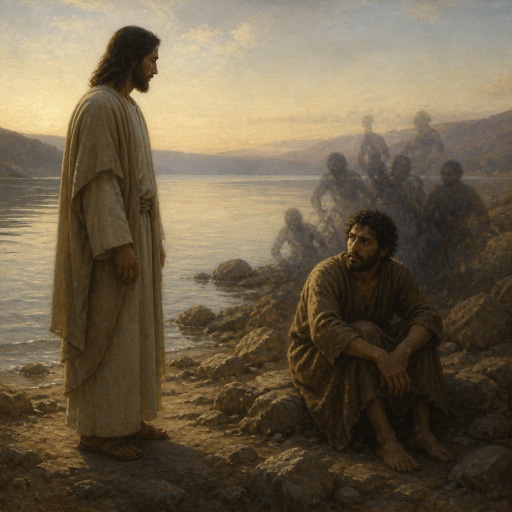
"And he asked him, What is thy name? And he answered, saying, My name is Legion: for we are many." - Mark 5:9

Mark 9:36-37

Mark 16:4-5

Mark 16:4-5

Mark 16:4-5

Mark 9:48 - "Where their worm dieth not, and the fire is not quenched."

Mark 6:9 - "But be shod with sandals; and not put on two coats."

Mark 9:40 - "For he that is not against us is on our part."

Mark 9:46 - "Where their worm dieth not, and the fire is not quenched."

Mark 9:44 - "Where their worm dieth not, and the fire is not quenched."

Mark 9:32 - "But they understood not that saying, and were afraid to ask him."

Mark 5:17 - "And they began to pray him to depart out of their coasts."

african american mary magdalene, mark 16: 9

Mark 9:16 - "And he asked the scribes, What question ye with them?"

Mark 9:6 - "For he wist not what to say; for they were sore afraid."

Mark 15:5 - "But Jesus yet answered nothing; so that Pilate marvelled."

Mark 9:4 - "And there appeared unto them Elias with Moses: and they were talking with Jesus."

Mark 9:2 Do not show Jesus' face Show only 4 people including Jesus Show a mountain area therefore, show only 4 people in a mountain area and for one of them don't show the face. Mark 9:2

Mark 9:27 - "But Jesus took him by the hand, and lifted him up; and he arose."
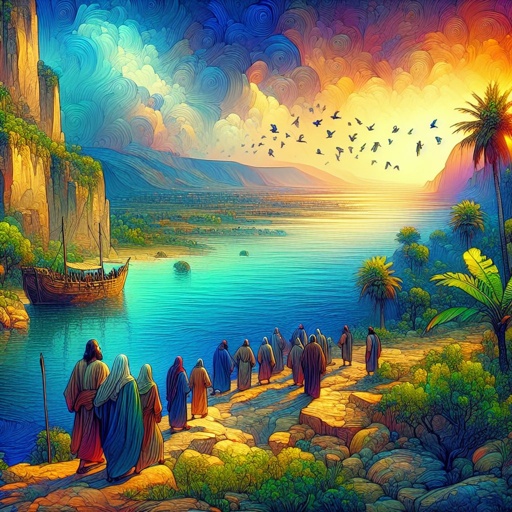
Mark 5:1 - "And they came over unto the other side of the sea, into the country of the Gadarenes."

Mark 5:11 - "Now there was there nigh unto the mountains a great herd of swine feeding."