What does Matthew 11:2 mean?
“Now when John had heard in the prison the works of Christ, he sent two of his disciples,” — Matthew 11:2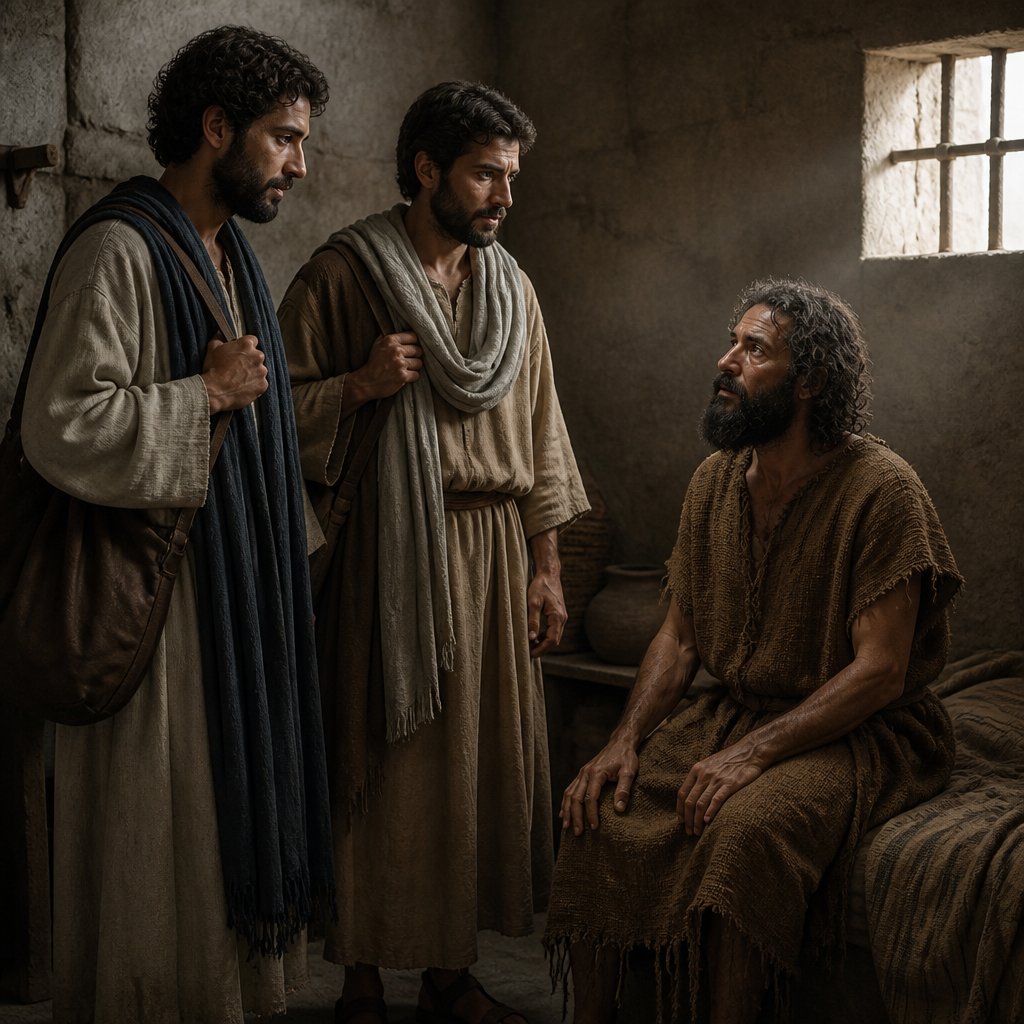
Matthew 11:2 (KJV) states: "Now when John had heard in the prison the works of Christ, he sent two of his disciples."
This Bible verse comes at a crucial moment in the book of Matthew, as it marks a significant shift in the narrative. Prior to this verse, John the Baptist had been actively preaching and baptizing in the wilderness, preparing the way for the coming of Jesus Christ. However, John's ministry eventually led to his imprisonment by King Herod, causing him to become uncertain about the identity of Jesus. This verse serves as a turning point in the narrative, as it sets the stage for Jesus' response to John's question about his identity and his recognition of John's role in fulfilling prophecy.
The immediate context of this verse is important in understanding its significance. John the Baptist, a prominent figure in the New Testament, was facing doubts and uncertainty while he was in prison. He had heard of Jesus' miracles and teachings, but he was unsure if Jesus was the long-awaited Messiah. This uncertainty led him to send two of his disciples to question Jesus about his identity. This reflects the very human experience of doubt and questioning, even from a faithful servant of God like John the Baptist.
This verse also serves to highlight the theme of faith and doubt in the Christian journey. John the Baptist, who had previously declared Jesus as the “Lamb of God” (John 1:29), now questioned his identity. This shows that even the most dedicated followers of Christ may face times of uncertainty and doubt. The Bible does not withhold the struggles of its characters, and the story of John the Baptist in this verse shows that questioning and seeking understanding are natural parts of faith.
The symbolism in this verse is also significant. John's imprisonment represents the limitations and struggles of earthly life, while his sending of two disciples to Jesus signifies the reaching out for resolution and understanding. This act of seeking answers and clarity reflects the human experience of grappling with doubts and seeking reassurance in times of adversity.
Furthermore, the verse emphasizes the interconnectedness of the ministries of John the Baptist and Jesus. John the Baptist prepared the way for Jesus through his preaching and baptism, and his recognition of Jesus as the Messiah was an essential part of this preparation. John's doubt and subsequent question to Jesus serve to reaffirm the fulfillment of Old Testament prophecies about the Messiah, and Jesus' response in the following verses reaffirms the divine nature of his mission.
In conclusion, Matthew 11:2 (KJV) is a crucial verse that captures the uncertainty and questioning of a devoted servant of God, John the Baptist. It addresses the themes of faith and doubt, the human experience of seeking understanding, and the interconnectedness of the ministries of John and Jesus. The verse serves as a reminder that doubt and questioning are part of the Christian journey, and that seeking clarity and reassurance is a natural part of faith.
Get our apps


Artwork for Matthew 11:2

Matthew 11:2 - "Now when John had heard in the prison the works of Christ, he sent two of his disciples,"
"Now when John had heard in the prison the works of Christ, he sent two of his disciples," - Matthew 11:2

Matthew 2:11

Matthew 11:3

Matthew 2:10-11. Depict the magi learning of the birth of Jesus and following the star

Matthew 3:11

Matthew 3:11

Matthew 3:11

Matthew 3:11

Matthew 3:11

Matthew 3:11

Matthew 3:11-12

Matthew 3:11-12

Matthew 3:11

Matthew 3:11

Matthew 3:11

Matthew 11:1

Matthew 11:1

Matthew 28:11

Matthew 2:11 - "¶ And when they were come into the house, they saw the young child with Mary his mother, and fell down, and worshipped him: and when they had opened their treasures, they presented unto him gifts; gold, and frankincense, and myrrh."

Matthew 2:10-11 - "When they saw the star, they were overjoyed. On coming to the house, they saw the child with his mother Mary, and they bowed down and worshiped him. Then they opened their treasures and presented him with gifts of gold, frankincense and myrrh."

Matthew 21:1-11

Matthew 25:11-13

Matthew 11:14 - "And if ye will receive it, this is Elias, which was for to come."

Matthew 11:30 - "For my yoke is easy, and my burden is light."

Matthew 18:11 - "For the Son of man is come to save that which was lost."

Matthew 11:6 - "And blessed is he, whosoever shall not be offended in me."

Matthew 6:11 - "Give us this day our daily bread."

Matthew 21:11 - "And the multitude said, This is Jesus the prophet of Nazareth of Galilee."

Matthew 11:13 - "For all the prophets and the law prophesied until John."