What does Matthew 12:12 mean?
“How much then is a man better than a sheep? Wherefore it is lawful to do well on the sabbath days.” — Matthew 12:12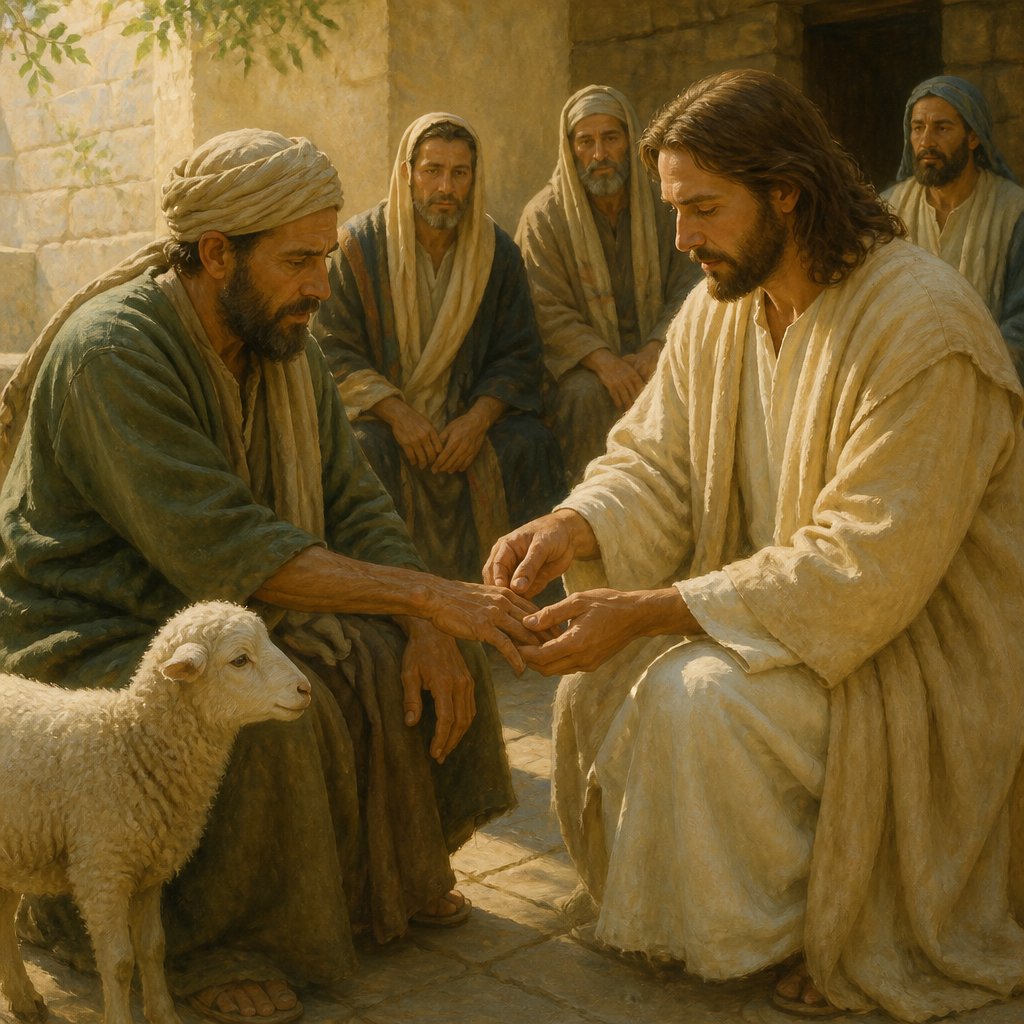
Matthew 12:12 (KJV) reads: "How much then is a man better than a sheep? Wherefore it is lawful to do well on the sabbath days."
This verse is part of a passage where Jesus is confronting the Pharisees, who were criticizing him and his disciples for breaking the Sabbath by picking grain to eat on the Sabbath. In response, Jesus uses an example of a sheep being trapped in a pit on the Sabbath and asks his audience if they would not rescue it. He then compares a man to a sheep, claiming that man is of much greater value than a sheep. He ends his argument by stating that it is lawful to do good on the Sabbath.
The context of this verse is important to understanding its full meaning. The Pharisees were strict observers of the Sabbath and had many rules and regulations regarding what was permissible on that day. They criticized Jesus and his disciples for picking grain to eat, as it was considered work and therefore forbidden on the Sabbath. However, Jesus challenges their legalistic interpretation of the Sabbath by emphasizing the value of human life and the need for mercy and compassion.
One of the key themes in this verse is the value of human life. Jesus is making a bold statement by comparing a man to a sheep, which was a valuable commodity in ancient times. By doing so, he is asserting that human beings have inherent worth and should be treated with care and compassion. This challenges the Pharisees' legalistic view of the Sabbath, as they were so focused on following the letter of the law that they neglected the spirit of the law, which is to love and care for one another.
Another important theme in this verse is the concept of doing good. Jesus is asserting that it is always right to do good, even on the Sabbath. This challenges the Pharisees' rigid interpretation of the Sabbath laws and emphasizes the importance of showing mercy and kindness to others. This theme is consistent with other teachings of Jesus, such as the commandment to love your neighbor as yourself.
The symbolism in this verse is also significant. The sheep represents something of value, and Jesus uses it to illustrate the value of human life. By comparing a man to a sheep, Jesus is reinforcing the idea that human beings are of immeasurable worth. This challenges the prevailing attitudes of the time, which often placed more value on material possessions and religious observance than on human relationships and compassion.
Overall, Matthew 12:12 is a powerful and thought-provoking verse that challenges legalism and emphasizes the value of human life. It reminds us of the importance of showing mercy and kindness to others and the need to prioritize love and compassion over rigid adherence to laws and regulations. This verse continues to be relevant today, serving as a reminder to focus on the things that truly matter and to treat others with dignity and respect.
Get our apps


Artwork for Matthew 12:12

Matthew 12:12 - "How much then is a man better than a sheep? Wherefore it is lawful to do well on the sabbath days."
"How much then is a man better than a sheep? Wherefore it is lawful to do well on the sabbath days." - Matthew 12:12

Matthew 3:11-12

Matthew 3:11-12

Matthew 3:12

Matthew 3:12

Matthew 23:12

Matthew 7:12

Matthew 23:12

Matthew 7:12

Matthew 3:12

Matthew 2:1-12

Matthew 12:36-37

Matthew 5:1 a 12

matthew 12:36-37

Matthew 5:8-12

Matthew 2:1-12

Matthew 2:1-12

Matthew 5:1 a 12

Matthew 2:1-12

Matthew 12:36-37

Matthew 10:12 - "And when ye come into an house, salute it."

Matthew 12:21 - "And in his name shall the Gentiles trust."

Matthew 12:16 - "And charged them that they should not make him known:"

Matthew 12:8 - "For the Son of man is Lord even of the sabbath day."

Matthew 12:23 - "And all the people were amazed, and said, Is not this the son of David?"

Matthew 12:9 - "And when he was departed thence, he went into their synagogue:"

Matthew 12:17 - "That it might be fulfilled which was spoken by Esaias the prophet, saying,"

Matthew 6:12 - "And forgive us our debts, as we forgive our debtors."

Romans 12:1-2