What does Matthew 15:15 mean?
“Then answered Peter and said unto him, Declare unto us this parable.” — Matthew 15:15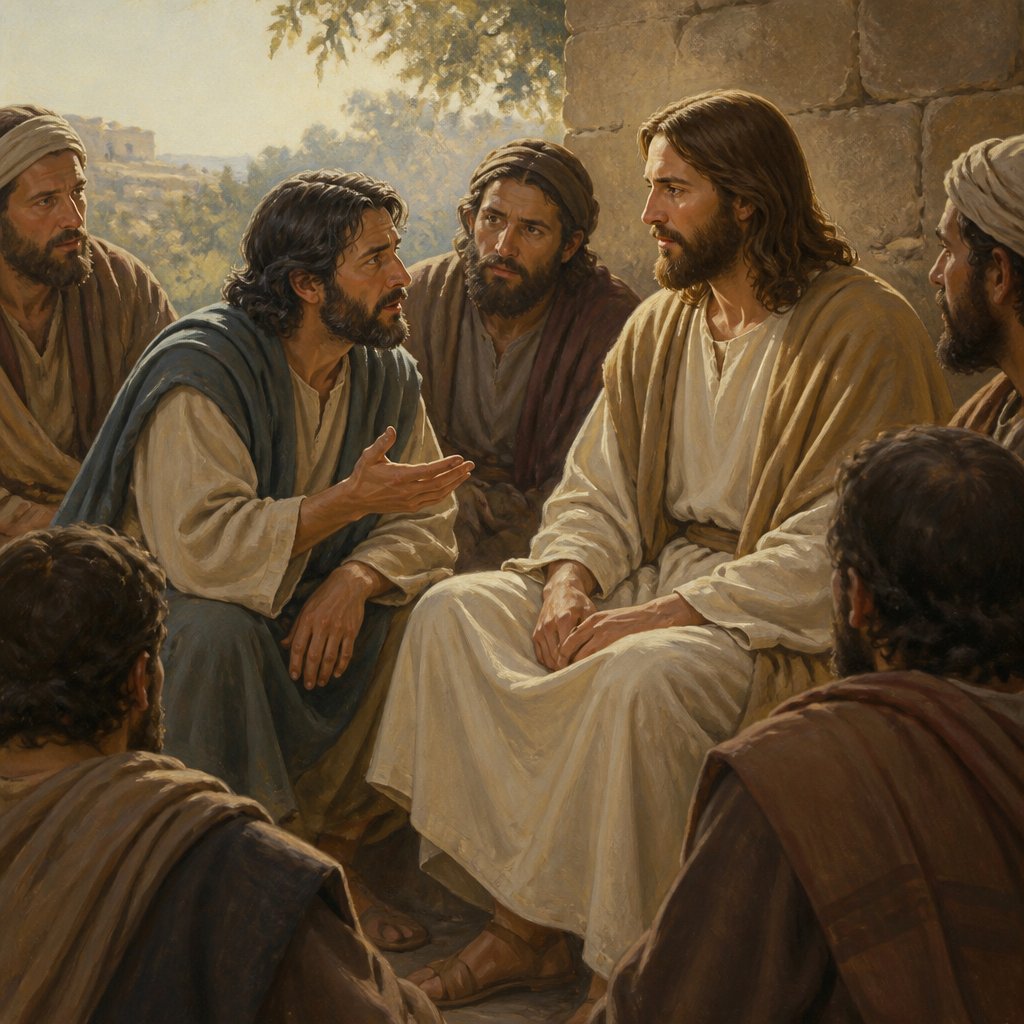
In Matthew 15:15 (KJV), the verse reads, "Then answered Peter and said unto him, Declare unto us this parable." This verse is part of a larger narrative in which Jesus has just finished speaking to the crowds in a parable, and his disciples come to him seeking an explanation of its meaning. This verse offers a glimpse into the disciples' desire to truly understand the teachings of Jesus and their willingness to seek clarification when they do not immediately comprehend his message.
The context of this verse is crucial in understanding its significance. The chapter begins with a confrontation between Jesus and the Pharisees and scribes who question him about why his disciples do not follow the traditions of the elders. Jesus responds by rebuking them, pointing out their hypocrisy in placing the traditions of men above the commandments of God. He then goes on to teach the crowds about the true nature of defilement, explaining that it is not what goes into the mouth that defiles a person, but what comes out of the mouth that defiles them. This teaching challenges the traditional understanding of purity and defilement and underscores the importance of inner purity and righteousness.
In the verse that precedes Matthew 15:15, Jesus tells his disciples, "Are ye also yet without understanding? Do not ye yet understand, that whatsoever entereth in at the mouth goeth into the belly, and is cast out into the draught?" (Matthew 15:16, KJV). Jesus' admonishment to his disciples indicates a level of frustration with their lack of understanding, prompting Peter to step forward and request an explanation of the parable. This emphasizes the disciples' earnest desire to comprehend the deeper spiritual truths that Jesus is teaching and their recognition of Jesus as a teacher and authority figure.
The disciples' request for clarification is significant in the larger narrative of Jesus' ministry. It reflects the human struggle to comprehend divine truths and the need for spiritual guidance and illumination. It also underscores the importance of humility and teachability in the process of learning and growing in faith. Peter's willingness to admit his lack of understanding and seek enlightenment from Jesus sets an example for believers in their own journey of faith.
The theme of seeking understanding and spiritual enlightenment is central to the verse and resonates with the broader theme of spiritual growth and discipleship in the Gospel of Matthew. The disciples' earnest desire to understand the teachings of Jesus reflects the ongoing process of learning and transformation that is inherent in the Christian life.
In terms of symbolism, Peter's request for Jesus to "declare unto us this parable" can be seen as a symbol of the believers' need for spiritual interpretation and guidance in understanding the deeper truths of scripture. Jesus' subsequent explanation of the parable serves as a symbol of the illumination and clarity that comes from his teachings, and the disciples' role in conveying these truths to others.
Overall, Matthew 15:15 (KJV) offers a rich and multi-layered message about the pursuit of spiritual understanding, the importance of humility and teachability, and the transformative power of Jesus' teachings. It serves as a reminder of the ongoing journey of faith and the role of spiritual guidance in seeking a deeper understanding of God's word.
Get our apps


Artwork for Matthew 15:15

Matthew 15:15 - "Then answered Peter and said unto him, Declare unto us this parable."
"Then answered Peter and said unto him, Declare unto us this parable." - Matthew 15:15

matthew 15 matthew 15:10

Matthew 5:15

Matthew 15:23

Matthew 5:15

Matthew 26:15

Matthew 26:15

Matthew 15:23

Matthew 24:15

Matthew 15 : 1-20

Matthew 17:14-15

Matthew 15:35 - "And he commanded the multitude to sit down on the ground."

Matthew 1:15 - "And Eliud begat Eleazar; and Eleazar begat Matthan; and Matthan begat Jacob;"

Matthew 11:15 - "He that hath ears to hear, let him hear."

Matthew 15:16 - "And Jesus said, Are ye also yet without understanding?"

Matthew 19:15 - "And he laid his hands on them, and departed thence."

Matthew 15:21 - "¶ Then Jesus went thence, and departed into the coasts of Tyre and Sidon."

Luke 6:15 - "Matthew and Thomas, James the son of Alphaeus, and Simon called Zelotes,"

Matthew 15:25 - "Then came she and worshipped him, saying, Lord, help me."

Matthew 15:10 - "¶ And he called the multitude, and said unto them, Hear, and understand:"

Matthew 15:9 - "But in vain they do worship me, teaching for doctrines the commandments of men."

Matthew 15:7 - "Ye hypocrites, well did Esaias prophesy of you, saying,"

Matthew 15:1 - "Then came to Jesus scribes and Pharisees, which were of Jerusalem, saying,"

Proverbs 1:5

Proverbs 1:5

Proverbs 1:5

Proverbs 1:5

Proverbs 1:5

Genesis 1:5