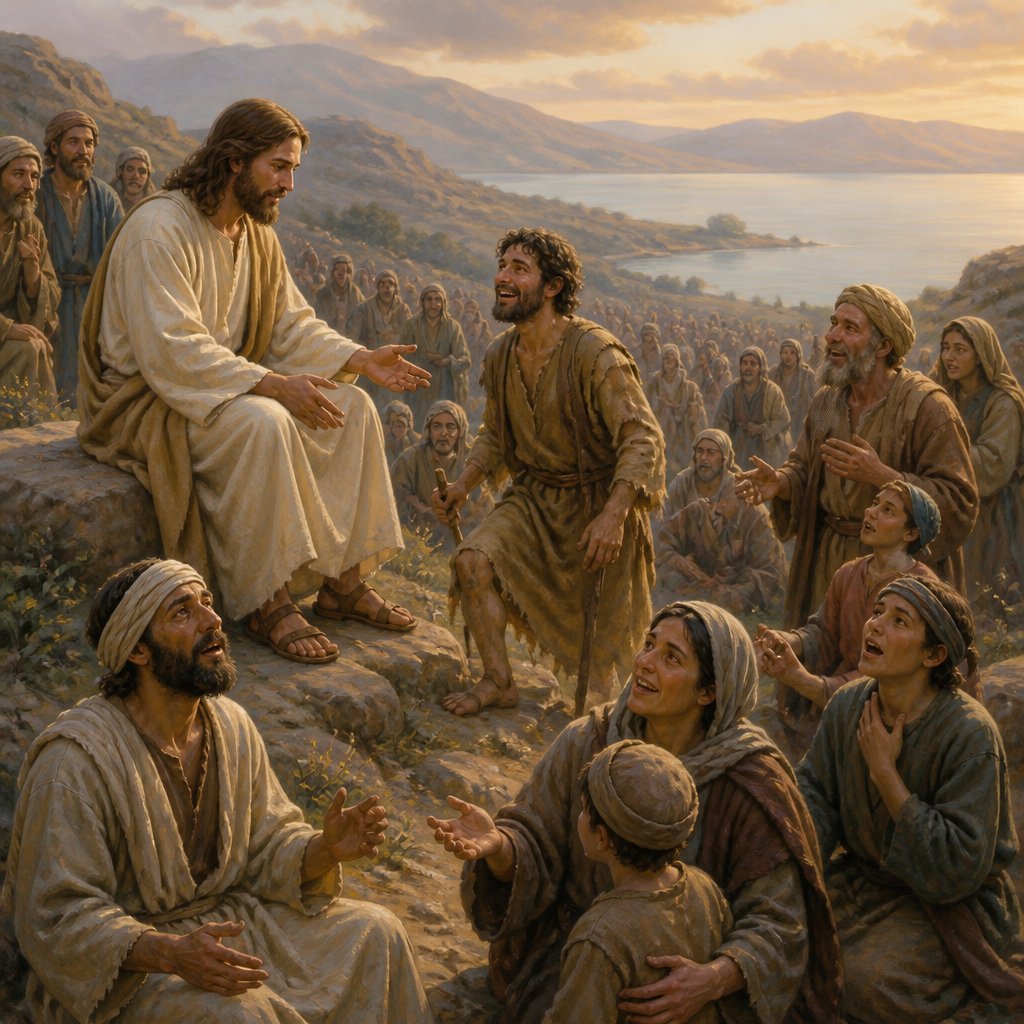
The Bible verse Matthew 15:29-31 in the King James Version reads:
"And Jesus departed from thence, and came nigh unto the sea of Galilee; and went up into a mountain, and sat down there. And great multitudes came unto him, having with them those that were lame, blind, dumb, maimed, and many others, and cast them down at Jesus' feet; and he healed them: Insomuch that the multitude wondered, when they saw the dumb to speak, the maimed to be whole, the lame to walk, and the blind to see: and they glorified the God of Israel."
This passage from the book of Matthew provides a glimpse into one of the many miraculous healings performed by Jesus during his earthly ministry. The context for this particular event is that Jesus had departed from a region called Tyre and Sidon, where he had engaged in a debate with the religious leaders about the purity of a person's heart. After leaving this area, Jesus traveled to the Sea of Galilee and ascended a mountain, where a large crowd gathered around him. Among the crowd were individuals who were suffering from various physical ailments and disabilities, including the lame, the blind, the dumb, and the maimed.
The themes present in this passage include Jesus' compassion and power to heal, the response of faith and wonder from the crowd, and the glorification of God. Jesus' healing ministry was an expression of his compassion and love for those who were suffering, and it also demonstrated his divine authority over sickness and infirmity. The multitudes who witnessed these miraculous healings were filled with awe and wonder at the sight of the lame walking, the blind seeing, the dumb speaking, and the maimed being made whole. Their response to these extraordinary acts of healing was to glorify the God of Israel, acknowledging the source of Jesus' power and authority.
The context of this passage also includes the backdrop of Jesus' ongoing conflict with the religious leaders of his time. Throughout the Gospels, Jesus often clashed with the Pharisees and scribes over matters of religious tradition, righteousness, and the interpretation of the law. The contrast between their rigid adherence to religious rituals and Jesus' demonstration of divine power and compassion is a prominent theme in the New Testament. In this passage, Jesus' healing of the sick and disabled serves as a direct challenge to the religious establishment's understanding of purity and holiness. By openly ministering to those who were considered unclean or marginalized in society, Jesus challenged the religious norms of his day and revealed the true nature of God's kingdom, which prioritizes mercy, justice, and inclusion.
The symbolism in this passage is significant, as it reveals the spiritual and redemptive significance of Jesus' healing ministry. The physical healings described in this passage are not merely demonstrations of Jesus' supernatural power; they also point to deeper spiritual truths. In the Bible, physical infirmities are often used as symbols of spiritual brokenness and the need for inner healing. By restoring the sight of the blind, the speech of the dumb, and the mobility of the lame, Jesus symbolically represents the spiritual transformation and restoration that he offers to all who come to him in faith. Through his healing ministry, Jesus not only addresses the physical suffering of the individuals in the crowd but also offers a glimpse of the spiritual wholeness and redemption that he brings to all who believe in him.
In conclusion, Matthew 15:29-31 offers a powerful depiction of Jesus' compassion, power, and authority as the divine healer. The passage also serves as a reminder of the transformative and redemptive nature of Jesus' ministry, which extends beyond physical healing to encompass the restoration of the soul. The response of the crowd, filled with awe and wonder, and their glorification of the God of Israel, highlights the impact of Jesus' miraculous works and the profound faith that they inspired. As modern-day readers, we are invited to reflect on the significance of Jesus' healing ministry and to respond with awe and praise for the God who continues to work miracles in our lives today.
Get our apps


Artwork for Matthew 15:29-31

Matthew 15:29-31 - "Matthew 15:29-31: Jesus left there and went along the Sea of Galilee. Then he went up on a mountainside and sat down. Great crowds came to him, bringing the lame, the blind, the crippled, the mute and many others, and laid them at his feet; and he healed them. The people were amazed when they saw the mute speaking, the crippled made well, the lame walking and the blind seeing. And they praised the God of Israel."
"Matthew 15:29-31: Jesus left there and went along the Sea of Galilee. Then he went up on a mountainside and sat down. Great crowds came to him, bringing the lame, the blind, the crippled, the mute and many others, and laid them at his feet; and he healed them. The people were amazed when they saw the mute speaking, the crippled made well, the lame walking and the blind seeing. And they praised the God of Israel." - Matthew 15:29-31

Matthew 15:29 - "And Jesus departed from thence, and came nigh unto the sea of Galilee; and went up into a mountain, and sat down there."

Matthew 15:31 - "Insomuch that the multitude wondered, when they saw the dumb to speak, the maimed to be whole, the lame to walk, and the blind to see: and they glorified the God of Israel."

Hosea 3:1-5

Matthew 10:29-31 - "Are not two sparrows sold for a penny? Yet not one of them will fall to the ground apart from the will of your Father. And even the very hairs of your head are all numbered. So don’t be afraid; you are worth more than many sparrows."

matthew 25:31

Matthew 21:31

matthew 15 matthew 15:10

Matthew 24:30-31

Matthew 24:30-31

Matthew 24:30-31

Matthew 24:30-31

Matthew 24:30-31

Matthew 24:30-31

Matthew 24:30-31
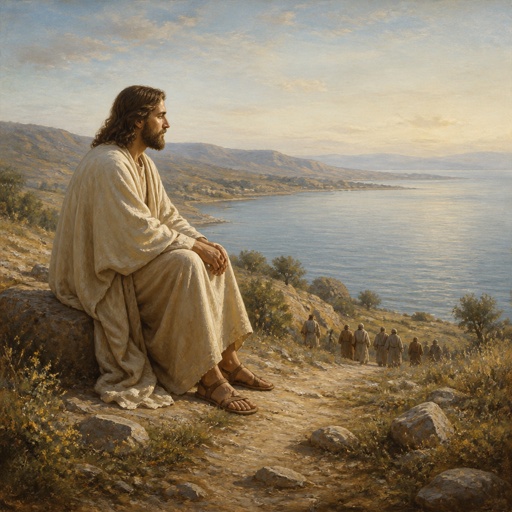
"And Jesus departed from thence, and came nigh unto the sea of Galilee; and went up into a mountain, and sat down there." - Matthew 15:29

Matthew 24:30-31

Matthew 24:30-31

Matthew 24:30-31

Proverbs 31:29 - "Many daughters have done virtuously, but thou excellest them all."

Numbers 31:29 - "Take it of their half, and give it unto Eleazar the priest, for an heave offering of the LORD."

Matthew 20:29-34

Matthew 7:24-29

Matthew 7:24-29

Exodus 29:31 - "¶ And thou shalt take the ram of the consecration, and seethe his flesh in the holy place."
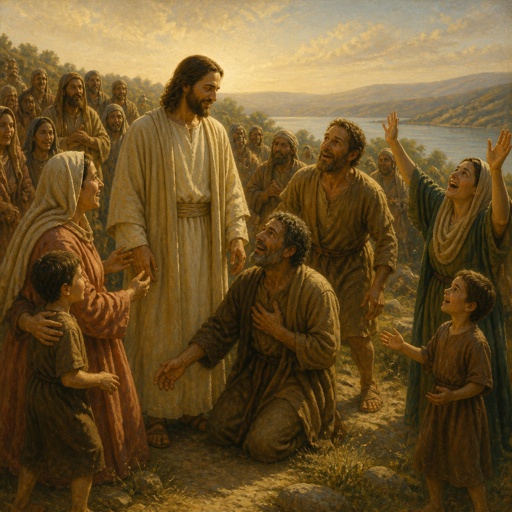
"Insomuch that the multitude wondered, when they saw the dumb to speak, the maimed to be whole, the lame to walk, and the blind to see: and they glorified the God of Israel." - Matthew 15:31

Genesis 29:31 - "¶ And when the LORD saw that Leah was hated, he opened her womb: but Rachel was barren."

Joshua 15:31 - "And Ziklag, and Madmannah, and Sansannah,"

Joshua 24: 29-31 An image including old Jushua