What does Matthew 19:27 mean?
"Then answered Peter and said unto him, Behold, we have forsaken all, and followed thee; what shall we have therefore?" - Matthew 19:27
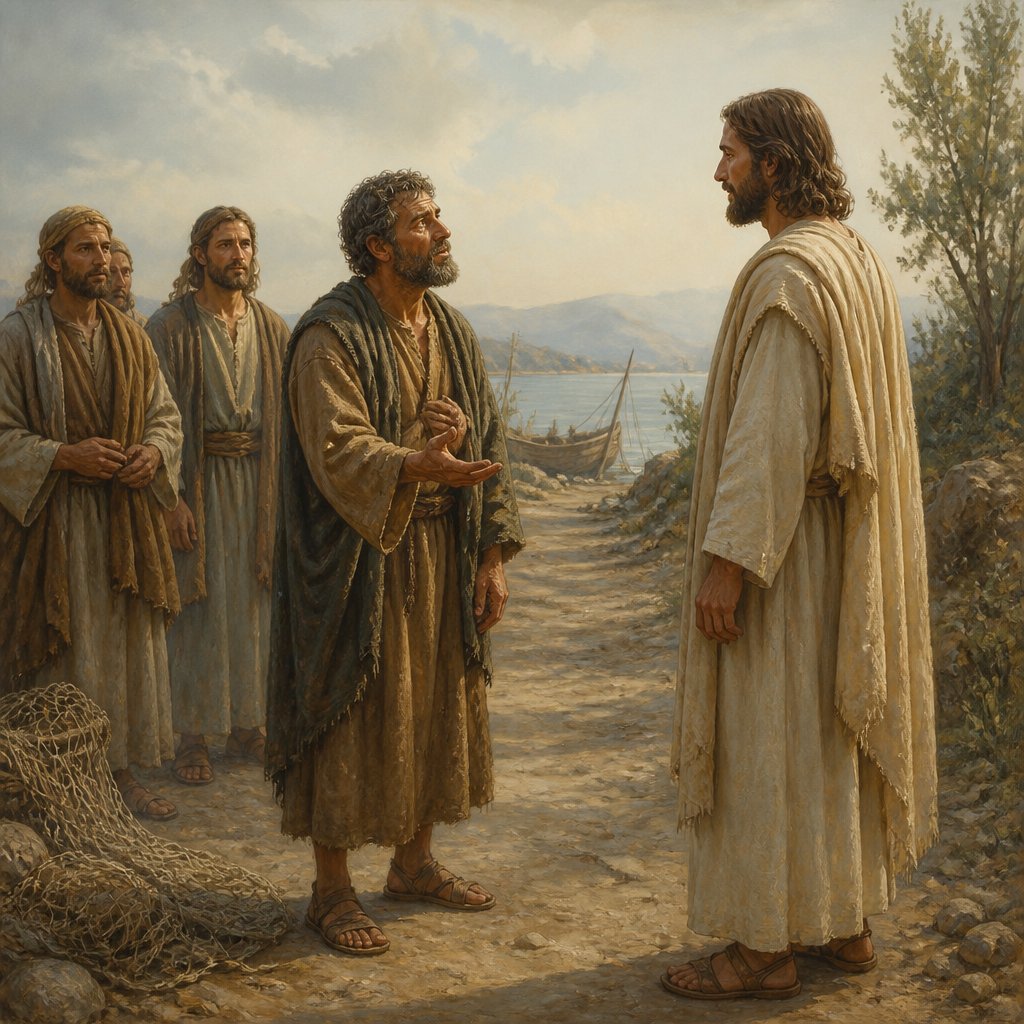
Matthew 19:27 in the King James Version reads, "Then answered Peter and said unto him, Behold, we have forsaken all, and followed thee; what shall we have therefore?" This passage is a pivotal moment in the narrative where Peter, one of Jesus' closest disciples, expresses his concerns and seeks reassurance about the sacrifices he and the other disciples have made to follow Jesus.
The context of this verse is important to understanding its significance. In the preceding verses, Jesus had just said, "Verily I say unto you, That a rich man shall hardly enter into the kingdom of heaven. And again I say unto you, It is easier for a camel to go through the eye of a needle, than for a rich man to enter into the kingdom of God" (Matthew 19:23-24). This exchange follows the encounter with the rich young ruler who had approached Jesus seeking to inherit eternal life. In response to Jesus' call to sell all his possessions and give to the poor, the young man walked away in grief because he had great possessions. It is in this context that Peter, seeking to make sense of what he had just witnessed, raises the question about what he and the other disciples will receive as a result of their sacrifices.
One of the main themes of Matthew 19:27 is the idea of sacrifice and reward. Peter's question reflects a concern that is not uncommon among those who follow Jesus. He acknowledges the sacrifices made by the disciples to leave everything behind and follow Jesus. They had given up their professions, their homes, and their comfort to be in His service. Peter's question stems from a desire to understand the value of their sacrifices in the kingdom of heaven. The underlying theme here is the tension between worldly security and eternal reward, a common theme throughout the gospels.
Another important theme in this verse is the concept of discipleship. Peter's question reflects the heart of a true disciple. In seeking reassurance about their sacrifices, Peter demonstrates a commitment to following Jesus wholeheartedly. Throughout the Gospels, Jesus frequently challenges His followers to count the cost of discipleship. In this passage, Peter is expressing the tension between the demands of discipleship and the desire for some form of earthly reward or security. This tension is still relevant today for all who seek to follow Christ.
The dialogue in this verse also emphasizes the unique relationship between Jesus and his disciples. Peter's question is directed at Jesus, the one whom they have followed and learned from. His question suggests a deep level of trust and intimacy between them. This relationship demonstrates the nature of faith and trust in Jesus, where his followers are willing to bring their concerns and questions to Him, knowing that He alone has the answers.
Symbolism in this verse can be seen in Peter's use of the word "forsaken." When he says, "Behold, we have forsaken all," he is using a word that conveys the idea of abandonment or leaving something behind. This symbolism highlights the depth of the disciples' sacrifice and commitment to following Jesus. It also serves to contrast the rich young ruler's unwillingness to forsake his possessions and follow Jesus wholeheartedly.
In response to Peter's question, Jesus goes on to reassure the disciples that they will indeed be rewarded for their sacrifices, promising them positions of authority in the coming kingdom. This assurance reflects the overarching theme of God's justice and generosity. It serves as a reminder that God sees and rewards the sacrifices made in His name. This conversation ultimately points to the ultimate reward of eternal life and the presence of God, which is the greatest reward for all who faithfully follow Christ.
In conclusion, Matthew 19:27 captures a moment of vulnerability and raw honesty from one of Jesus' closest disciples. It reflects the tension and concerns experienced by those who choose to follow Christ. The passage addresses the themes of sacrifice, discipleship, and the unique relationship between Jesus and His followers. It offers reassurance and hope in the face of earthly sacrifices and challenges. Ultimately, it points to the promise of eternal reward and the faithfulness of God to those who serve Him wholeheartedly.
Have questions about Matthew 19:27?
Dive deeper into this scripture with Bible Chat — an AI-powered tool for exploring God's Word through conversation. Ask questions, get context, and grow in your understanding of the Bible.
Get Our Apps


Matthew 19:27 Artwork

Matthew 19:27 - "¶ Then answered Peter and said unto him, Behold, we have forsaken all, and followed thee; what shall we have therefore?"
"¶ Then answered Peter and said unto him, Behold, we have forsaken all, and followed thee; what shall we have therefore?" - Matthew 19:27

Matthew 27:19 - "¶ When he was set down on the judgment seat, his wife sent unto him, saying, Have thou nothing to do with that just man: for I have suffered many things this day in a dream because of him."

Matthew 27:46

Matthew 27:35

Matthew 24:27

Matthew 27:26

Matthew 27:26

Matthew 27: 38

Matthew 27:27 - "Then the soldiers of the governor took Jesus into the common hall, and gathered unto him the whole band of soldiers."

Genesis 19-27

Matthew 7:24-27

Exodus 27:19-20

Genesis 27:18-19

John 19:25-27

Matthew 27:36 - "And sitting down they watched him there;"

Matthew 27:16 - "And they had then a notable prisoner, called Barabbas."

matthew 28:19

Matthew 19:26

matthew 28:19

John 19:25-27

John 19:26-27

Exodus 27:19-21

Matthew 22:27 - "And last of all the woman died also."

Matthew 27:39 - "¶ And they that passed by reviled him, wagging their heads,"

Matthew 27:18 - "For he knew that for envy they had delivered him."

Matthew 27:28 - "And they stripped him, and put on him a scarlet robe."

Matthew 19:13

Matthew 27:8 - "Wherefore that field was called, The field of blood, unto this day."

Matthew 19:19 - "Honour thy father and thy mother: and, Thou shalt love thy neighbour as thyself."