What does Matthew 19:7 mean?
“They say unto him, Why did Moses then command to give a writing of divorcement, and to put her away?” — Matthew 19:7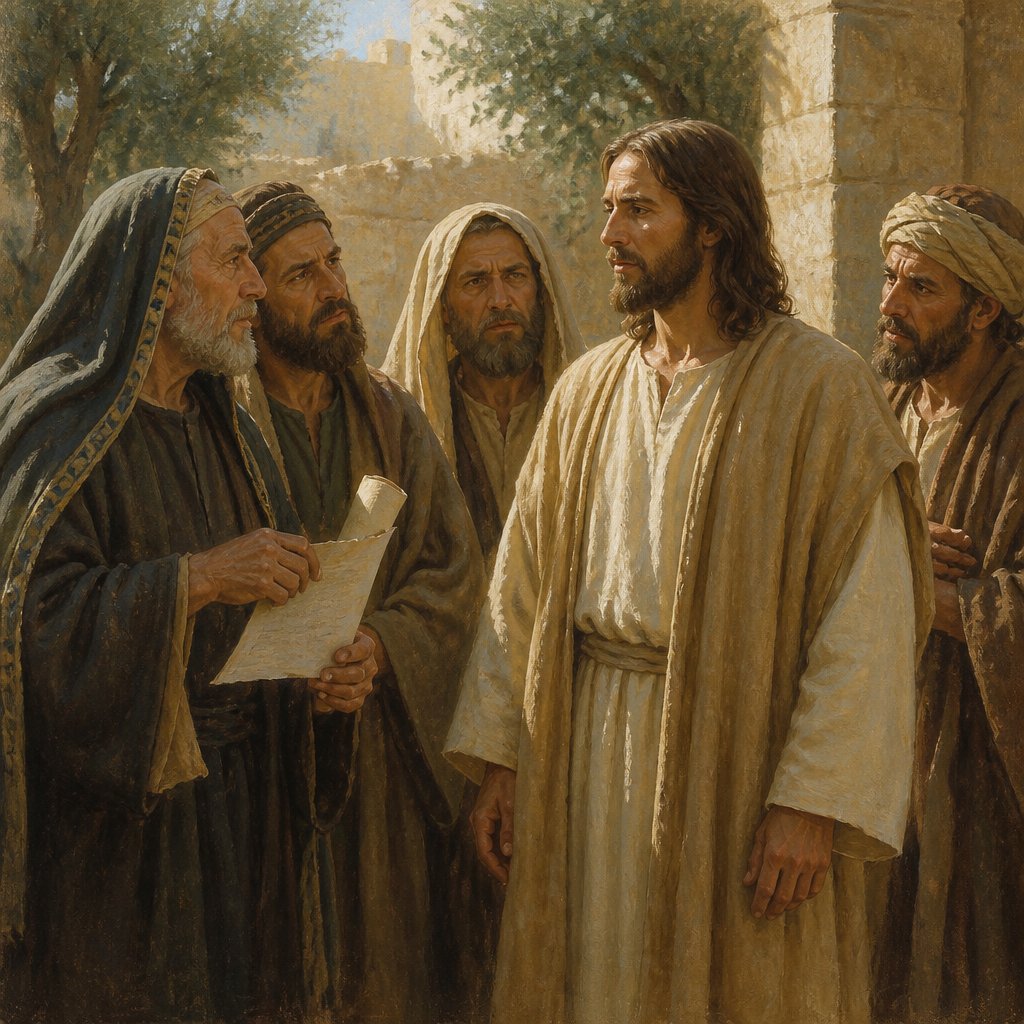
Matthew 19:7 in the King James Version of the Bible reads, "They say unto him, Why did Moses then command to give a writing of divorcement, and to put her away?" This verse is part of a larger passage in which the Pharisees are testing Jesus by asking him about divorce, specifically whether it is lawful for a man to divorce his wife for any reason. In this verse, the Pharisees are referencing a commandment in the Mosaic law that allowed for divorce under certain circumstances.
The passage in which this verse appears begins in Matthew 19:3, where the Pharisees come to Jesus and ask, "Is it lawful for a man to put away his wife for every cause?" This question is a reference to the practice of easy divorce that was prevalent at the time, where a man could divorce his wife simply by giving her a certificate of divorce. In response to their question, Jesus refers back to the creation account in Genesis and emphasizes the unity and permanence of marriage. He tells the Pharisees that Moses allowed for divorce "because of the hardness of your hearts" but that it was not intended to be this way from the beginning.
The verse in question, Matthew 19:7, is the Pharisees' attempt to challenge Jesus' teachings on divorce by referring to the Mosaic law, specifically Deuteronomy 24:1-4, where Moses gives instructions for a man to divorce his wife. They are essentially trying to trip Jesus up by using the law against him, forcing him to either go against the law of Moses or to present a new interpretation of the law of divorce.
In their question to Jesus, the Pharisees are trying to position him as going against the established teachings of the Jewish law. They are also trying to test his authority and wisdom in the matter. By referencing the commandment of Moses, the Pharisees are attempting to undermine Jesus' teachings on marriage and divorce.
However, Jesus responds to the Pharisees by pointing out that the law given by Moses was a concession to human sinfulness, and that it was not God's original intention for marriage to end in divorce. He goes on to teach that marriage is a sacred and lifelong union between a man and a woman, and that divorce should only be allowed in cases of infidelity.
This passage in Matthew 19:3-9 touches on several important themes, including marriage, divorce, the nature of God's law, and the authority of Jesus. One of the central themes is the sanctity and permanence of marriage. Jesus uses this opportunity to reaffirm the divine intent for marriage to be a lifelong commitment, rooted in love, faithfulness, and unity.
Another important theme is the contrast between the Mosaic law and the teachings of Jesus. Jesus' response to the Pharisees demonstrates his authority to interpret and fulfill the law, as well as his ability to transcend the limitations of the Mosaic law by emphasizing the original intent of God's design for marriage. In doing so, Jesus demonstrates that his teachings are not in conflict with the law of Moses, but rather a fulfillment and completion of it.
Symbolism is also present in this passage, particularly in the reference to Moses and the law. The Pharisees' question about the commandment of Moses represents the legalistic and traditional mindset that Jesus came to challenge. Jesus' response, on the other hand, represents a new understanding of God's will and a return to the original design for marriage.
In conclusion, Matthew 19:7 is a crucial part of a larger passage in the Gospel of Matthew that addresses the topics of marriage and divorce. Through this passage, Jesus emphasizes the sanctity and permanence of marriage, asserts his authority to interpret and fulfill the law, and challenges the legalistic mindset of the Pharisees. The verse serves as a reminder of the divine intent for marriage and the importance of honoring the sacred union between a man and a woman.
Get our apps


Artwork for Matthew 19:7
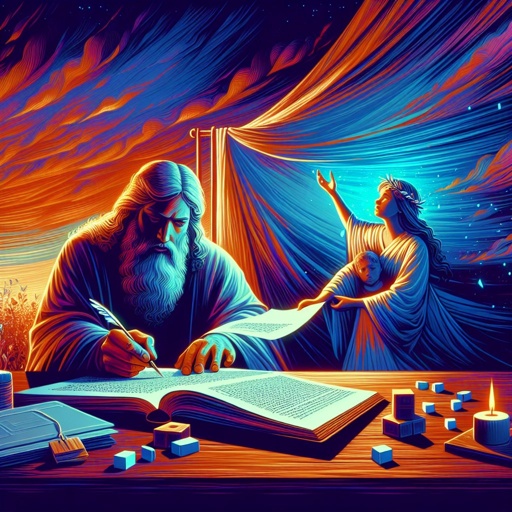
Matthew 19:7 - "They say unto him, Why did Moses then command to give a writing of divorcement, and to put her away?"
"They say unto him, Why did Moses then command to give a writing of divorcement, and to put her away?" - Matthew 19:7

Matthew 7:19 - "Every tree that bringeth not forth good fruit is hewn down, and cast into the fire."
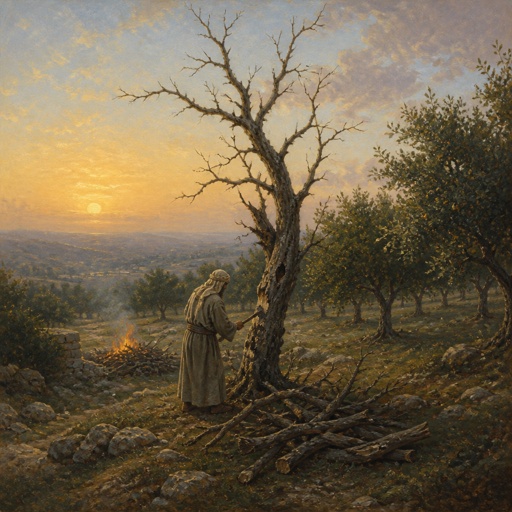
"Every tree that bringeth not forth good fruit is hewn down, and cast into the fire." - Matthew 7:19

matthew 28:19

Matthew 19:26

matthew 28:19

Matthew 7:7

Matthew 19:13

Matthew 19:19 - "Honour thy father and thy mother: and, Thou shalt love thy neighbour as thyself."

Matthew 28:19-20

Matthew 28: 19-20

Matthew 28:19-20

Matthew 19:16-17

Matthew 28:19-20

Matthew 7:13-14

Matthew 7:13-14

Matthew 7:13-14

Matthew 7:13-14

Matthew 7:13-14

Matthew 7:13-14

Matthew 7:13-14

Matthew 7:13-14

Matthew 7:13-14

Matthew 7:13-14

Matthew 7:13-14

Matthew 7:13

Matthew 7:12

Matthew 19:2 - "And great multitudes followed him; and he healed them there."

Matthew 19:30 - "But many that are first shall be last; and the last shall be first."