What does Matthew 1:11-12 mean?
“And Josias begat Jechonias and his brethren, about the time they were carried away to Babylon: And after they were brought to Babylon, Jechonias begat Salathiel; and Salathiel begat Zorobabel;” — Matthew 1:11-12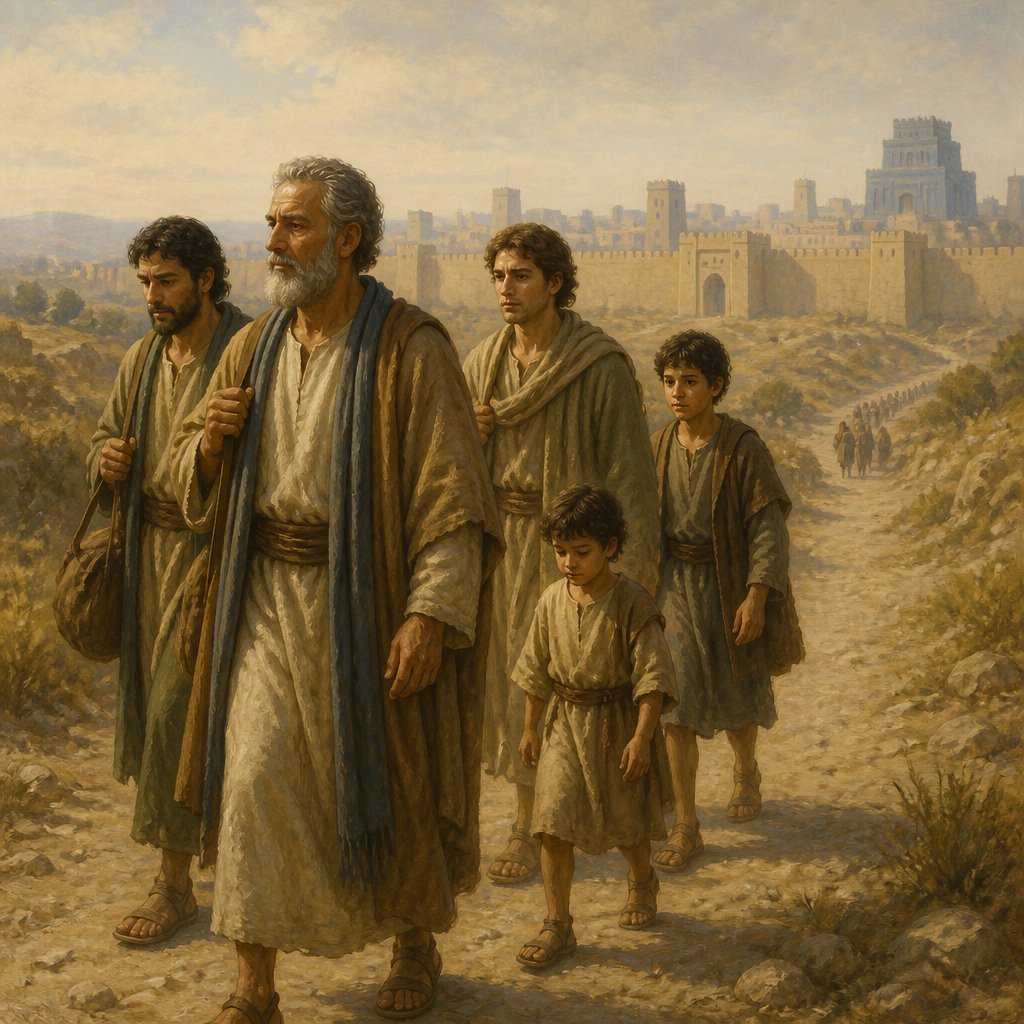
Alright, Matthew 1:11-12 in the King James Version reads, "And Josias begat Jechonias and his brethren, about the time they were carried away to Babylon: And after they were brought to Babylon, Jechonias begat Salathiel; and Salathiel begat Zorobabel." This verse is part of the genealogy of Jesus Christ, as recorded in the book of Matthew.
At first glance, genealogies may seem dry and irrelevant, but they are actually crucial to understanding the Bible and its themes. This particular genealogy is significant because it traces Jesus' lineage back to King David, thereby fulfilling the prophecies of the Old Testament that the Messiah would be from the line of David.
In these two verses, we see the names of several key figures in the history of Israel: Josias, Jechonias, Salathiel, and Zorobabel. These individuals are part of the royal line of David and are mentioned in the Old Testament as well. By including these names in Jesus' genealogy, Matthew is emphasizing Jesus' royal lineage and rightful claim to the throne of David.
The mention of Babylon in verse 11 is also significant. It serves as a reminder of a dark period in Israel's history when they were carried away into exile by the Babylonians. This event had a profound impact on the Jewish people and their faith, and the mention of it in Jesus' genealogy would have resonated deeply with Matthew's audience.
The genealogy in Matthew 1 not only emphasizes Jesus' royal lineage but also highlights the faithfulness of God throughout history. Despite the exile and the challenging circumstances faced by the people of Israel, God remained faithful to His promises. He preserved the line of David and ultimately brought forth the Messiah, Jesus Christ, who would bring salvation and restoration to His people.
In a broader context, the genealogy of Jesus Christ also underscores the theme of fulfillment. Throughout the Old Testament, there were numerous prophecies and promises regarding the coming of a Savior. The genealogy in Matthew 1 serves as a powerful declaration that all these promises have been fulfilled in Jesus. He is the long-awaited Messiah, the one who would bring salvation, redemption, and reconciliation to God.
Looking at the symbolism in these verses, the names mentioned carry meaning and significance. For example, the name Jechonias means "established by God," which could be seen as a foreshadowing of Jesus, who was indeed established by God to fulfill His divine purpose. The name Salathiel means "I asked God," which may symbolize the people of Israel's desire for a deliverer, a desire that was ultimately answered in the person of Jesus Christ.
Overall, Matthew 1:11-12 is more than just a list of names in a family tree. It is a testament to the faithfulness of God, the fulfillment of His promises, and the significance of Jesus' royal lineage. It serves as a reminder that God is at work throughout history, orchestrating events and preserving His people for the ultimate purpose of bringing forth the Savior of the world.
Get our apps


Artwork for Matthew 1:11-12
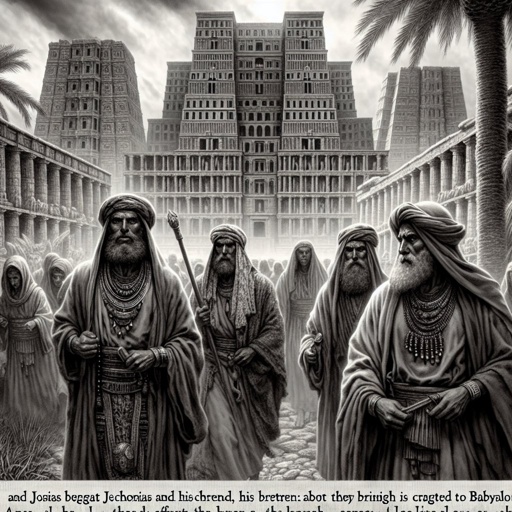
Matthew 1:11-12 - "And Josias begat Jechonias and his brethren, about the time they were carried away to Babylon: And after they were brought to Babylon, Jechonias begat Salathiel; and Salathiel begat Zorobabel."
"And Josias begat Jechonias and his brethren, about the time they were carried away to Babylon: And after they were brought to Babylon, Jechonias begat Salathiel; and Salathiel begat Zorobabel." - Matthew 1:11-12

Matthew 1:2

Matthew 3:11-12

Matthew 3:11-12

Matthew 1:11 - "And Josias begat Jechonias and his brethren, about the time they were carried away to Babylon:"

Matthew 1:1-16 Jesus geneology.

Matthew 1:2 - "Abraham begat Isaac; and Isaac begat Jacob; and Jacob begat Judas and his brethren;"

Matthew 11:1

Matthew 11:1

Matthew 11:3

Matthew 2:1-12

Matthew 5:1 a 12

Matthew 2:1-12

Matthew 2:1-12

Matthew 11:12 - "And from the days of John the Baptist until now the kingdom of heaven suffereth violence, and the violent take it by force."

Matthew 21:1-11

Matthew 5:1 a 12

Matthew 2:1-12

Luke 1:11-12

Luke 1:11-12

Luke 1:11-12

Luke 1:11-12
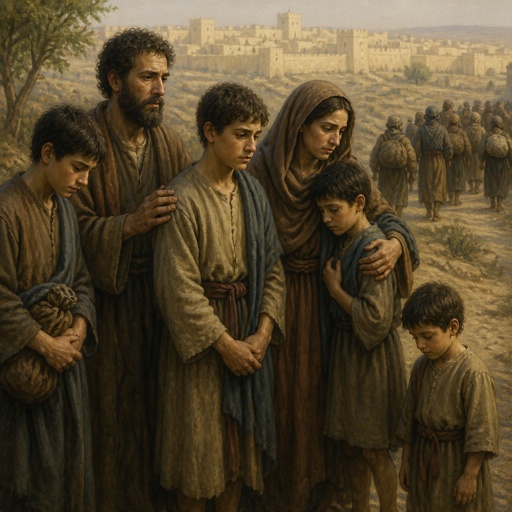
"And Josias begat Jechonias and his brethren, about the time they were carried away to Babylon:" - Matthew 1:11

Matthew 23:11-12 - "But the greatest among you shall be your servant. Whoever exalts himself shall be humbled; and whoever humbles himself shall be exalted."

Acts 1:1-11

"Abraham begat Isaac; and Isaac begat Jacob; and Jacob begat Judas and his brethren;" - Matthew 1:2

1 Kings 12:11
1 Kings 12:11

1 Kings 12:11