What does Matthew 1:5 mean?
“And Salmon begat Booz of Rachab; and Booz begat Obed of Ruth; and Obed begat Jesse;” — Matthew 1:5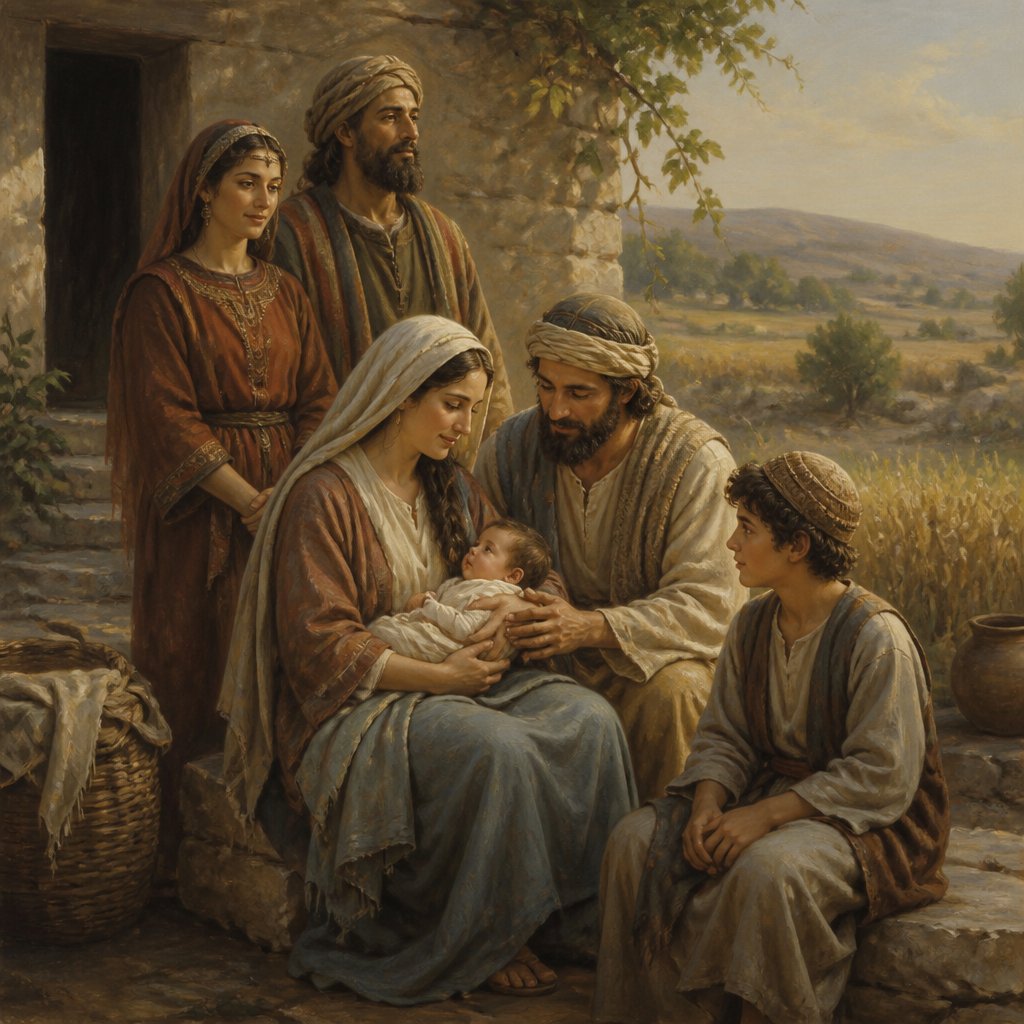
Matthew 1:5 KJV: "And Salmon begat Booz of Rachab; and Booz begat Obed of Ruth; and Obed begat Jesse;"
The first chapter of the Gospel of Matthew is known as the genealogy of Jesus Christ. It traces the ancestry of Jesus from Abraham through David, highlighting his royal lineage. This verse is part of the genealogy and focuses on the lineage from Salmon to Jesse.
The genealogy in the Gospel of Matthew serves several purposes. First, it establishes Jesus' connection to the line of David, fulfilling the prophecy of the Messiah being from the house of David. Second, it emphasizes Jesus' place in the history of Israel and his connection to the people of Israel. Lastly, it highlights God's faithfulness throughout generations, showing that Jesus' coming was part of God's plan from the beginning.
In this verse, we can see the inclusion of four individuals: Salmon, Boaz, Obed, and Jesse. Each of these individuals played a significant role in the history of Israel and in the lineage of Jesus.
Salmon was the husband of Rahab. Rahab was a Canaanite woman who helped the Israelite spies during the conquest of Jericho. Her act of faith and courage saved her and her family, and she later became part of the lineage of Jesus. This inclusion of Rahab in the genealogy is a testament to God's grace and the fact that he works through all people, regardless of their background or ethnicity.
Boaz was the son of Salmon and Rahab. He is best known for his role in the story of Ruth. Boaz married Ruth, a Moabite woman, and their son Obed became the grandfather of King David. The story of Ruth and Boaz is a beautiful example of God's providence and faithfulness. Despite Ruth's humble background as a foreigner, she was brought into the line of Jesus through her faithfulness and devotion to God.
Obed was the son of Boaz and Ruth. His inclusion in the genealogy is significant because it reinforces the theme of God's faithfulness and ability to work through ordinary people to accomplish his purposes. Obed's descendant, Jesse, became the father of King David, solidifying Jesus' connection to the royal line of David.
Jesse, the father of King David, is the final figure mentioned in this verse. His significance lies in the fact that the Messiah was prophesied to come from the house of David. By including Jesse in the genealogy, the Gospel of Matthew establishes Jesus' rightful place as the long-awaited Messiah.
The inclusion of these individuals in the genealogy of Jesus emphasizes several themes that run throughout the Bible. God works through ordinary people, often using those who are considered outsiders or of lowly status to accomplish His plans. This is seen in the inclusion of Rahab and Ruth, both of whom were foreigners and women in a patriarchal society. Additionally, the genealogy highlights God's faithfulness and His ability to orchestrate events throughout history to bring about His ultimate purposes.
The context of this verse within the genealogy of Jesus also serves as a reminder of God's sovereignty and His promises to His people. By tracing Jesus' lineage back to David and Abraham, the Gospel of Matthew connects Jesus to the covenant promises made to Israel. The genealogy serves as a powerful statement about Jesus' identity and his role in fulfilling the promises of God.
In conclusion, Matthew 1:5 provides a rich and meaningful commentary on the themes of God's faithfulness, providence, and the inclusion of all people in His redemptive plan. It reinforces the significance of Jesus' lineage and his connection to the history of Israel. This verse serves as a powerful reminder of God's ability to work through ordinary individuals and His faithfulness to fulfill His promises.
Get our apps


Artwork for Matthew 1:5

Matthew 1:5 - "And Salmon begat Booz of Rachab; and Booz begat Obed of Ruth; and Obed begat Jesse;"

"And Salmon begat Booz of Rachab; and Booz begat Obed of Ruth; and Obed begat Jesse;" - Matthew 1:5

Matthew 5:44

Matthew 5:14

Matthew 5:44

Matthew 5:14

Matthew 5:1 a 12

Matthew 5:1 a 12

Matthew 5:1 - "And seeing the multitudes, he went up into a mountain: and when he was set, his disciples came unto him:"

Matthew 5:5 - "Blessed are the meek: for they shall inherit the earth."

Matthew 5:44

Matthew 5:44

Matthew 5

Matthew 5

Matthew 5:44

Matthew 5:44

Matthew 5

Matthew 5:44

Matthew 5:38

Matthew 6:5

Matthew 5:15

Matthew 5:30

Matthew 5:30

Matthew 5:15

Matthew 5:38

matthew 5 13-20

Matthew 5:8-12

“The blind receive sight, the lame walk, those who have leprosy are cleansed, the deaf hear, the dead are raised” - Matthew 11:5

"Blessed are the meek: for they shall inherit the earth." - Matthew 5:5

Matthew 5:4 - "Blessed are they that mourn: for they shall be comforted."