What does Matthew 20:15 mean?
“Is it not lawful for me to do what I will with mine own? Is thine eye evil, because I am good?” — Matthew 20:15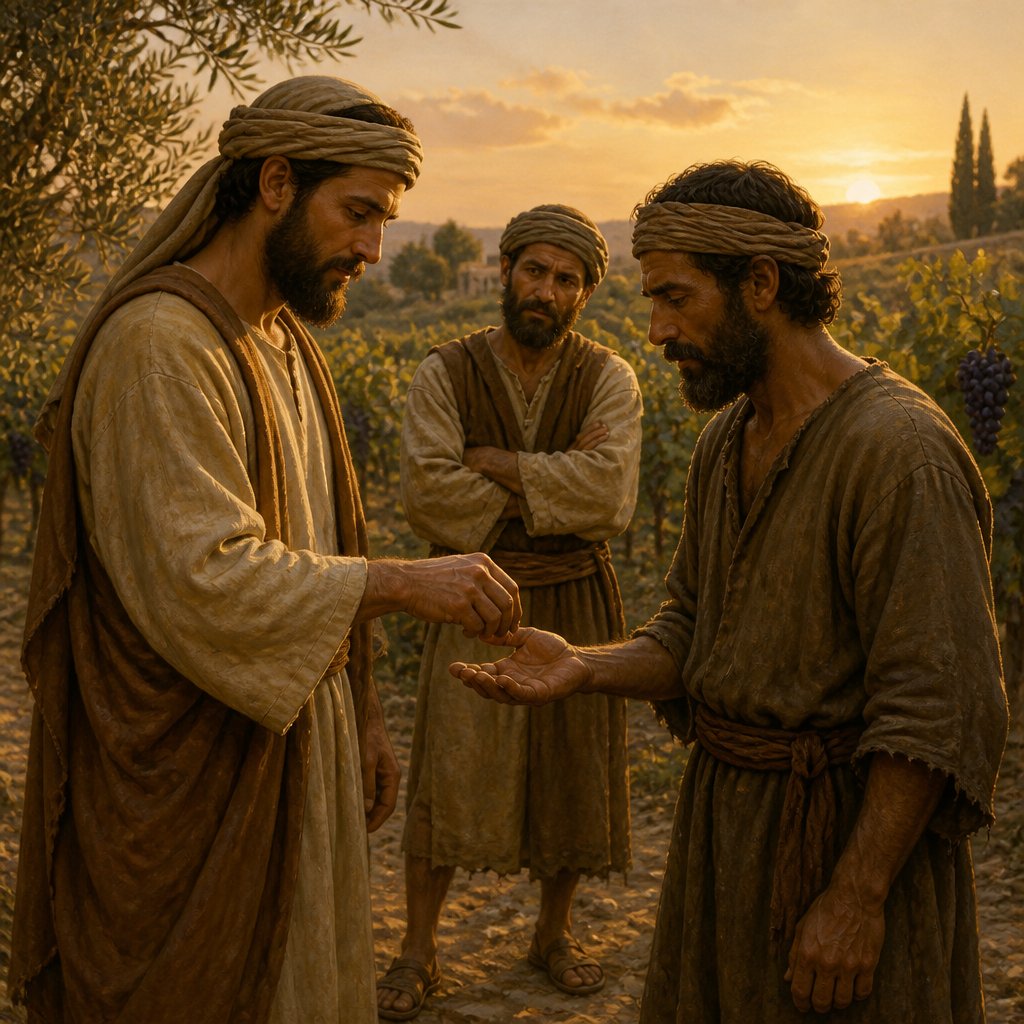
The Bible verse Matthew 20:15 from the King James Version (KJV) states: "Is it not lawful for me to do what I will with mine own? Is thine eye evil, because I am good?" This verse is part of a parable told by Jesus, in which he compares the kingdom of heaven to a landowner who hired workers for his vineyard at different times of the day, and paid them all the same wage at the end of the day.
This verse is the response of the landowner to the complaint of the workers who were hired early in the morning, who felt that they should receive more pay than those who were hired later in the day. The landowner's question, "Is thine eye evil, because I am good?" is a rhetorical question that challenges the workers' understanding of fairness and generosity.
The themes present in this verse include the generosity and fairness of God, and the idea of grace and salvation being available to all, regardless of their circumstances.
The context of this verse is important to understand the message that Jesus is trying to convey. In the parable, the landowner represents God, and the workers represent people who come to faith at different stages of their lives. The early morning workers, who labored all day, represent those who have been faithful to God for a long time, and the later workers represent those who come to faith later in life. The landowner's actions demonstrate that God's grace and salvation are available to all who come to Him, regardless of when they come or how much they have done in service to Him.
The verse also brings up the concept of jealousy and envy. The early morning workers' complaint stems from their jealousy towards the later workers who received the same wage for less work. The landowner's question challenges the workers to examine their own motives and attitudes, and points out that their envy is based on a misunderstanding of the landowner's generosity. In the same way, Jesus encourages his listeners to examine their own hearts and to recognize any tendencies towards envy and jealousy.
Symbolism in this verse includes the landowner representing God's generosity and grace, while the workers represent different people who come to faith at different times in their lives. The wages that the workers receive can be seen as a symbol of God's salvation and eternal life, which is freely given to all who come to Him.
Overall, Matthew 20:15 from the King James Version carries a powerful message about the generosity and fairness of God, as well as the importance of examining our own hearts for feelings of jealousy and envy. The parable reminds us that God's grace is available to all, and that our own attitudes towards others should be marked by generosity and understanding.
Get our apps


Artwork for Matthew 20:15

Matthew 20:15 - "Is it not lawful for me to do what I will with mine own? Is thine eye evil, because I am good?"

"Is it not lawful for me to do what I will with mine own? Is thine eye evil, because I am good?" - Matthew 20:15

Matthew 15 : 1-20

Matthew 15:20 - "These are the things which defile a man: but to eat with unwashen hands defileth not a man."

"These are the things which defile a man: but to eat with unwashen hands defileth not a man." - Matthew 15:20

matthew 15 matthew 15:10

Matthew 15:19-20 - "For out of the heart come evil thoughts—murder, adultery, sexual immorality, theft, false testimony, slander. These are what defile a person; but eating with unwashed hands does not defile them."

Matthew 17:20

Matthew 18:20

matthew 20:3

Matthew 18:20

Matthew 18:20

Matthew 17:20

Matthew 15:18-20 - "But the things that come out of a person's mouth come from the heart, and these defile them. For out of the heart come evil thoughts—murder, adultery, sexual immorality, theft, false testimony, slander. These are what defile a person; but eating with unwashed hands does not defile them."

Matthew 26:15

Matthew 26:15

Matthew 15:23

Matthew 24:15

Matthew 28:19-20

matthew 5 13-20

Matthew 20:29-34

Matthew 15:15 - "Then answered Peter and said unto him, Declare unto us this parable."

Matthew 5:15

Matthew 15:23

Matthew 5:15

Matthew 28: 19-20

Matthew 28:19-20

Matthew 28:19-20

Matthew 20:20 - "¶ Then came to him the mother of Zebedee's children with her sons, worshipping him, and desiring a certain thing of him."

Genesis 15:20