What does Matthew 21:30 mean?
“And he came to the second, and said likewise. And he answered and said, I go, sir: and went not.” — Matthew 21:30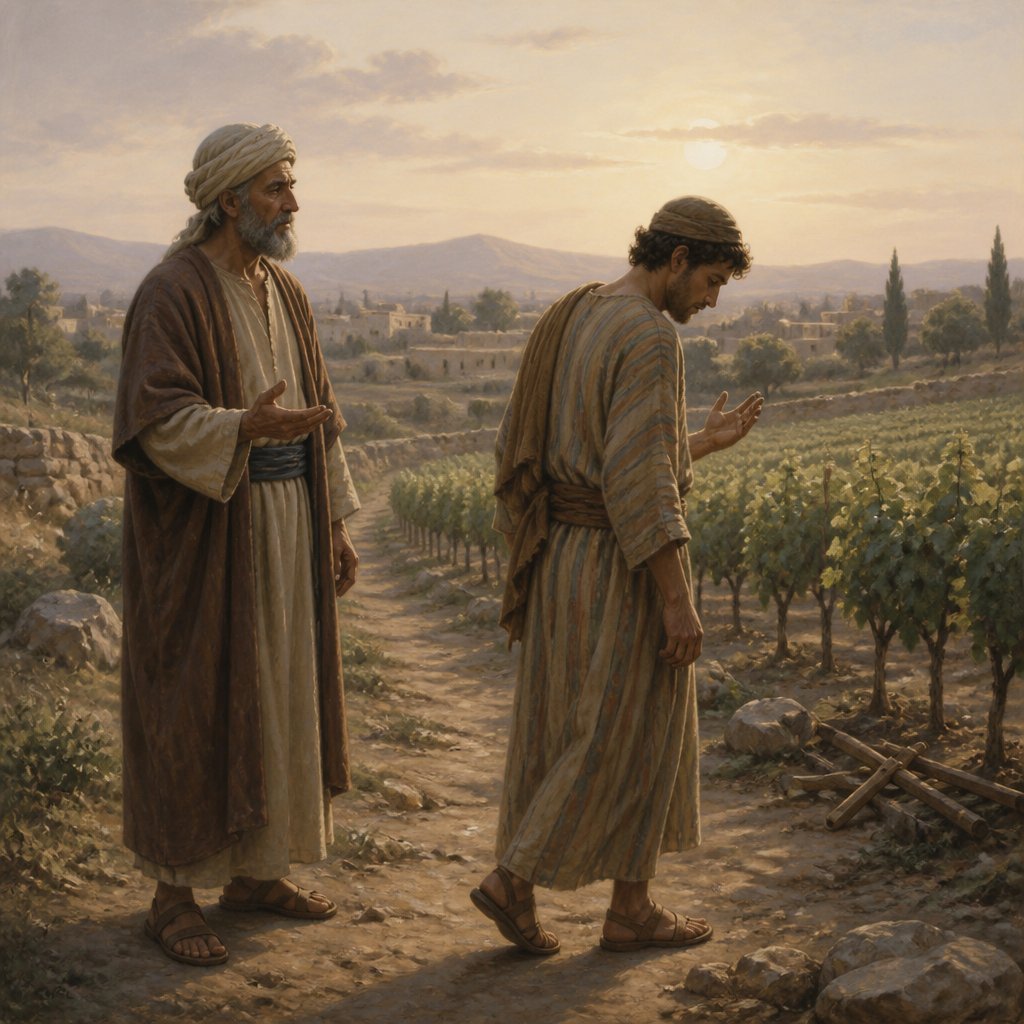
In the King James Version (KJV) of the Bible, Matthew 21:30 states, "And he came to the second, and said likewise. And he answered and said, I go, sir: and went not."
This verse is part of a parable told by Jesus to illustrate the nature of repentance and obedience in response to the Kingdom of God. The parable is known as the Parable of the Two Sons. In this parable, a man asks his two sons to go and work in his vineyard. The first son initially refuses but later decides to go and work in the vineyard. The second son agrees to go and work, but he does not actually go and work in the vineyard.
The parable is included in the broader context of Jesus' teachings and interactions as he approached the end of his earthly ministry. In the preceding verses, Jesus had been confronted by the chief priests and elders of the people who questioned his authority. In response, Jesus told this parable to convey a powerful message about true obedience and the nature of repentance in contrast to mere profession of faith or righteousness.
The Parable of the Two Sons holds significant themes of repentance, obedience, and the sincerity of one's words and actions. It is an illustration of the concept that true righteousness is shown through actions, not just words. The first son initially refused to go and work in the vineyard but later repented and obeyed his father's command. On the other hand, the second son, who initially agreed to go and work, did not follow through with his promise. This contrast highlights the importance of genuine repentance and obedience in the eyes of God.
The parable also carries a broader symbolic meaning. The vineyard can represent God's kingdom or the work of God on earth. The two sons represent different responses to God's call. The first son, who initially refused but later obeyed, represents the sinners and outcasts who may have strayed from God but ultimately repent and enter the kingdom. The second son, who makes a hollow promise, represents the religious leaders and those who profess righteousness but do not truly follow God's will.
The parable serves as a warning against hypocrisy and self-righteousness, as Jesus was addressing the chief priests and elders who claimed to be obedient to God but did not recognize the truth of his teachings. It challenges individuals to examine their own hearts and motivations, emphasizing the need for genuine repentance and obedience to God's will.
Furthermore, this parable is a reflection of the contrasting responses to Jesus' own ministry. While the religious leaders rejected Jesus and his teachings, the "sinners" and outcasts, represented by the first son, responded to Jesus' message with repentance and obedience. The parable thus speaks to the broader theme of inclusion and the reversal of social norms in God's kingdom.
In conclusion, Matthew 21:30, within the broader context of the Parable of the Two Sons, conveys a powerful and timeless message about repentance, obedience, and sincerity in one's relationship with God. It serves as a warning against hypocrisy and self-righteousness while also emphasizing the inclusive nature of God's kingdom. The parable challenges individuals to examine their own hearts and actions, inviting them to embody true repentance and obedience in response to God's call.
Get our apps


Artwork for Matthew 21:30

Matthew 21:30 - "And he came to the second, and said likewise. And he answered and said, I go, sir: and went not."
"And he came to the second, and said likewise. And he answered and said, I go, sir: and went not." - Matthew 21:30

Matthew 6:30

Matthew 5:30

Matthew 5:30

Genesis 21-30

Matthew 24:30-31

Matthew 24:30-31

Matthew 24:30-31

Matthew 24:30-31

Matthew 24:30-31

Matthew 24:30-31

Matthew 24:30-31

Matthew 24:30-31

Matthew 24:30-31

Matthew 24:30-31

Matthew 11:30 - "For my yoke is easy, and my burden is light."

Matthew 10:30 - "But the very hairs of your head are all numbered."

Matthew 9:21

Matthew 21

Matthew 9:21-22

Matthew 19:30 - "But many that are first shall be last; and the last shall be first."

Matthew 9:21-22

Matthew 9:21-22

Matthew 9:21-22

Matthew 9:21-22

Matthew 25:21

Matthew 25:21

Proverbs 21:30 - "There is no wisdom nor understanding nor counsel against the LORD."

Matthew 26:30 - "And when they had sung an hymn, they went out into the mount of Olives."