What does Matthew 21:34 mean?
“And when the time of the fruit drew near, he sent his servants to the husbandmen, that they might receive the fruits of it.” — Matthew 21:34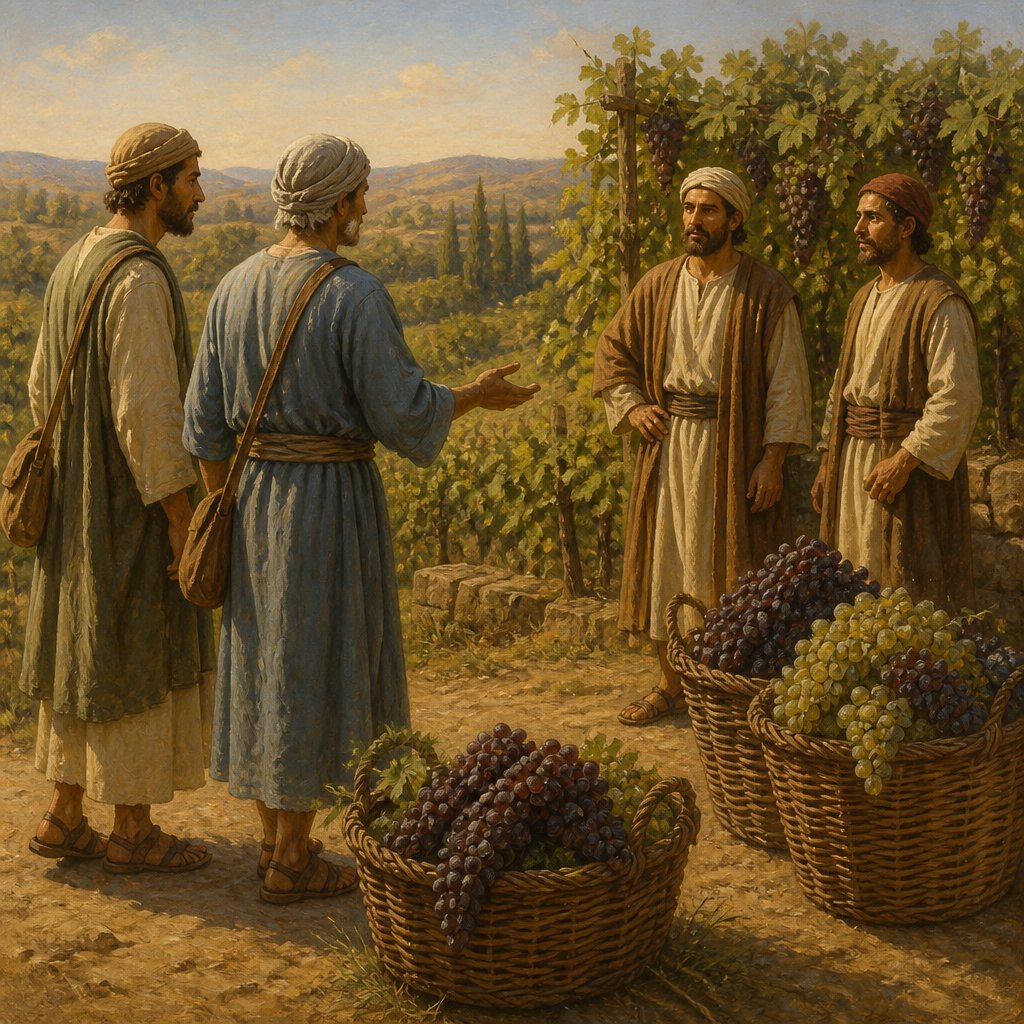
Matthew 21:34 (KJV) reads: "And when the time of the fruit drew near, he sent his servants to the husbandmen, that they might receive the fruits of it."
This verse is a part of a parable that Jesus tells in the Gospel of Matthew. The parable is known as the Parable of the Wicked Husbandmen and it is a story that Jesus uses to teach a valuable lesson to his followers. In this parable, Jesus uses the metaphor of a vineyard to represent the kingdom of God, the owner of the vineyard to represent God, the vineyard itself to represent the world, and the various characters in the story to represent different groups of people.
The verse specifically highlights the actions of the owner of the vineyard, who sends his servants to the husbandmen (the tenants of the vineyard) to collect the fruits of the vineyard. The time of the fruit drawing near represents the time for the crops to ripen and be ready for harvest.
In the broader context of the parable, the servants that are sent by the owner represent the prophets that God sends to the people of Israel to call them to repentance and to bear spiritual fruit. However, the husbandmen mistreat the servants, beating one, killing another, and stoning another. This represents the way that the people of Israel reject and even kill the prophets that God sends to them.
The deeper meaning of this verse and the parable as a whole is to illustrate God's faithfulness in sending messengers to His people and their often cruel rejection of those messengers. The parable is a warning to the religious leaders of Israel at the time, showing them that if they continue to reject God's messengers, they will suffer severe consequences.
The parable also foreshadows the rejection and crucifixion of Jesus himself, who is the ultimate messenger and fulfillment of God's plan for salvation. The religious leaders of the time were like the wicked husbandmen who rejected the owner's messengers and ultimately rejected His son, Jesus.
The themes present in this verse and the parable as a whole include the faithfulness of God, the rejection of His messengers, and the consequences of disobedience and rejection. It serves as a warning to the people of Israel, and by extension to all people, to listen to the voice of God and heed His call to repentance and spiritual fruitfulness.
Symbolism is also evident in this verse, as the vineyard represents the world, the owner represents God, the servants represent the prophets, and the husbandmen represent the religious leaders of Israel. The fruits of the vineyard represent the spiritual fruitfulness that God desires from His people.
In conclusion, Matthew 21:34, as part of the Parable of the Wicked Husbandmen, serves as a powerful lesson about the rejection of God's messengers and the consequences of disobedience. It is a call to repentance and spiritual growth, as well as a warning to those who would reject God's word. The verse and the parable as a whole continue to hold deep significance for Christians today, serving as a reminder of the need to listen to God's voice and bear fruit in keeping with repentance.
Get our apps


Artwork for Matthew 21:34

Matthew 21:34 - "And when the time of the fruit drew near, he sent his servants to the husbandmen, that they might receive the fruits of it."
"And when the time of the fruit drew near, he sent his servants to the husbandmen, that they might receive the fruits of it." - Matthew 21:34

Matthew 6:34

Genesis 21-34

Matthew 6:34

Matthew 6:34

Matthew 6:34

Matthew 6:34

Matthew 18:23-34

Matthew 18:23-34

Matthew 18:23-34

Matthew 20:29-34

Matthew 6:25 – 34

Matthew 18:23-34
Numbers 34:21 - "Of the tribe of Benjamin, Elidad the son of Chislon."

Genesis 21:34 - "And Abraham sojourned in the Philistines' land many days."

Matthew 14:34 - "¶ And when they were gone over, they came into the land of Gennesaret."

Matthew 9:21

Psalms 34:21 - "Evil shall slay the wicked: and they that hate the righteous shall be desolate."

Matthew 21

Matthew 9:21-22

Matthew 9:34 - "But the Pharisees said, He casteth out devils through the prince of the devils."

Images that depicts the verse Matthew 27:11-34

Job 34:21 - "For his eyes are upon the ways of man, and he seeth all his goings."

Job 21:34 - "How then comfort ye me in vain, seeing in your answers there remaineth falsehood?"

Matthew 9:21-22

Matthew 9:21-22

Matthew 9:21-22

Matthew 9:21-22

Matthew 5:34 - "But I say unto you, Swear not at all; neither by heaven; for it is God's throne:"