What does Matthew 22:26 mean?
“Likewise the second also, and the third, unto the seventh.” — Matthew 22:26
The verse Matthew 22:26 in the King James Version (KJV) of the Bible reads, "Likewise the second also, and the third, unto the seventh."
This verse is part of a larger passage in the book of Matthew that records a conversation between Jesus and the Sadducees, who were a Jewish religious sect known for their denial of the resurrection. In this particular passage, the Sadducees were attempting to trap Jesus with a hypothetical scenario about marriage and the afterlife. They presented a question to Jesus about a woman who had been married to multiple brothers, all of whom had died. They asked Jesus whose wife she would be in the resurrection.
To fully understand the meaning and commentary of this verse, it is important to consider the context in which it occurs. The Sadducees were known for their strict adherence to the Torah, the first five books of the Old Testament, and their skepticism about the existence of the afterlife. Their question to Jesus was meant to challenge his teachings and beliefs about life after death.
In response to their question, Jesus rebukes the Sadducees for their lack of understanding of the Scriptures and the power of God. He tells them that they are mistaken because they do not know the Scriptures or the power of God. Jesus goes on to explain that in the resurrection, people will be like angels and will not marry or be given in marriage. He then emphasizes the importance of knowing the Scriptures and the power of God, stating that God is not the God of the dead but of the living.
The specific verse, "Likewise the second also, and the third, unto the seventh," is a continuation of Jesus' response to the Sadducees' question. He uses this phrase to illustrate that in the resurrection, there will be no need for marriage, as people will be like angels. This passage emphasizes the transformation that will occur in the afterlife, where earthly relationships and institutions will no longer be necessary.
In terms of themes, this passage addresses the themes of the afterlife, resurrection, and the power of God. Jesus' teachings on these subjects challenged the beliefs of the Sadducees and emphasized the transformative nature of the afterlife. The passage also highlights the importance of knowing the Scriptures and understanding the power of God, as Jesus rebukes the Sadducees for their lack of understanding.
Symbolism in this verse can be found in the reference to the seven brothers. The number seven holds symbolic significance in the Bible, representing completion, perfection, and divine fullness. In this passage, the mentioning of the seven brothers serves as a symbolic illustration of the earthly relationships and institutions that will be transcended in the resurrection. It symbolizes the completeness of the transformation that will occur in the afterlife, where earthly limitations will no longer apply.
In conclusion, the verse Matthew 22:26 in the King James Version of the Bible is a significant part of a passage in which Jesus addresses the topic of the afterlife and resurrection. It challenges the beliefs of the Sadducees and emphasizes the transformative nature of the afterlife. The passage also emphasizes the importance of knowing the Scriptures and understanding the power of God. Through its themes and symbolism, this verse conveys profound truths about the nature of the afterlife and the power of God.
Get our apps


Artwork for Matthew 22:26

Matthew 22:26 - "Likewise the second also, and the third, unto the seventh."

"Likewise the second also, and the third, unto the seventh." - Matthew 22:26

Matthew 26:22 - "And they were exceeding sorrowful, and began every one of them to say unto him, Lord, is it I?"

"And they were exceeding sorrowful, and began every one of them to say unto him, Lord, is it I?" - Matthew 26:22

Matthew 26:25

Matthew 26:15

Matthew 19:26

Matthew 26:15

Matthew 27:26

Matthew 27:26

Matthew 26:53

Matthew 26:41

Matthew 26:65

Matthew 26:53

Matthew 9:21-22

Jonah 2:2-6 Jonah sinking down in the deep blue water, with the whale about to swallow him.
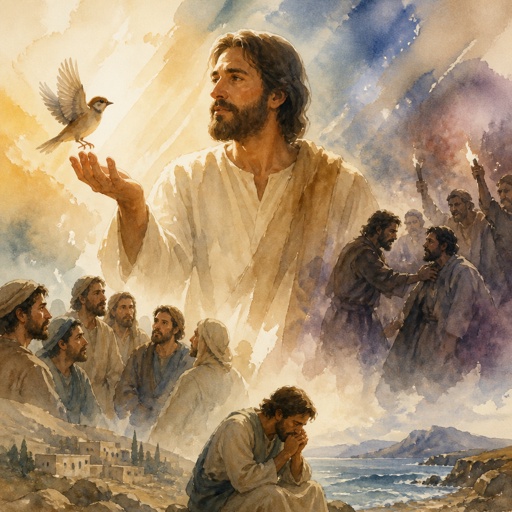
Matthew 10:26-33
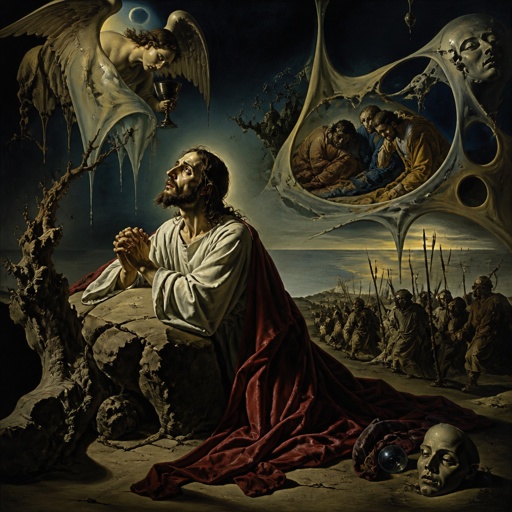
Matthew 26:36-46

Matthew 9:21-22

Matthew 9:21-22

Matthew 9:21-22

Matthew 9:21-22

Matthew 22:22 - "When they had heard these words, they marvelled, and left him, and went their way."

Matthew 6:22

Matthew 6:22

Luke 16:22-26

Matthew 26:26 - "¶ And as they were eating, Jesus took bread, and blessed it, and brake it, and gave it to the disciples, and said, Take, eat; this is my body."

Matthew 6:22

Leviticus 22:26 - "¶ And the LORD spake unto Moses, saying,"

Matthew 9:26 - "And the fame hereof went abroad into all that land."