What does Matthew 26:16 mean?
“And from that time he sought opportunity to betray him.” — Matthew 26:16
The verse Matthew 26:16 in the King James Version of the Bible reads, "And from that time he sought opportunity to betray him." This verse is part of the narrative of the betrayal of Jesus by one of his disciples, Judas Iscariot. The context of this verse is crucial to understanding its meaning and significance.
In the preceding verses, Jesus is in Bethany at the house of Simon the leper. A woman comes to him and pours expensive ointment on his head, anointing him. This act is seen as a loving and generous gesture of worship and adoration towards Jesus. However, the disciples, particularly Judas Iscariot, are indignant about this act, seeing it as wasteful and unnecessary.
Judas, in particular, expresses his discontent and questions why the ointment was not sold and the money given to the poor. However, John's account in the parallel verse in John 12:6 adds that Judas did not care for the poor but was a thief and took money from the common purse. This sheds light on Judas' true intentions and motives behind his question.
The verse Matthew 26:16 follows this incident, indicating that from that moment onwards, Judas began seeking an opportunity to betray Jesus. This verse reveals the treacherous nature of Judas' character and his eventual betrayal of Jesus.
One of the main themes in this verse is betrayal. Judas, who was one of Jesus' twelve disciples, betrays him for thirty pieces of silver, ultimately leading to Jesus' crucifixion. This act of betrayal is not only a significant event in Jesus' life but also plays a crucial role in the fulfillment of prophecies and the ultimate sacrifice for the redemption of humanity.
Another theme that can be derived from this verse is the contrast between love and betrayal. The act of the woman anointing Jesus with expensive ointment is a demonstration of love and devotion, while Judas' plotting to betray Jesus stands in stark contrast as an act of disloyalty and greed. This stark contrast highlights the internal conflicts and moral choices faced by individuals in their relationship with Jesus.
The symbolism in this verse lies in the character of Judas Iscariot. Judas symbolizes the archetype of betrayal and the consequences of choosing personal gain over loyalty and fidelity. His actions serve as a cautionary tale of the dangers of succumbing to greed and selfish desires at the expense of higher principles and moral values.
Furthermore, this verse serves as a reminder of the profound impact of individual choices and actions. Judas' decision to betray Jesus ultimately leads to his own demise, showcasing the inevitable consequences of deceit and betrayal.
In a broader context, the verse Matthew 26:16 serves to underscore the intricate interplay between human agency and divine providence. While Judas' betrayal is a pivotal moment in the narrative, it ultimately leads to the fulfillment of God's plan for the redemption of humanity through the sacrifice of Jesus. This tension between human actions and God's ultimate purpose is a recurring theme throughout the Bible and is reflected in this verse as well.
In conclusion, the verse Matthew 26:16 from the King James Version of the Bible encapsulates the themes of betrayal, love, and moral choice within the context of Judas' plotting to betray Jesus. It serves as a poignant reminder of the consequences of treachery and the redemptive power of Jesus' sacrifice. This verse continues to resonate as a profound and timeless message for believers, offering valuable insights into the complexities of human nature and the enduring grace of God.
Get our apps


Artwork for Matthew 26:16

Matthew 26:16 - "And from that time he sought opportunity to betray him."

"And from that time he sought opportunity to betray him." - Matthew 26:16

Matthew 16:26 - "For what is a man profited, if he shall gain the whole world, and lose his own soul? or what shall a man give in exchange for his soul?"

Matthew 26:25

Matthew 26:15

Matthew 19:26

Matthew 26:15

Matthew 27:26

Matthew 27:26

Matthew 26:53

Matthew 26:41

Matthew 26:65

Matthew 26:53
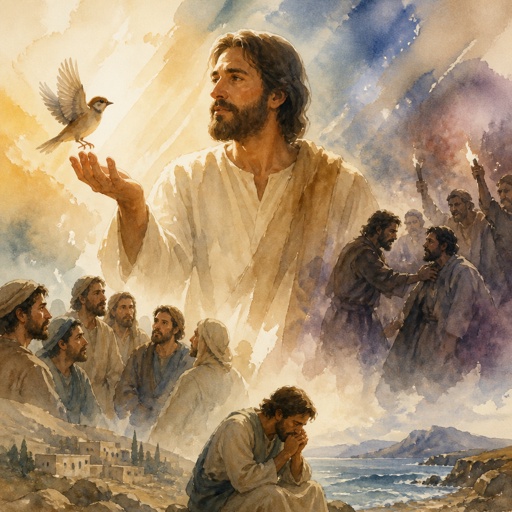
Matthew 10:26-33
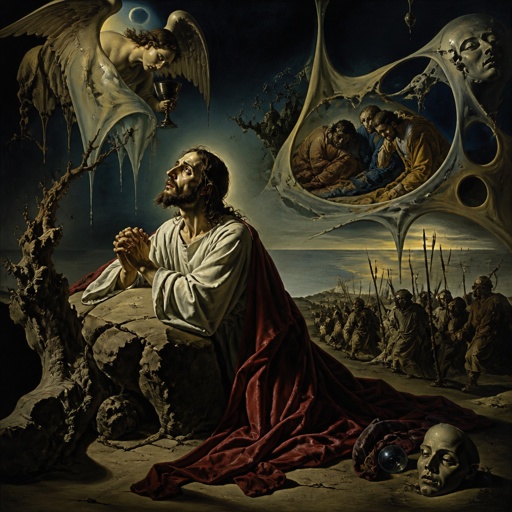
Matthew 26:36-46

Matthew 3:16

Matthew 26:26 - "¶ And as they were eating, Jesus took bread, and blessed it, and brake it, and gave it to the disciples, and said, Take, eat; this is my body."

Matthew 3:16

Matthew 3:16

Matthew 22:26 - "Likewise the second also, and the third, unto the seventh."

Matthew 9:26 - "And the fame hereof went abroad into all that land."

Matthew 26:54 - "But how then shall the scriptures be fulfilled, that thus it must be?"

Galatians 5:16-26

Numbers 11:16-26

Matthew 16:25

Luke 16:22-26

Matthew 26:6 - "¶ Now when Jesus was in Bethany, in the house of Simon the leper,"

Matthew 26:4 - "And consulted that they might take Jesus by subtilty, and kill him."

Matthew 26:5 - "But they said, Not on the feast day, lest there be an uproar among the people."

Matthew 16:16 - "And Simon Peter answered and said, Thou art the Christ, the Son of the living God."