What does Matthew 26:19 mean?
“And the disciples did as Jesus had appointed them; and they made ready the passover.” — Matthew 26:19
Matthew 26:19 in the King James Version (KJV) reads, "And the disciples did as Jesus had appointed them; and they made ready the passover." This verse comes from the New Testament of the Bible and is part of the narrative leading up to Jesus' crucifixion. The context of this verse is the Last Supper, a significant event in Christianity that symbolizes the ultimate sacrifice Jesus made for humanity.
The Last Supper was a Passover meal that Jesus shared with his disciples before his crucifixion. In the broader context of the book of Matthew, this event takes place during the final days of Jesus' life on earth. The disciples did as Jesus had appointed them, preparing for the Passover according to Jesus' instructions. This demonstrates the obedience and faithfulness of the disciples to Jesus' teachings and commands.
One of the themes that can be derived from this verse is obedience. The disciples' willingness to follow Jesus' instructions serves as an example of obedience to his teachings. This reflects the importance of faith and obedience in Christian belief. It also emphasizes the disciples' role in fulfilling Jesus' plan, as they obediently carry out his commands in preparation for the Passover.
Another theme is the significance of the Passover. In Jewish tradition, the Passover is a commemoration of the Israelites' liberation from slavery in Egypt. It involves the sacrificial offering of a lamb, which is symbolic of Jesus' sacrificial death on the cross. By participating in the Passover meal, Jesus and his disciples are observing a tradition that holds deep religious and historical significance. This foreshadows the impending sacrifice of Jesus, who would become the ultimate Passover lamb, offering freedom from sin and death for all who believe in him.
The verse also symbolizes the institution of the Eucharist, a central sacrament in Christianity. During the Last Supper, Jesus institutes the practice of communion by sharing bread and wine with his disciples, symbolic of his body and blood. This act represents the spiritual nourishment and unity that believers receive through Christ's sacrifice. The preparation for the Passover in Matthew 26:19 sets the stage for the profound spiritual significance of the Last Supper and the establishment of the Eucharist.
In a broader sense, this verse underscores the fulfillment of prophecy and the divine plan of redemption. The events leading up to Jesus' crucifixion, including the Last Supper, are all part of God's ultimate plan to reconcile humanity to himself. The disciples' obedience and the preparation for the Passover are integral parts of this grand narrative, illustrating the unfolding of God's redemptive purpose through Jesus Christ.
In conclusion, Matthew 26:19 from the King James Version offers a rich and profound message within the broader context of the Last Supper and the events leading up to Jesus' crucifixion. It conveys themes of obedience, the significance of the Passover, the institution of the Eucharist, and the fulfillment of divine prophecy. This verse serves as a crucial moment in the narrative of Jesus' earthly ministry, providing insight into the spiritual and theological significance of the Passover and its connection to the ultimate sacrifice of Jesus Christ.
Get our apps


Artwork for Matthew 26:19

Matthew 26:19 - "And the disciples did as Jesus had appointed them; and they made ready the passover."

"And the disciples did as Jesus had appointed them; and they made ready the passover." - Matthew 26:19

Matthew 19:26

Matthew 19:26 - "But Jesus beheld them, and said unto them, With men this is impossible; but with God all things are possible."

"But Jesus beheld them, and said unto them, With men this is impossible; but with God all things are possible." - Matthew 19:26

Matthew 26:25

Matthew 26:15

Matthew 26:15

Matthew 27:26

Matthew 27:26

Matthew 26:53

Matthew 26:41

Matthew 26:65

Matthew 26:53

Genesis 19-26
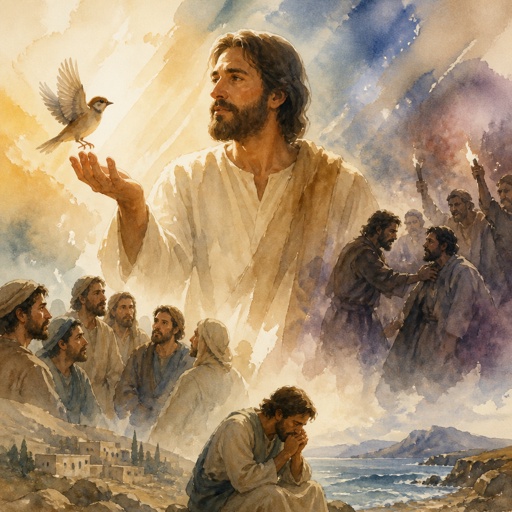
Matthew 10:26-33
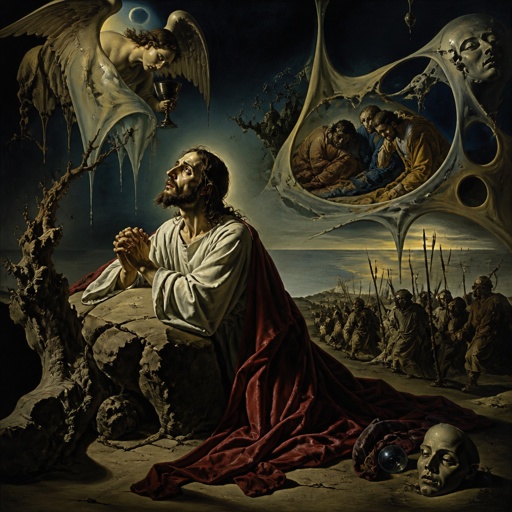
Matthew 26:36-46

Matthew 26:26 - "¶ And as they were eating, Jesus took bread, and blessed it, and brake it, and gave it to the disciples, and said, Take, eat; this is my body."

matthew 28:19

matthew 28:19

John 19:26-27

Matthew 19:13

Matthew 22:26 - "Likewise the second also, and the third, unto the seventh."

Matthew 9:26 - "And the fame hereof went abroad into all that land."

Matthew 26:54 - "But how then shall the scriptures be fulfilled, that thus it must be?"

Matthew 19:19 - "Honour thy father and thy mother: and, Thou shalt love thy neighbour as thyself."

Matthew 26:6 - "¶ Now when Jesus was in Bethany, in the house of Simon the leper,"

Matthew 26:4 - "And consulted that they might take Jesus by subtilty, and kill him."

Matthew 28:19-20

Matthew 26:5 - "But they said, Not on the feast day, lest there be an uproar among the people."