What does Matthew 26:20 mean?
“Now when the even was come, he sat down with the twelve.” — Matthew 26:20
The verse Matthew 26:20 from the King James Version (KJV) of the Bible reads: "Now when the even was come, he sat down with the twelve."
This verse is part of the narrative of Jesus's last meal with his disciples before his crucifixion. The evening meal, known as the Last Supper, has great significance in Christian theology and tradition. It was during this meal that Jesus instituted the Holy Communion, or Eucharist, as a remembrance of his sacrifice for the forgiveness of sins.
The verse highlights the intimate and solemn nature of the Last Supper. Jesus, knowing that his time on earth was coming to an end, chose to spend this final evening with his closest followers. The number twelve is significant as it represents the twelve apostles, who would become the foundation of the early Christian church.
The setting of the evening meal holds profound theological and symbolic meaning. The act of sitting down to share a meal with his disciples represents fellowship and communion. In the ancient Near East, sharing a meal was a sign of acceptance and intimacy. By sitting down with his disciples, Jesus was reaffirming his love and acceptance of them, despite knowing that one of them would betray him.
The Last Supper also foreshadows the events that were to unfold in the following days. Jesus's choice to have this meal on the eve of his crucifixion signifies the connection between the Last Supper and the sacrificial death that he would soon undergo. The wine and bread that Jesus shared with his disciples became symbols of his body and blood, which would be offered for the salvation of all believers.
In addition to its historical and theological significance, the verse also speaks to the timeless themes of friendship, loyalty, and betrayal. Jesus, aware of Judas Iscariot's impending betrayal, did not exclude him from the Last Supper. Instead, he included Judas in the fellowship, demonstrating his unconditional love and mercy. This act of inclusion exemplifies Jesus's teachings of forgiveness and acceptance, even in the face of betrayal.
The verse also reflects the human experiences of fellowship and companionship. The act of sitting down for a meal with loved ones is a universal symbol of unity and community. This simple act of sharing a table can be seen as a metaphor for the importance of relationships and the need for human connection.
In the broader context of the Gospel of Matthew, the verse serves as a crucial moment in Jesus's ministry. It marks the beginning of the events leading to his crucifixion and resurrection, which form the core of Christian faith. The Last Supper and the subsequent betrayal, trial, and crucifixion are central to the Christian narrative, as they represent the fulfillment of God's plan for the redemption of humanity.
In conclusion, Matthew 26:20 from the King James Version of the Bible captures a pivotal moment in the life of Jesus and the formation of Christian theology. It conveys themes of fellowship, sacrifice, and redemption, while also highlighting the complexity of human relationships. The verse holds powerful symbolism and continues to be a source of spiritual inspiration and reflection for believers around the world.
Get our apps


Artwork for Matthew 26:20

Matthew 26:20 - "Now when the even was come, he sat down with the twelve."

"Now when the even was come, he sat down with the twelve." - Matthew 26:20

Matthew 20:26 - "But it shall not be so among you: but whosoever will be great among you, let him be your minister;"

"But it shall not be so among you: but whosoever will be great among you, let him be your minister;" - Matthew 20:26

Matthew 20:26-28 - "It shall not be so among you. But whoever would be great among you must be your servant, and whoever would be first among you must be your slave, even as the Son of Man came not to be served but to serve, and to give his life as a ransom for many."

Matthew 26:25

Matthew 26:15

Matthew 19:26

Matthew 26:15

Matthew 27:26

Matthew 27:26

Matthew 26:53

Matthew 26:65

Matthew 26:41

Matthew 26:53

Proverbs 26:20
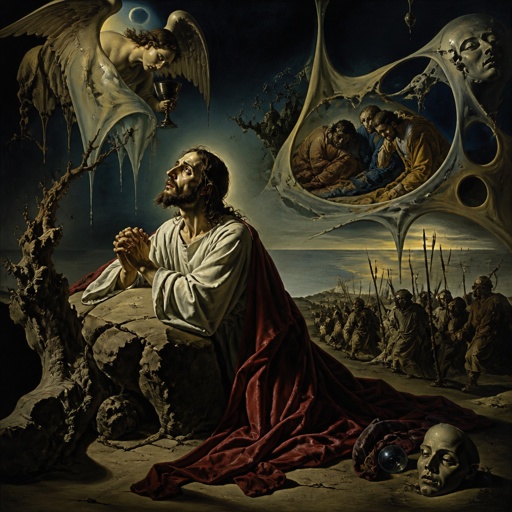
Matthew 26:36-46
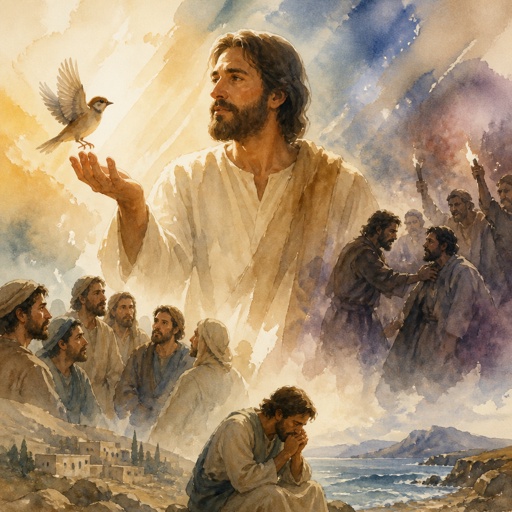
Matthew 10:26-33

Matthew 26:26 - "¶ And as they were eating, Jesus took bread, and blessed it, and brake it, and gave it to the disciples, and said, Take, eat; this is my body."

Matthew 18:20

Matthew 17:20

matthew 20:3

Matthew 18:20

Matthew 18:20

Matthew 17:20

Matthew 22:26 - "Likewise the second also, and the third, unto the seventh."

Matthew 9:26 - "And the fame hereof went abroad into all that land."

Matthew 26:54 - "But how then shall the scriptures be fulfilled, that thus it must be?"

Matthew 26:6 - "¶ Now when Jesus was in Bethany, in the house of Simon the leper,"

Matthew 26:4 - "And consulted that they might take Jesus by subtilty, and kill him."