What does Matthew 26:26-28 mean?
“And as they were eating, Jesus took bread, and blessed it, and brake it, and gave it to the disciples, and said, Take, eat; this is my body. And he took the cup, and gave thanks, and gave it to them, saying, Drink ye all of it; For this is my blood of the new testament, which is shed for many for the remission of sins.” — Matthew 26:26-28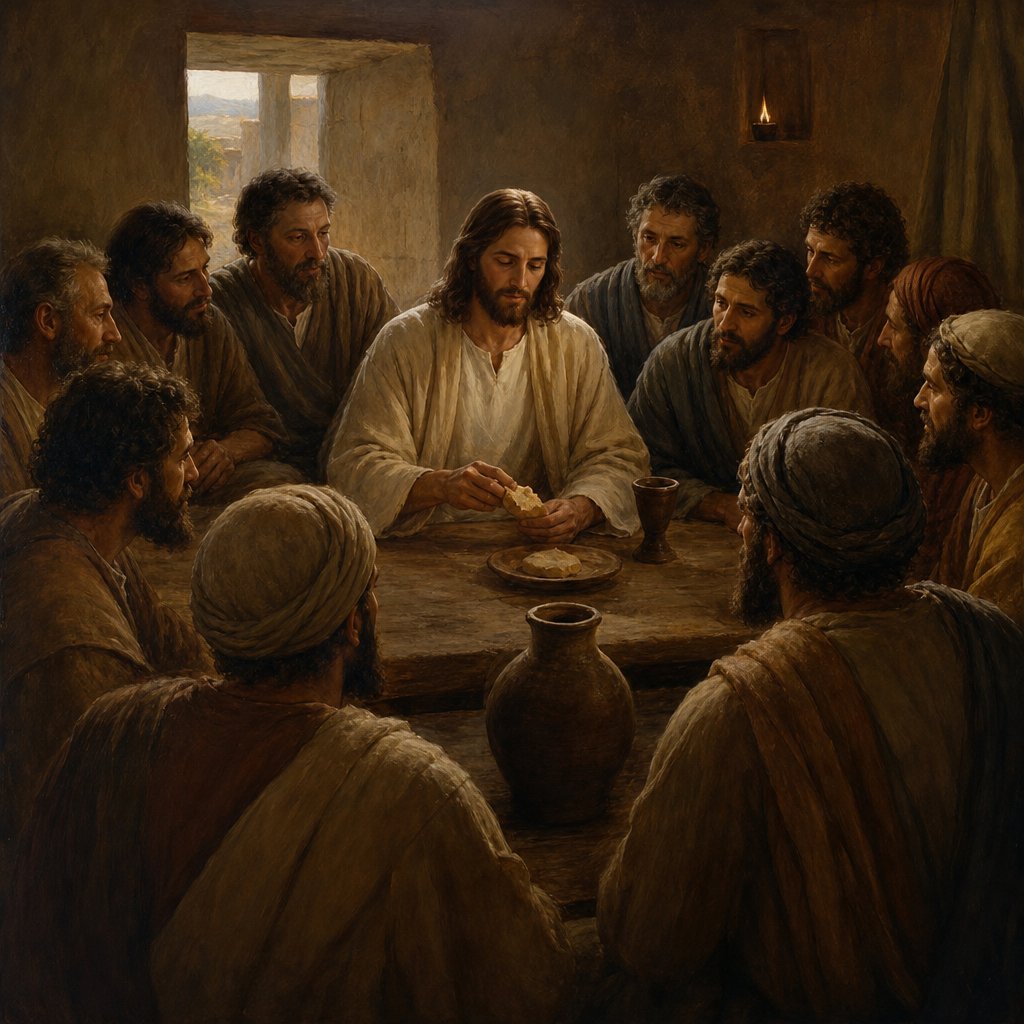
Matthew 26:26-28 (KJV) stands at the heart of the Passion narrative, spoken in the shadow of betrayal and death, and it gathers up the meaning of Jesus Christ’s coming suffering into visible, memorable signs. The words are given during the supper immediately preceding His arrest. Judas has already been identified as the betrayer in the surrounding passage, the authorities are plotting, and the disciples themselves do not yet grasp that within hours the Shepherd will be smitten and the sheep scattered. In that setting, Jesus does not merely predict His death; He interprets it. He places His own death inside the story of God’s redemption, and He gives His disciples a way to remember, proclaim, and participate in what He is about to accomplish.
The passage reads: “And as they were eating, Jesus took bread, and blessed it, and brake it, and gave it to the disciples, and said, Take, eat; this is my body. And he took the cup, and gave thanks, and gave it to them, saying, Drink ye all of it; For this is my blood of the new testament, which is shed for many for the remission of sins” (Matthew 26:26-28, KJV). The actions and the words belong together. The bread is taken, blessed, broken, and given; the cup is taken, thanked for, and shared. Each verb moves the disciples from ordinary eating into sacramental meaning. The meal becomes a deliberate act of covenant-making, and the ordinary elements become appointed signs of an extraordinary reality.
The immediate context is a Jewish feast season in which deliverance and sacrifice are already in view. At the Passover, Israel remembered being spared by blood and brought out by God’s mighty hand. Into that remembered deliverance Jesus speaks of His own “blood,” and not merely as the blood of a victim but as covenant-blood: “my blood of the new testament.” In the KJV, “testament” carries the weight of a covenant arrangement ratified by sacrifice. In Scripture, covenants are sealed with blood because life is in the blood, and because the seriousness of the bond is underscored by the cost of life. Jesus therefore declares that His coming death is not an accident of history but the appointed means by which God establishes the “new testament,” a new covenantal order in which sins are dealt with decisively.
When Jesus says of the bread, “this is my body,” He ties the sign to Himself. The bread is not offered as a mere token of friendship or a symbol of general spiritual nourishment, but as a deliberate pointer to His person given over for them. The breaking of the bread naturally evokes the giving up of His life, His body delivered to suffering. The disciples will shortly see His body arrested, struck, scourged, and crucified. By linking the bread to His body before any nail is driven, Jesus tells them how to read what they will see: not simply the collapse of their hopes, but the self-giving of the Christ. The command “Take, eat” calls for reception. It presents His gift as something to be accepted inwardly, not watched from a distance. The language presses the truth that salvation is not gained by spectatorship but by a receiving of what Christ gives.
Likewise, the cup is interpreted with even more explicit purpose: “this is my blood of the new testament, which is shed for many for the remission of sins.” Blood “shed” indicates a violent, sacrificial death, and the phrase “for many” signals breadth without suggesting universality without distinction. It echoes the idea of a representative, substitutionary giving of life for others. Most crucially, Jesus attaches a specific saving effect: “for the remission of sins.” In KJV language, “remission” is the sending away, the release, the pardoning of guilt. Jesus is not presenting His death as only an example of love or courage; He says it accomplishes forgiveness. Sin, which separates man from God and incurs judgment, is dealt with through His blood. The cup therefore signifies not merely suffering, but atonement and reconciliation.
Several themes converge here. There is the theme of substitution, because His body and blood are given “for” others, and the stated result is the remission of sins for “many.” There is the theme of covenant, because “new testament” indicates a divine arrangement inaugurated by Christ’s death, bringing God’s promises to their intended fulfillment. There is the theme of memorial and proclamation, because the rite is given at the climactic moment as an enduring act for disciples: the church is to remember Christ by returning to these signs, letting the gospel be preached to the heart through bread and cup. There is also the theme of unity and participation, because the disciples share one bread and one cup at the table of their Lord, indicating fellowship with Him and with one another grounded not in personality or achievement but in His redeeming death.
The symbolism is therefore neither empty nor self-generated. Bread is basic, sustaining food; it corresponds to the truth that Christ gives Himself as true life to His people. A cup shared in thanksgiving corresponds to joy and blessing, yet in this moment it becomes the cup of the covenant sealed by suffering. The blessing and thanksgiving show that Jesus embraces the Father’s will, not as defeat but as the path of redemption. Even the ordinariness of bread and wine speaks: God attaches eternal realities to common things, making the deepest salvation accessible and repeatable in the life of the believing community.
The significance of Matthew 26:26-28 in the KJV is that Jesus, on the eve of the cross, deliberately frames His death as covenant sacrifice for the forgiveness of sins and gives His disciples a tangible, God-appointed way to receive, remember, and confess that meaning. The cross is not left to be interpreted by rumor, fear, or later reflection. Christ Himself interprets it beforehand: His body given, His blood shed, the new testament established, sins remitted.
Get our apps


Artwork for Matthew 26:26-28

Matthew 26:26-28 - "And as they were eating, Jesus took bread, and blessed it, and brake it, and gave it to the disciples, and said, Take, eat; this is my body. And he took the cup, and gave thanks, and gave it to them, saying, Drink ye all of it; For this is my blood of the new testament, which is shed for many for the remission of sins."
"And as they were eating, Jesus took bread, and blessed it, and brake it, and gave it to the disciples, and said, Take, eat; this is my body. And he took the cup, and gave thanks, and gave it to them, saying, Drink ye all of it; For this is my blood of the new testament, which is shed for many for the remission of sins." - Matthew 26:26-28

Matthew 26:28 - "For this is my blood of the new testament, which is shed for many for the remission of sins."

"For this is my blood of the new testament, which is shed for many for the remission of sins." - Matthew 26:28

romans 8:26-28

Matthew 26:25

Matthew 26:15

Matthew 19:26

Matthew 26:15

Matthew 27:26

Matthew 27:26

Matthew 26:53

Matthew 26:65

Matthew 26:41

Matthew 26:53

Matthew 26:26 - "¶ And as they were eating, Jesus took bread, and blessed it, and brake it, and gave it to the disciples, and said, Take, eat; this is my body."
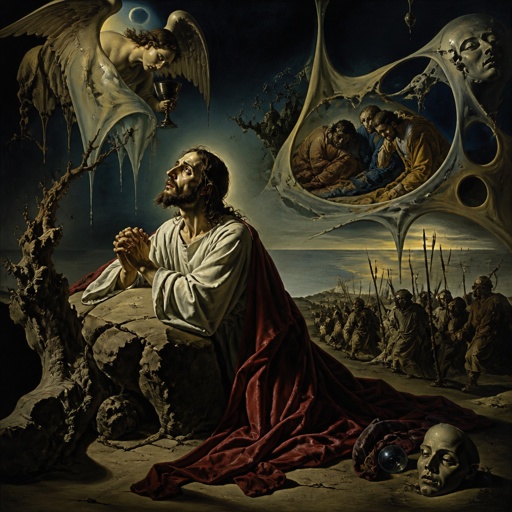
Matthew 26:36-46
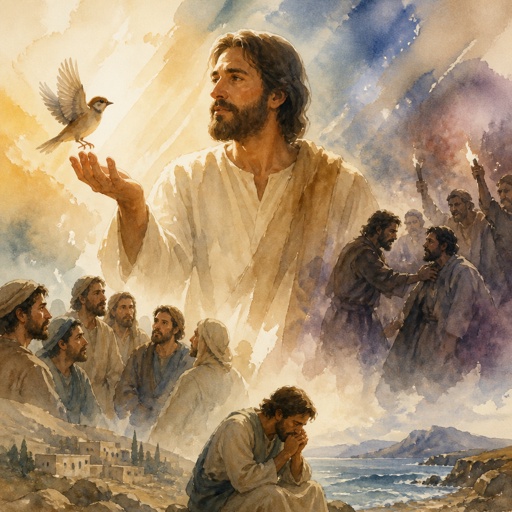
Matthew 10:26-33

Numbers 26:28 - "¶ The sons of Joseph after their families were Manasseh and Ephraim."

Job 28:26 - "When he made a decree for the rain, and a way for the lightning of the thunder:"

Matthew 26:54 - "But how then shall the scriptures be fulfilled, that thus it must be?"

Matthew 22:26 - "Likewise the second also, and the third, unto the seventh."

Matthew 9:26 - "And the fame hereof went abroad into all that land."

Matthew 20:26-28 - "It shall not be so among you. But whoever would be great among you must be your servant, and whoever would be first among you must be your slave, even as the Son of Man came not to be served but to serve, and to give his life as a ransom for many."

Exodus 26:28 - "And the middle bar in the midst of the boards shall reach from end to end."

Proverbs 26:28 - "A lying tongue hateth those that are afflicted by it; and a flattering mouth worketh ruin."

Isaiah 28:26 - "For his God doth instruct him to discretion, and doth teach him."

Acts 26:28 - "Then Agrippa said unto Paul, Almost thou persuadest me to be a Christian."

Matthew 26:5 - "But they said, Not on the feast day, lest there be an uproar among the people."

Matthew 26:16 - "And from that time he sought opportunity to betray him."