What does Matthew 26:60 mean?
“But found none: yea, though many false witnesses came, yet found they none. At the last came two false witnesses,” — Matthew 26:60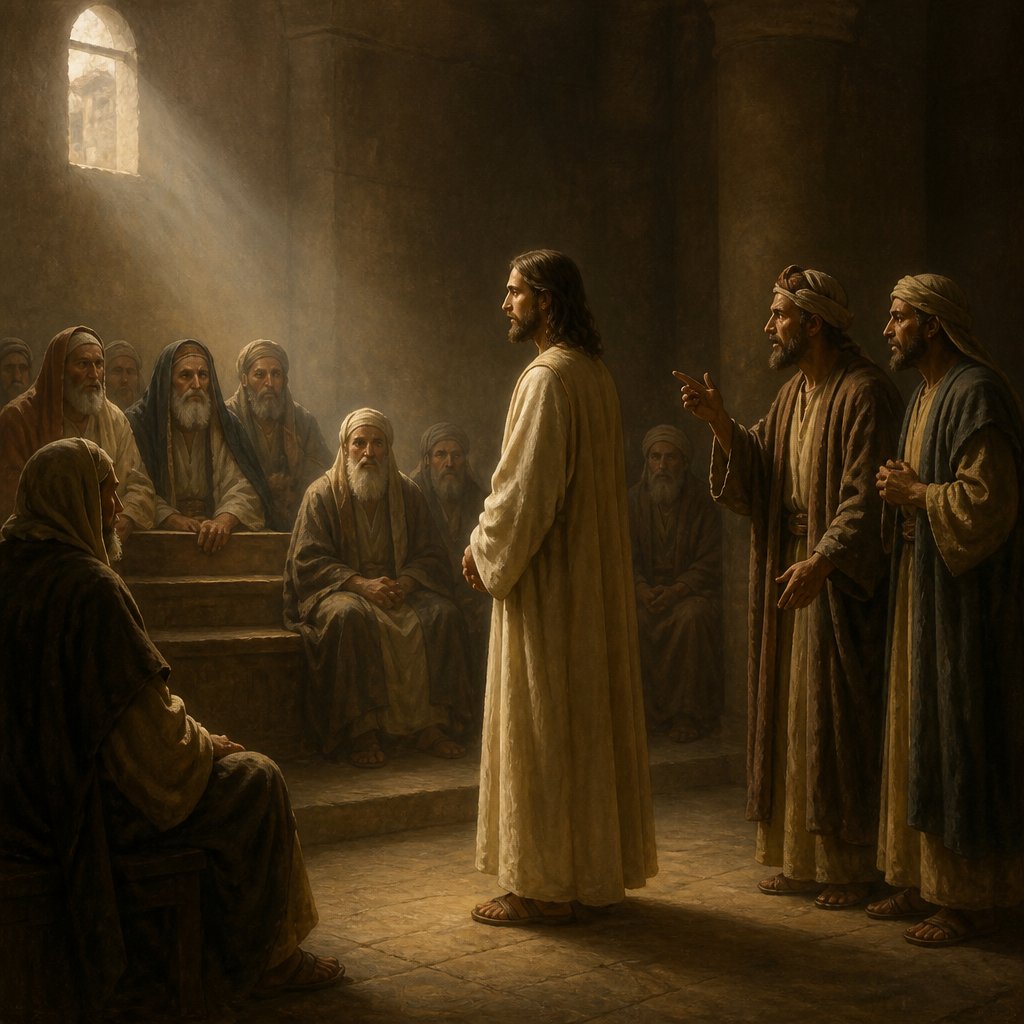
Matthew 26:60 (KJV) says, "But found none: yea, though many false witnesses came, yet found they none. At the last came two false witnesses." This verse is part of the larger narrative of Jesus' trial before the Jewish council and the high priest, Caiaphas. The context of this verse is crucial to understanding its meaning and significance.
In this chapter of Matthew, Jesus has just been betrayed by Judas Iscariot and arrested in the Garden of Gethsemane. He is then brought before the Sanhedrin, the Jewish council, and falsely accused of blasphemy. The religious leaders are seeking evidence to put Jesus to death, as they perceive Him as a threat to their authority and teachings. They are desperate to find any kind of testimony that would justify condemning Jesus.
The verse states that despite many false witnesses coming forward, they were unable to find any consistent testimony against Jesus. This highlights the dishonesty and corruption of those who were seeking Jesus' condemnation. Their attempts to find evidence against Him were ultimately futile, as there was no truth to their accusations. The fact that "many false witnesses came" demonstrates the extent to which the religious authorities were willing to go to achieve their goal of condemning Jesus.
The mention of "two false witnesses" at the end of the verse is significant as it fulfills the requirement of Jewish law, which states that at least two witnesses are needed to convict a person of a crime. However, their testimonies were found to be inconsistent and unreliable, further emphasizing the unjust and malicious nature of the accusations against Jesus.
This verse also serves as a reminder of the fulfillment of Old Testament prophecies regarding the suffering and persecution of the Messiah. Throughout the Gospels, the theme of Christ's suffering and betrayal is a recurring motif, and this verse is a part of that larger narrative. The unjust treatment of Jesus at the hands of the religious leaders was in fulfillment of God's plan for the redemption of humanity through His sacrifice on the cross.
Symbolically, this verse also represents the inherent wickedness and deceitfulness of the human heart. Despite the religious leaders' outward appearance of righteousness, their actions reveal their true nature. It also serves as a reminder of the fallen nature of humanity and the capacity for evil within each individual. The betrayal and unjust condemnation of Jesus by those in positions of authority highlight the universal need for redemption and the inherent sinfulness of mankind.
Overall, Matthew 26:60 is a pivotal verse in the narrative of Jesus' trial and crucifixion. It emphasizes the unjust treatment of Jesus by the religious authorities, the fulfillment of Old Testament prophecies, and the universal need for redemption. It serves as a reminder of the wickedness of the human heart and the ultimate sacrifice of Jesus for the salvation of mankind. Despite the attempts of false witnesses and the corruption of those in power, the truth of Jesus' innocence and His ultimate victory over sin and death prevail.
Get our apps


Artwork for Matthew 26:60

Matthew 26:60 - "But found none: yea, though many false witnesses came, yet found they none. At the last came two false witnesses,"

"But found none: yea, though many false witnesses came, yet found they none. At the last came two false witnesses," - Matthew 26:60

Numbers 26:60 - "And unto Aaron was born Nadab, and Abihu, Eleazar, and Ithamar."
"And unto Aaron was born Nadab, and Abihu, Eleazar, and Ithamar." - Numbers 26:60

Matthew 27:60 - "And laid it in his own new tomb, which he had hewn out in the rock: and he rolled a great stone to the door of the sepulchre, and departed."

Matthew 26:25

Matthew 26:15

Matthew 19:26

Matthew 26:15

Matthew 27:26

Matthew 27:26

Matthew 26:53

Matthew 26:65

Matthew 26:41

Matthew 26:53
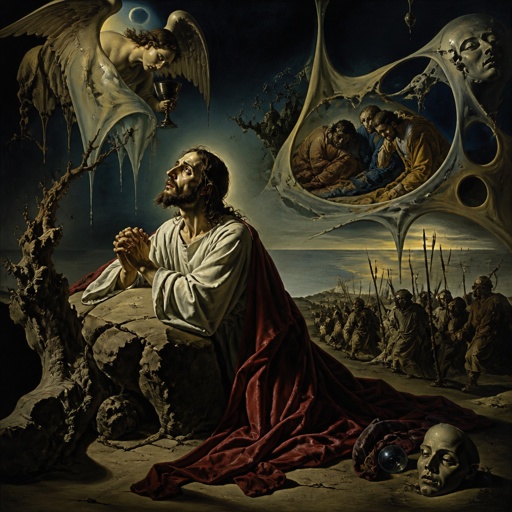
Matthew 26:36-46
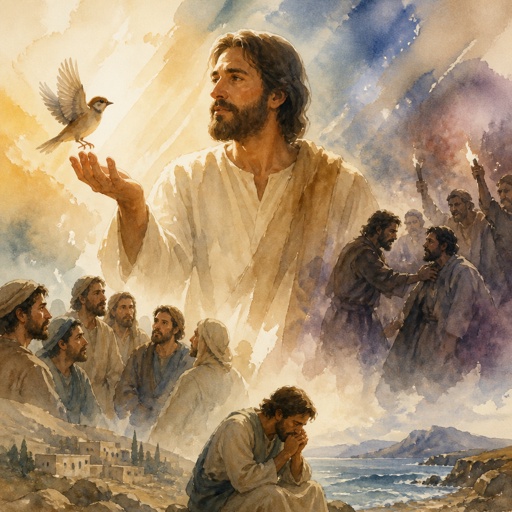
Matthew 10:26-33

Matthew 26:26 - "¶ And as they were eating, Jesus took bread, and blessed it, and brake it, and gave it to the disciples, and said, Take, eat; this is my body."

Matthew 22:26 - "Likewise the second also, and the third, unto the seventh."

Matthew 9:26 - "And the fame hereof went abroad into all that land."

Matthew 26:54 - "But how then shall the scriptures be fulfilled, that thus it must be?"

Matthew 26:6 - "¶ Now when Jesus was in Bethany, in the house of Simon the leper,"

Matthew 26:4 - "And consulted that they might take Jesus by subtilty, and kill him."

Matthew 26:5 - "But they said, Not on the feast day, lest there be an uproar among the people."

Matthew 26:16 - "And from that time he sought opportunity to betray him."

Matthew 26:72 - "And again he denied with an oath, I do not know the man."

Matthew 11:26 - "Even so, Father: for so it seemed good in thy sight."

Matthew 26:20 - "Now when the even was come, he sat down with the twelve."

Matthew 26:30 - "And when they had sung an hymn, they went out into the mount of Olives."

Matthew 26:66 - "What think ye? They answered and said, He is guilty of death."