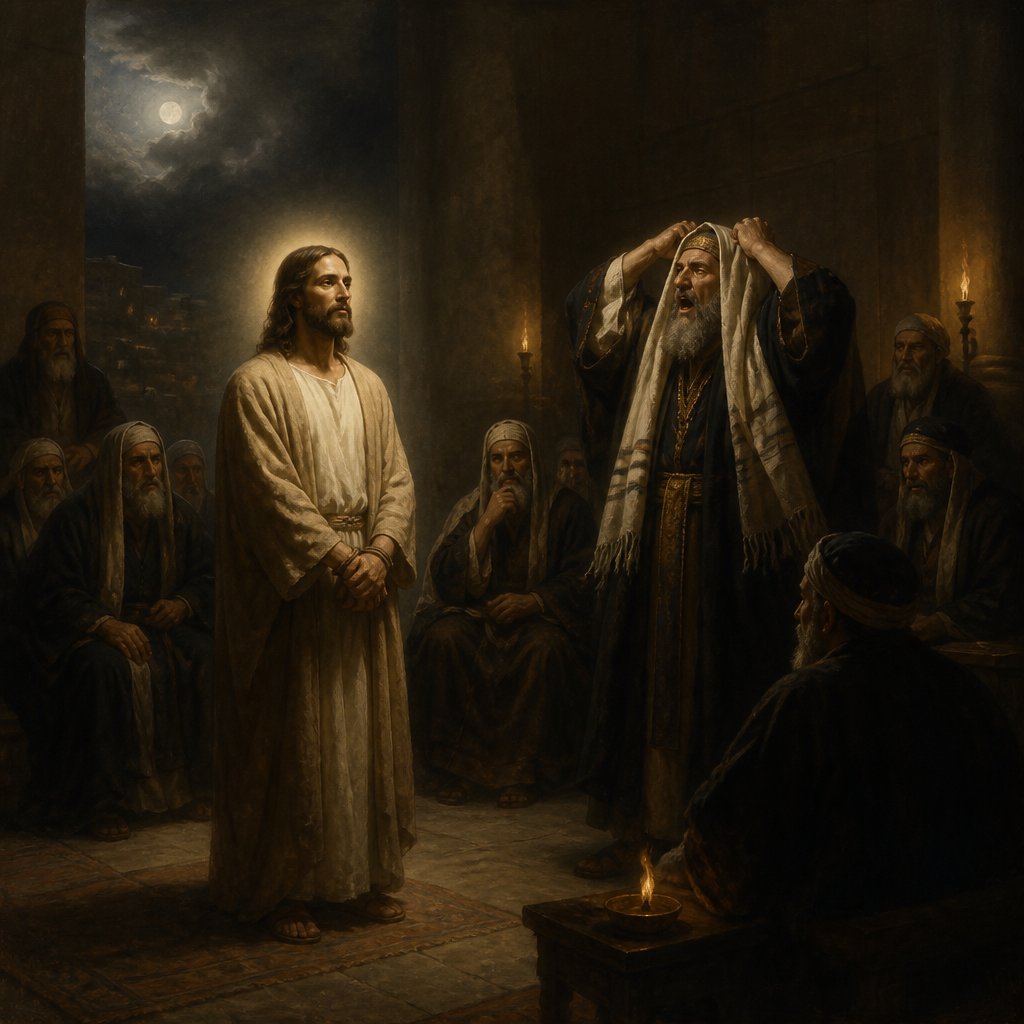
The Bible verse Matthew 26:62-66 from the King James Version (KJV) recounts the trial of Jesus before the high priest Caiaphas. The verse reads:
"And the high priest arose, and said unto him, Answerest thou nothing? what is it which these witness against thee? But Jesus held his peace. And the high priest answered and said unto him, I adjure thee by the living God, that thou tell us whether thou be the Christ, the Son of God. Jesus saith unto him, Thou hast said: nevertheless I say unto you, Hereafter shall ye see the Son of man sitting on the right hand of power, and coming in the clouds of heaven. Then the high priest rent his clothes, saying, He hath spoken blasphemy; what further need have we of witnesses? behold, now ye have heard his blasphemy. What think ye? They answered and said, He is guilty of death."
This passage is a pivotal moment in the narrative of Jesus' trial and eventual crucifixion. It reveals the clash between Jesus, the religious leaders, and the Roman authorities, and depicts a dramatic confrontation between the sacred and the secular.
One of the key themes in this passage is the concept of blasphemy. In Jewish law, claiming to be the Son of God or the Messiah was considered blasphemous, as it was seen as an attempt to usurp the divine authority of God. The high priest's question to Jesus, "whether thou be the Christ, the Son of God," is an attempt to trap him into making a blasphemous statement. Jesus' response, "Thou hast said: nevertheless I say unto you, Hereafter shall ye see the Son of man sitting on the right hand of power, and coming in the clouds of heaven," is a clear affirmation of his divinity and messianic identity. This assertion deeply offends the high priest, leading him to accuse Jesus of blasphemy and ultimately condemn him to death.
The conversation between Jesus and the high priest also highlights the complex interplay between power and authority. Caiaphas, as the high priest, holds a position of religious authority within the Jewish community, while Jesus presents himself as a spiritual and moral authority. Their confrontation reflects the tension between these two types of authority, as well as the clash between the traditional religious establishment and the radical message of Jesus.
The symbolism in this passage is also significant. The tearing of the high priest's clothes is a vivid symbol of outrage and condemnation. In Jewish tradition, tearing one's clothes is a sign of extreme distress and mourning, and it is typically done in response to a grave offense or blasphemy. By tearing his clothes, the high priest indicates his belief that Jesus' words are not just offensive, but also fundamentally destructive to the religious order and community.
The context of this passage is essential for understanding its significance. It takes place during the final days of Jesus' life, as he faces increasing opposition from religious and political authorities in Jerusalem. The high priest's role in Jesus' trial is particularly significant, as Caiaphas represented the religious establishment that ultimately played a key role in Jesus' condemnation and crucifixion.
Overall, Matthew 26:62-66 from the KJV captures a critical moment in the narrative of Jesus' trial, emphasizing themes of blasphemy, authority, and the clash between sacred and secular power. The passage serves as a powerful reminder of the challenges and conflicts that Jesus faced in his mission, and it highlights the profound significance of his life and teachings.
Get our apps


Artwork for Matthew 26:62-66

Matthew 26:62-66 - "Then the high priest stood up and said to Jesus, “Are you not going to answer? What is this testimony that these men are bringing against you?” But Jesus remained silent. The high priest said to him, “I charge you under oath by the living God: Tell us if you are the Messiah, the Son of God.” “You have said so,” Jesus replied. “But I say to all of you: From now on you will see the Son of Man sitting at the right hand of the Mighty One and coming on the clouds of heaven.” Then the high priest tore his clothes and said, “He has spoken blasphemy! Why do we need any more witnesses? Look, now you have heard the blasphemy. What do you think?” “He is worthy of death,” they answered."
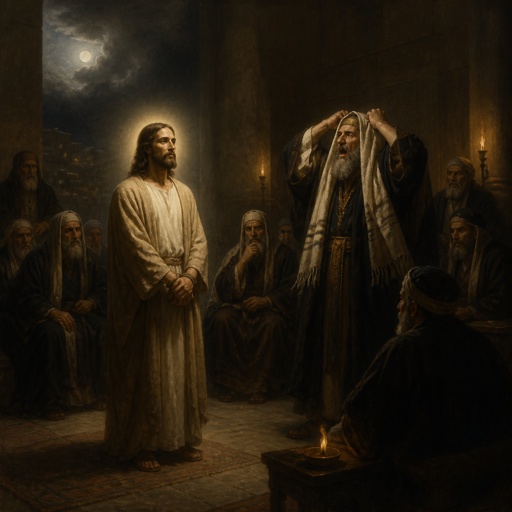
"Then the high priest stood up and said to Jesus, “Are you not going to answer? What is this testimony that these men are bringing against you?” But Jesus remained silent. The high priest said to him, “I charge you under oath by the living God: Tell us if you are the Messiah, the Son of God.” “You have said so,” Jesus replied. “But I say to all of you: From now on you will see the Son of Man sitting at the right hand of the Mighty One and coming on the clouds of heaven.” Then the high priest tore his clothes and said, “He has spoken blasphemy! Why do we need any more witnesses? Look, now you have heard the blasphemy. What do you think?” “He is worthy of death,” they answered." - Matthew 26:62-66

Matthew 26:66 - "What think ye? They answered and said, He is guilty of death."
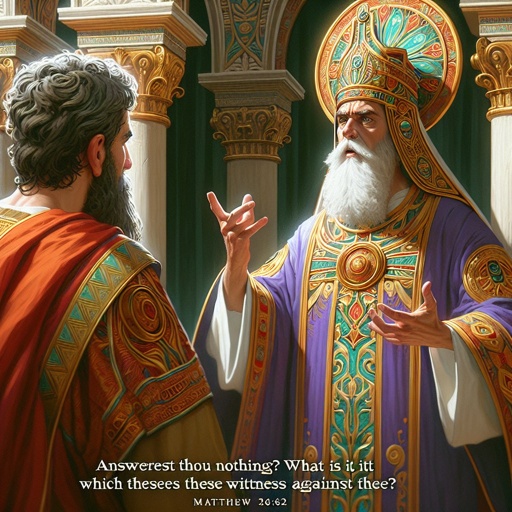
Matthew 26:62 - "And the high priest arose, and said unto him, Answerest thou nothing? what is it which these witness against thee?"
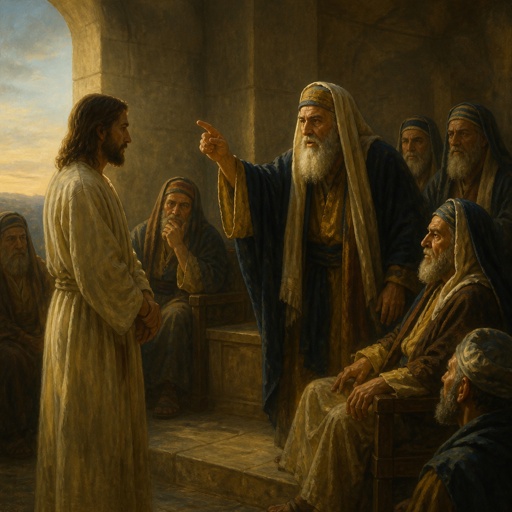
"What think ye? They answered and said, He is guilty of death." - Matthew 26:66
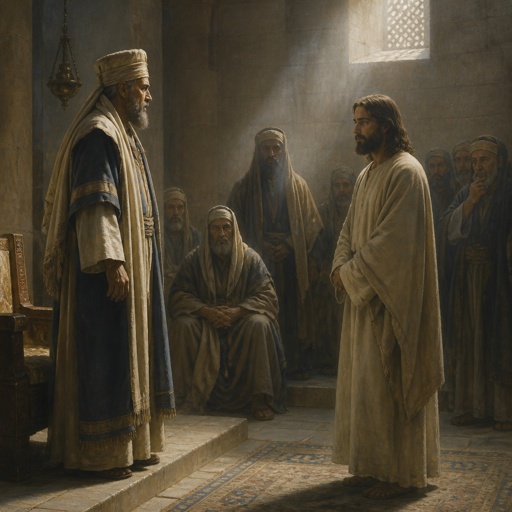
"And the high priest arose, and said unto him, Answerest thou nothing? what is it which these witness against thee?" - Matthew 26:62

Matthew 27:66 - "So they went, and made the sepulchre sure, sealing the stone, and setting a watch."

Matthew 27:62 - "¶ Now the next day, that followed the day of the preparation, the chief priests and Pharisees came together unto Pilate,"

Matthew 27:57-66 - "Matthew 27:57-66 57 When the even was come, there came a rich man of Arimathaea, named Joseph, who also himself was Jesus' disciple: 58 He went to Pilate, and begged the body of Jesus. Then Pilate commanded the body to be delivered. 59 And when Joseph had taken the body, he wrapped it in a clean linen cloth, 60 And laid it in his own new tomb, which he had hewn out in the rock: and he rolled a great stone to the door of the sepulchre, and departed. 61 And there was Mary Magdalene, and the other Mary, sitting over against the sepulchre. 62 Now the next day, that followed the day of the preparation, the chief priests and Pharisees came together unto Pilate, 63 Saying, Sir, we remember that that deceiver said, while he was yet alive, After three days I will rise again. 64 Command therefore that the sepulchre be made sure until the third day, lest his disciples come by night, and steal him away, and say unto the people, He is risen from the dead: so the last error shall be worse than the first. 65 Pilate said unto them, Ye have a watch: go your way, make it as sure as ye can. 66 So they went, and made the sepulchre sure, sealing the stone, and setting a watch."
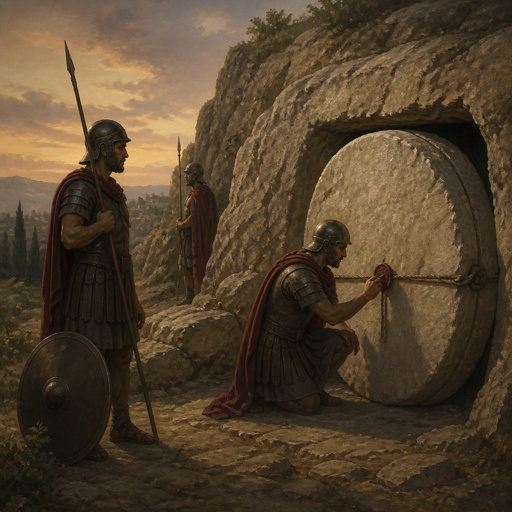
"So they went, and made the sepulchre sure, sealing the stone, and setting a watch." - Matthew 27:66

Numbers 26:62 - "And those that were numbered of them were twenty and three thousand, all males from a month old and upward: for they were not numbered among the children of Israel, because there was no inheritance given them among the children of Israel."
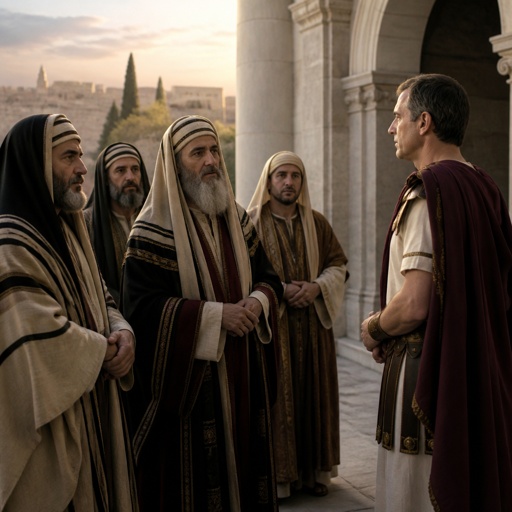
"¶ Now the next day, that followed the day of the preparation, the chief priests and Pharisees came together unto Pilate," - Matthew 27:62

Matthew 26:25

Matthew 26:15

Matthew 19:26

Matthew 26:15

Matthew 27:26

Matthew 27:26

Matthew 26:53

Matthew 26:65

Matthew 26:41

Matthew 26:53

Genesis 24-62

ISAIAH 62:1
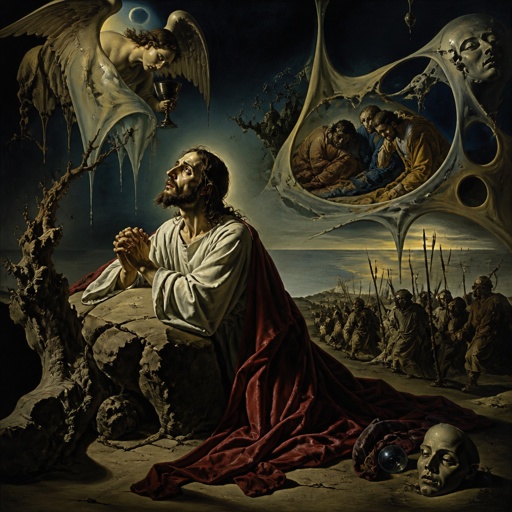
Matthew 26:36-46
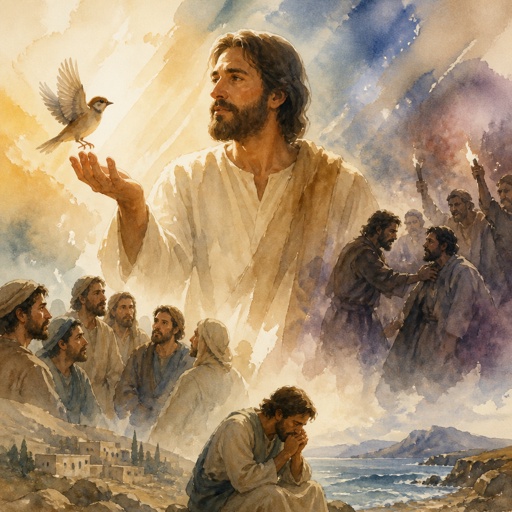
Matthew 10:26-33

Matthew 26:26 - "¶ And as they were eating, Jesus took bread, and blessed it, and brake it, and gave it to the disciples, and said, Take, eat; this is my body."

Matthew 22:26 - "Likewise the second also, and the third, unto the seventh."

Matthew 9:26 - "And the fame hereof went abroad into all that land."

Matthew 26:54 - "But how then shall the scriptures be fulfilled, that thus it must be?"