What does Matthew 26:66 mean?
“What think ye? They answered and said, He is guilty of death.” — Matthew 26:66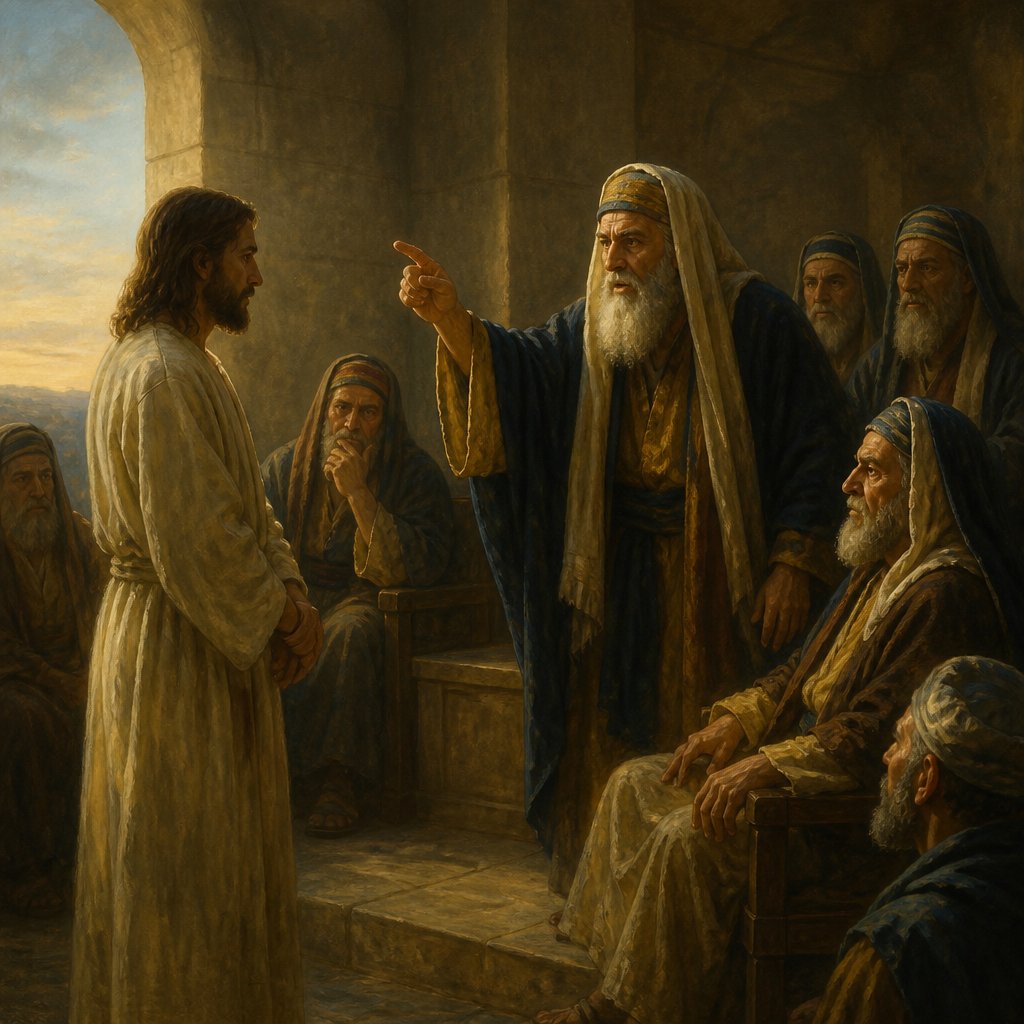
In the King James Version of the Bible, Matthew 26:66 states, "What think ye? They answered and said, He is guilty of death." This verse comes from the passage in which Jesus is brought before the Jewish religious leaders and accused of blasphemy. This pivotal moment in the Gospel of Matthew is part of the larger narrative leading to Jesus' crucifixion, death, and resurrection.
The immediate context of this verse is the trial of Jesus before the Sanhedrin, the ruling council of the Jews. Jesus had been brought before them on charges of blasphemy for claiming to be the Son of God. The religious leaders sought to put him to death for what they saw as a challenge to their authority and beliefs. In verse 65, Jesus affirms his identity as the Son of God, which further inflames the anger of the religious leaders and leads to their pronouncement of guilt in verse 66.
The themes present in this verse and the surrounding passage are central to the larger message of the Gospel of Matthew. The rejection and persecution of Jesus by the religious establishment illustrate the conflict between worldly power and the kingdom of God. The trial of Jesus serves as a demonstration of the spiritual blindness of those who reject him, as well as the fulfillment of Old Testament prophecies regarding the suffering and rejection of the Messiah.
One of the key themes in this passage is the idea of Jesus as the suffering servant. The Gospel of Matthew, like the other Gospels, presents Jesus as the fulfillment of the prophecies in the Old Testament, particularly those found in the book of Isaiah. In Isaiah 53, the suffering servant is described as being despised and rejected, oppressed and afflicted, yet remaining silent in the face of his accusers. This is mirrored in Jesus' trial before the religious leaders, where he is falsely accused, mocked, and ultimately sentenced to death.
The symbolism in this verse is profound. The trial of Jesus represents the rejection of God's chosen servant by those who should have recognized and welcomed him. The guilt pronounced by the religious leaders reflects not only their own misunderstanding and spiritual blindness, but also the guilt of all humanity in the rejection and crucifixion of Jesus. The indictment of Jesus as deserving of death carries echoes of the sacrificial system of the Old Testament, in which the shedding of blood was required for the forgiveness of sins.
This verse also highlights the contrast between the false judgment of the religious leaders and the true nature of Jesus as the Son of God. While he is wrongfully condemned by human authority, his death ultimately becomes the means of redemption and reconciliation for all who believe in him. The guilt of death pronounced by the Sanhedrin is contrasted with the innocence and righteousness of Jesus, who willingly submits to be the atoning sacrifice for sin.
In conclusion, Matthew 26:66 is a pivotal moment in the narrative of Jesus' trial and crucifixion. This verse and the surrounding passage reveal important themes about the identity of Jesus as the suffering servant, the rejection of him by religious authorities, and the ultimate significance of his death and resurrection for the forgiveness of sins. The symbolism in this verse illuminates the contrast between human judgment and divine truth, and the redemptive purpose of Jesus' sacrifice. Through this profound and spiritually rich passage, the Gospel of Matthew proclaims the power of God to bring salvation out of rejection and death.
Get our apps


Artwork for Matthew 26:66

Matthew 26:66 - "What think ye? They answered and said, He is guilty of death."
"What think ye? They answered and said, He is guilty of death." - Matthew 26:66

Matthew 27:66 - "So they went, and made the sepulchre sure, sealing the stone, and setting a watch."
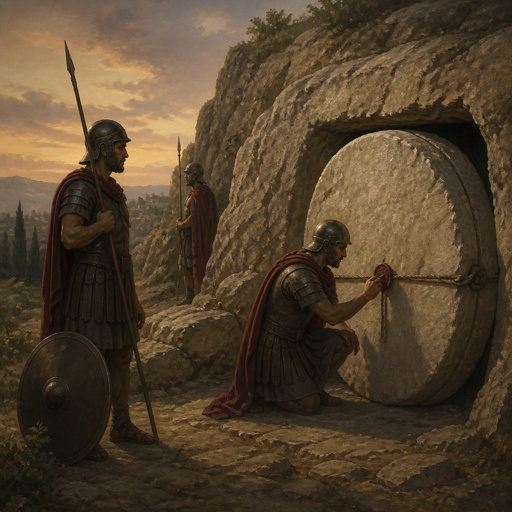
"So they went, and made the sepulchre sure, sealing the stone, and setting a watch." - Matthew 27:66

Matthew 26:25

Matthew 26:15

Matthew 19:26

Matthew 26:15

Matthew 27:26

Matthew 27:26

Matthew 26:53

Matthew 26:65

Matthew 26:41

Matthew 26:53
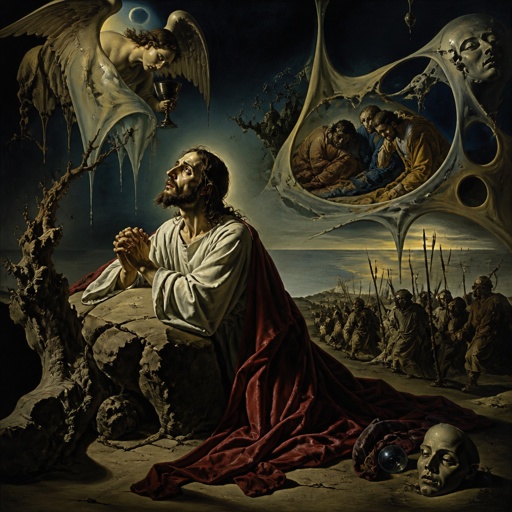
Matthew 26:36-46
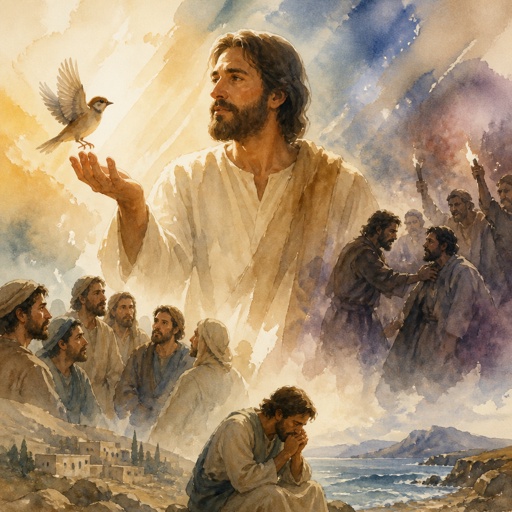
Matthew 10:26-33

Matthew 26:26 - "¶ And as they were eating, Jesus took bread, and blessed it, and brake it, and gave it to the disciples, and said, Take, eat; this is my body."

Matthew 26:62-66 - "Then the high priest stood up and said to Jesus, “Are you not going to answer? What is this testimony that these men are bringing against you?” But Jesus remained silent. The high priest said to him, “I charge you under oath by the living God: Tell us if you are the Messiah, the Son of God.” “You have said so,” Jesus replied. “But I say to all of you: From now on you will see the Son of Man sitting at the right hand of the Mighty One and coming on the clouds of heaven.” Then the high priest tore his clothes and said, “He has spoken blasphemy! Why do we need any more witnesses? Look, now you have heard the blasphemy. What do you think?” “He is worthy of death,” they answered."

Matthew 22:26 - "Likewise the second also, and the third, unto the seventh."

Matthew 9:26 - "And the fame hereof went abroad into all that land."

Matthew 26:54 - "But how then shall the scriptures be fulfilled, that thus it must be?"

Matthew 26:6 - "¶ Now when Jesus was in Bethany, in the house of Simon the leper,"

Matthew 26:4 - "And consulted that they might take Jesus by subtilty, and kill him."

Matthew 26:5 - "But they said, Not on the feast day, lest there be an uproar among the people."

Matthew 26:16 - "And from that time he sought opportunity to betray him."

Matthew 26:72 - "And again he denied with an oath, I do not know the man."

Matthew 11:26 - "Even so, Father: for so it seemed good in thy sight."

Matthew 26:20 - "Now when the even was come, he sat down with the twelve."

Matthew 26:30 - "And when they had sung an hymn, they went out into the mount of Olives."

Matthew 26:9 - "For this ointment might have been sold for much, and given to the poor."