What does Matthew 27:12 mean?
“And when he was accused of the chief priests and elders, he answered nothing.” — Matthew 27:12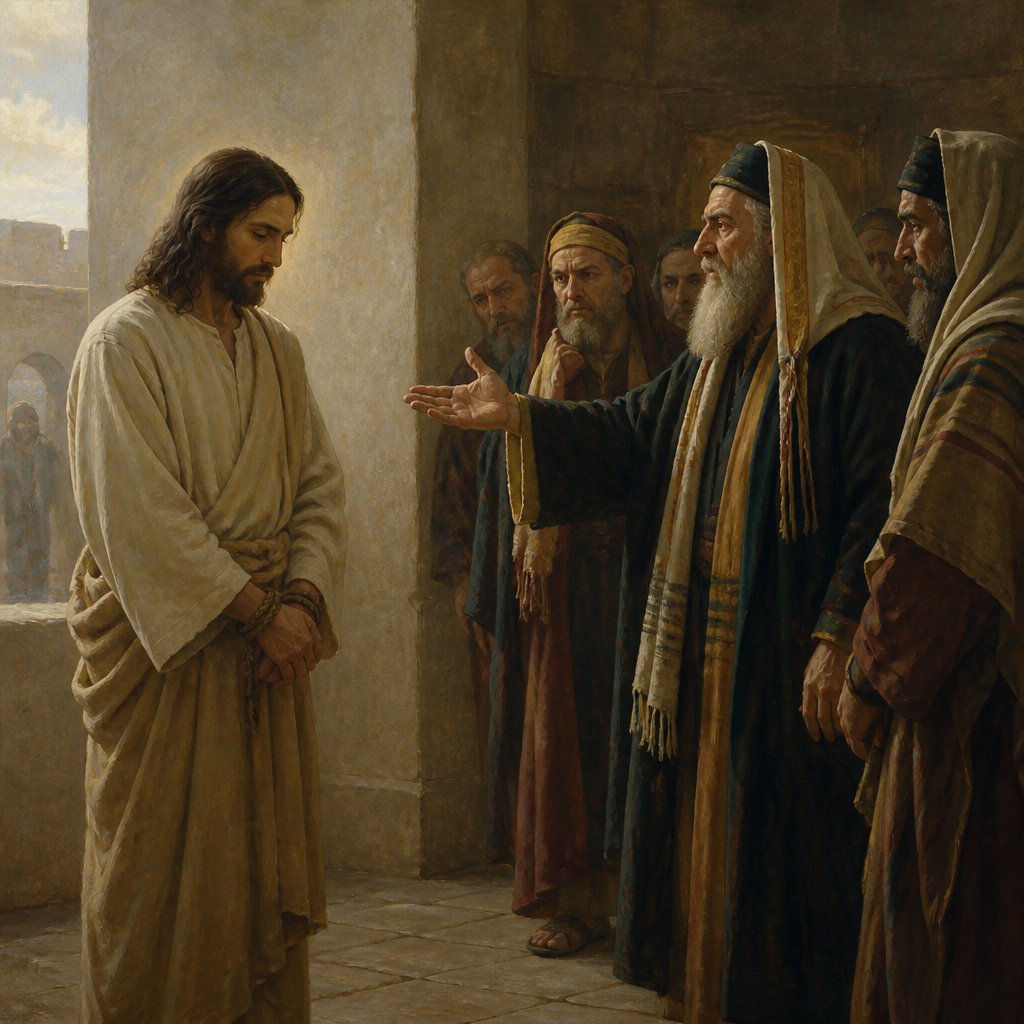
Matthew 27:12 (KJV): "And when he was accused of the chief priests and elders, he answered nothing."
In this verse, we find Jesus standing before the chief priests and elders, accused of various crimes. Despite the gravity of the accusations and the pressure from those in power, Jesus remains silent.
The context of this verse is crucial to understanding its significance. At this point in the narrative, Jesus has been betrayed by Judas, arrested in the Garden of Gethsemane, and brought before the religious and political authorities for trial. The chief priests and elders have made false accusations against Jesus, seeking to have him put to death. It is in this intense and volatile atmosphere that Jesus chooses to remain silent in the face of his accusers.
One of the key themes in this verse is that of Jesus' submission to the will of God. Throughout his ministry, Jesus consistently demonstrated a willingness to surrender to the divine plan, even when faced with persecution and suffering. This act of silence in the midst of false accusations is a powerful expression of Jesus' trust in God's sovereignty. It is a reflection of his obedience to the Father, even in the most challenging and unjust circumstances.
Another important theme in this verse is that of Jesus' role as the suffering servant. The prophet Isaiah spoke of a servant who would be "oppressed and afflicted, yet he did not open his mouth; he was led like a lamb to the slaughter, and as a sheep before its shearers is silent, so he did not open his mouth" (Isaiah 53:7, NIV). This verse from Matthew echoes this prophecy, emphasizing Jesus' willingness to endure suffering for the sake of others. His silence in the face of false accusations exemplifies his sacrificial love and his role as the ultimate atoning sacrifice for humanity.
Additionally, the silence of Jesus in this verse serves as a powerful indictment of the religious leaders who are unjustly condemning him. Their false accusations and manipulation of the legal system stand in stark contrast to Jesus' dignified silence. This silence exposes their hypocrisy and highlights the contrast between their corrupt motives and Jesus' steadfast commitment to truth and righteousness.
In terms of symbolism, Jesus' silence can be seen as a powerful expression of his humility and meekness. In the face of false accusations and the demands of those in authority, Jesus does not assert his rights or defend himself. Instead, he willingly embraces suffering and persecution, embodying the qualities of gentleness and selflessness.
Overall, Matthew 27:12 conveys deep spiritual truths about Jesus' character and his redemptive mission. His silent response to false accusations speaks volumes about his trust in God, his willingness to endure suffering, and his commitment to righteousness. It challenges us to consider our own responses to injustice and persecution, and to emulate Jesus' example of humility and selflessness. This verse ultimately points us to the profound significance of Jesus' sacrificial death on the cross, where he willingly endured unjust treatment for the sake of redeeming humanity.
Get our apps


Artwork for Matthew 27:12

Matthew 27:12 - "And when he was accused of the chief priests and elders, he answered nothing."

"And when he was accused of the chief priests and elders, he answered nothing." - Matthew 27:12

Matthew 12:27 - "And if I by Beelzebub cast out devils, by whom do your children cast them out? therefore they shall be your judges."

Matthew 27:46

Matthew 27:35

Matthew 24:27

Matthew 27:26
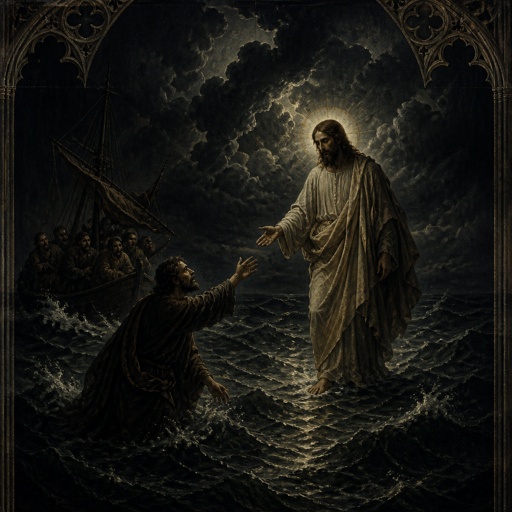
Matthew 14:27
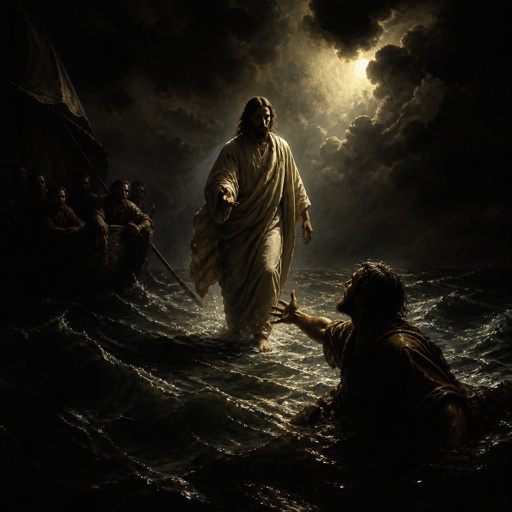
Matthew 14:27
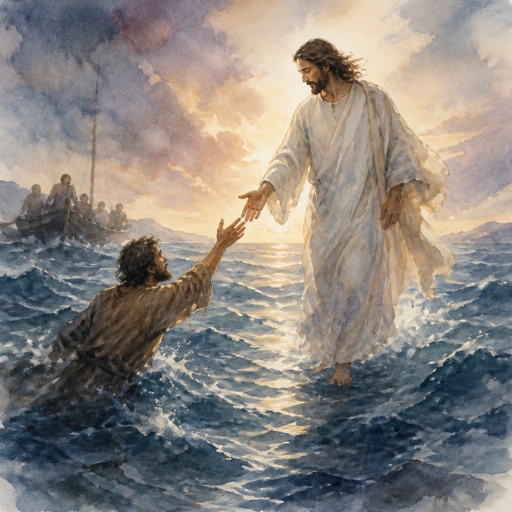
Matthew 14:27

Matthew 27:26

Matthew 27: 38

Matthew 27:27 - "Then the soldiers of the governor took Jesus into the common hall, and gathered unto him the whole band of soldiers."

Matthew 7:24-27

Matthew 27:36 - "And sitting down they watched him there;"

Matthew 27:16 - "And they had then a notable prisoner, called Barabbas."

"And if I by Beelzebub cast out devils, by whom do your children cast them out? therefore they shall be your judges." - Matthew 12:27

Matthew 22:27 - "And last of all the woman died also."

Matthew 27:39 - "¶ And they that passed by reviled him, wagging their heads,"

Matthew 27:18 - "For he knew that for envy they had delivered him."

Matthew 27:28 - "And they stripped him, and put on him a scarlet robe."

Matthew 27:8 - "Wherefore that field was called, The field of blood, unto this day."

Matthew 27:10 - "And gave them for the potter's field, as the Lord appointed me."

Matthew 27:7 - "And they took counsel, and bought with them the potter's field, to bury strangers in."

1 Corinthians 12:27

Matthew 3:11-12

Matthew 27:61 - "And there was Mary Magdalene, and the other Mary, sitting over against the sepulchre."

Matthew 20:27 - "And whosoever will be chief among you, let him be your servant:"

Matthew 27:30 - "And they spit upon him, and took the reed, and smote him on the head."

Matthew 27:41 - "Likewise also the chief priests mocking him, with the scribes and elders, said,"