What does Matthew 28:1-7 mean?
"In the end of the sabbath, as it began to dawn toward the first day of the week, came Mary Magdalene and the other Mary to see the sepulchre. And, behold, there was a great earthquake: for the angel of the Lord descended from heaven, and came and rolled back the stone from the door, and sat upon it. His countenance was like lightning, and his raiment white as snow: And for fear of him the keepers did shake, and became as dead men. And the angel answered and said unto the women, Fear not ye: for I know that ye seek Jesus, which was crucified. He is not here: for he is risen, as he said. Come, see the place where the Lord lay. And go quickly, and tell his disciples that he is risen from the dead; and, behold, he goeth before you into Galilee; there shall ye see him: lo, I have told you." - Matthew 28:1-7
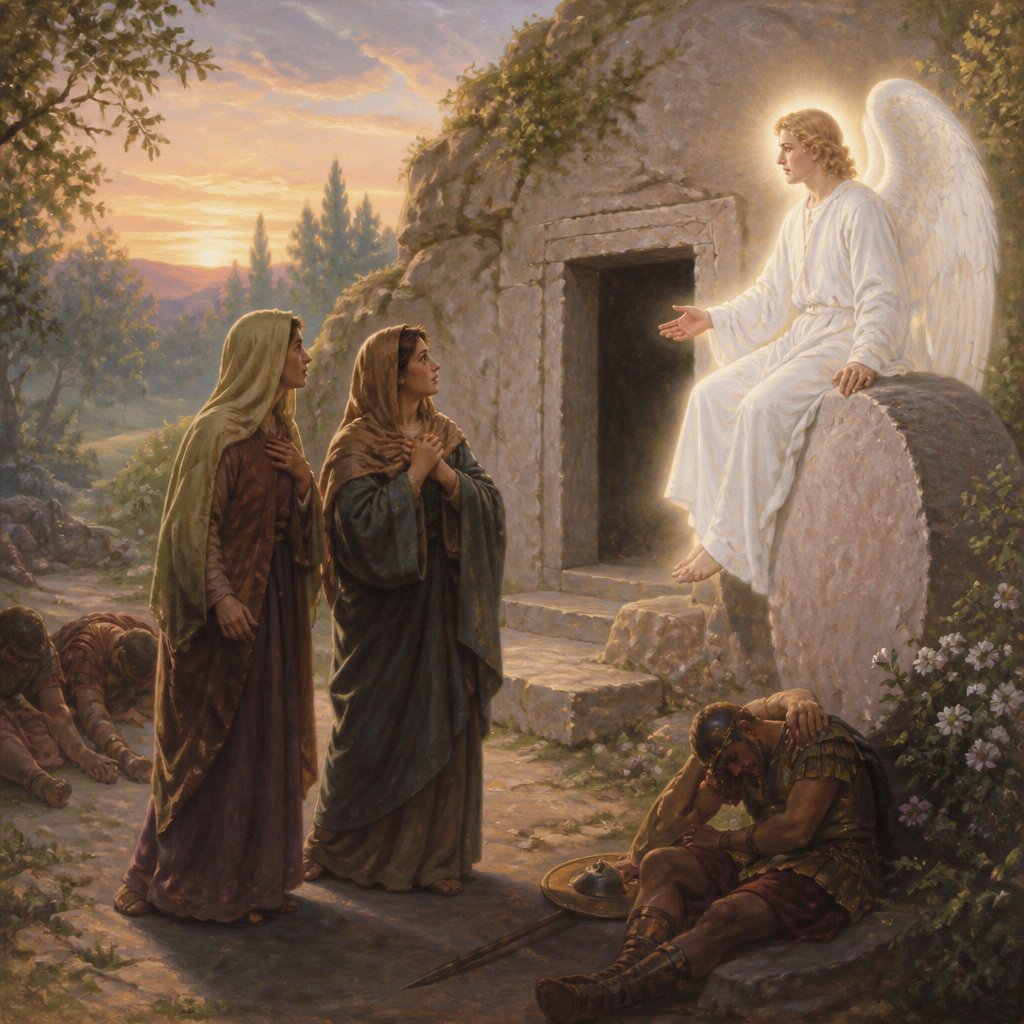
Matthew 28:1-7 in the King James Version of the Bible reads:
"In the end of the sabbath, as it began to dawn toward the first day of the week, came Mary Magdalene and the other Mary to see the sepulchre. And, behold, there was a great earthquake: for the angel of the Lord descended from heaven, and came and rolled back the stone from the door, and sat upon it. His countenance was like lightning, and his raiment white as snow: And for fear of him the keepers did shake, and became as dead men. And the angel answered and said unto the women, Fear not ye: for I know that ye seek Jesus, which was crucified. He is not here: for he is risen, as he said. Come, see the place where the Lord lay. And go quickly, and tell his disciples that he is risen from the dead; and, behold, he goeth before you into Galilee; there shall ye see him: lo, I have told you."
This passage relates the visit of Mary Magdalene and the other Mary to the sepulchre, following the Sabbath. They arrive at the tomb and experience a great earthquake, as an angel descends from heaven. The angel rolls back the stone from the door and sits upon it, with a countenance like lightning and raiment as white as snow. The keepers of the tomb shake and become as dead men due to fear. The angel reassures the women, revealing that Jesus has risen from the dead and instructing them to go and tell the disciples the news. The passage concludes with the angel telling the women that Jesus will go before them into Galilee, where they will see him.
This passage is significant for several reasons, both in terms of its immediate context in the Gospel of Matthew and its broader theological and spiritual implications. In the immediate context, this passage serves as a pivotal moment in the narrative of Jesus' resurrection. The women come to the tomb expecting to find Jesus' body, only to encounter the miraculous presence of the angel and the revelation that Jesus has risen. This event sets in motion the spread of the news of the resurrection and the subsequent appearances of Jesus to his disciples.
The themes and symbolism in this passage are rich and profound. One central theme is the resurrection of Jesus, which lies at the heart of Christian belief and doctrine. The fact that Jesus overcame death and rose from the grave is a foundational truth of the Christian faith, representing the victory of life over death, good over evil, and hope over despair. The imagery of the angel descending from heaven, the earthquake, and the rolling back of the stone all serve to emphasize the supernatural and divine nature of this event. The angel's appearance, described as being like lightning and clothed in radiant white, underscores the heavenly and majestic nature of the resurrection.
The presence of the women, particularly Mary Magdalene, at the tomb is also significant. In a cultural and historical context where the testimony of women was often marginalized or dismissed, the fact that the initial witnesses to the resurrection were women carries powerful symbolic and theological implications. It underscores the inclusive nature of the gospel message and the radical equality and dignity of all believers, regardless of gender or social status.
Furthermore, the angel's message to the women to go and tell the disciples about the resurrection demonstrates the importance of testimony and proclamation in the Christian faith. The women are entrusted with the crucial task of spreading the news of the resurrection, serving as heralds of the greatest news in human history. This highlights the mission and responsibility of all believers to share the good news of Jesus Christ with the world, inviting others to encounter the life-transforming reality of the resurrection.
In conclusion, Matthew 28:1-7 is a deeply significant and powerful passage within the Gospel of Matthew and the broader Christian tradition. It not only recounts the pivotal moment of Jesus' resurrection but also conveys profound themes of hope, transformation, and mission. The symbolism and imagery employed in this passage invite readers to contemplate the miraculous and transcendent nature of the resurrection and to consider the implications of this event for their own lives and faith. As such, this passage continues to inspire and challenge believers to embrace and proclaim the reality of the risen Christ.
Have questions about Matthew 28:1-7?
Dive deeper into this scripture with Bible Chat — an AI-powered tool for exploring God's Word through conversation. Ask questions, get context, and grow in your understanding of the Bible.
Get Our Apps


Matthew 28:1-7 Artwork

Matthew 28:1-7 - "After the Sabbath, at dawn on the first day of the week, Mary Magdalene and the other Mary went to look at the tomb. There was a violent earthquake, for an angel of the Lord came down from heaven and, going to the tomb, rolled back the stone and sat on it. His appearance was like lightning, and his clothes were white as snow. The guards were so afraid of him that they shook and became like dead men. The angel said to the women, “Do not be afraid, for I know that you are looking for Jesus, who was crucified. He is not here; he has risen, just as he said. Come and see the place where he lay. Then go quickly and tell his disciples: ‘He has risen from the dead and is going ahead of you into Galilee. There you will see him.’ Now I have told you."
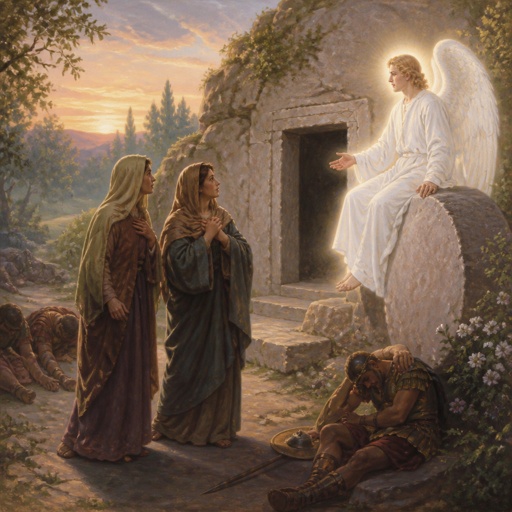
"After the Sabbath, at dawn on the first day of the week, Mary Magdalene and the other Mary went to look at the tomb. There was a violent earthquake, for an angel of the Lord came down from heaven and, going to the tomb, rolled back the stone and sat on it. His appearance was like lightning, and his clothes were white as snow. The guards were so afraid of him that they shook and became like dead men. The angel said to the women, “Do not be afraid, for I know that you are looking for Jesus, who was crucified. He is not here; he has risen, just as he said. Come and see the place where he lay. Then go quickly and tell his disciples: ‘He has risen from the dead and is going ahead of you into Galilee. There you will see him.’ Now I have told you." - Matthew 28:1-7
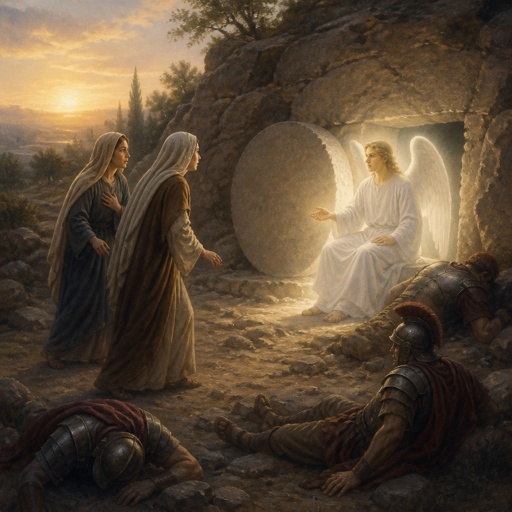
"After the Sabbath, at dawn on the first day of the week, Mary Magdalene and the other Mary went to look at the tomb. There was a violent earthquake, for an angel of the Lord came down from heaven and, going to the tomb, rolled back the stone and sat on it. His appearance was like lightning, and his clothes were white as snow. The guards were so afraid of him that they shook and became like dead men. The angel said to the women, “Do not be afraid, for I know that you are looking for Jesus, who was crucified. He is not here; he has risen, just as he said. Come and see the place where he lay. Then go quickly and tell his disciples: ‘He has risen from the dead and is going ahead of you into Galilee. There you will see him.’ Now I have told you." - Matthew 28:1-7
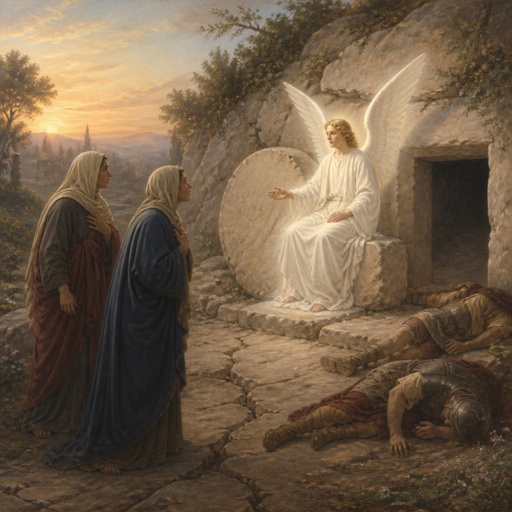
"After the Sabbath, at dawn on the first day of the week, Mary Magdalene and the other Mary went to look at the tomb. There was a violent earthquake, for an angel of the Lord came down from heaven and, going to the tomb, rolled back the stone and sat on it. His appearance was like lightning, and his clothes were white as snow. The guards were so afraid of him that they shook and became like dead men. The angel said to the women, “Do not be afraid, for I know that you are looking for Jesus, who was crucified. He is not here; he has risen, just as he said. Come and see the place where he lay. Then go quickly and tell his disciples: ‘He has risen from the dead and is going ahead of you into Galilee. There you will see him.’ Now I have told you." - Matthew 28:1-7
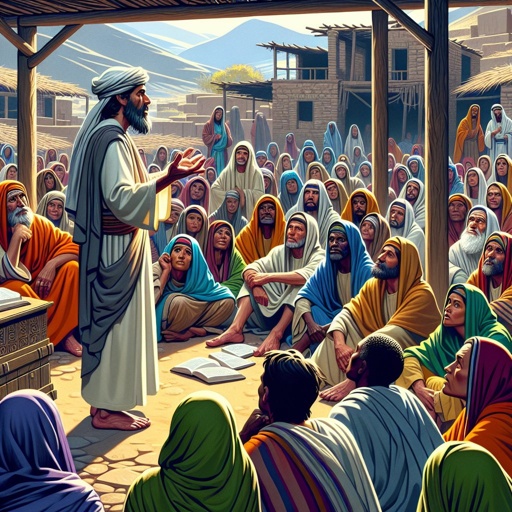
Matthew 7:28 - "And it came to pass, when Jesus had ended these sayings, the people were astonished at his doctrine:"

Matthew 7:7

1 Samuel 28:7

Matthew 7:1 - "Judge not, that ye be not judged."

Matthew 7:24-27

Matthew 28:1 - "In the end of the sabbath, as it began to dawn toward the first day of the week, came Mary Magdalene and the other Mary to see the sepulchre."

1 Kings 7:28 - "And the work of the bases was on this manner: they had borders, and the borders were between the ledges:"

"Judge not, that ye be not judged." - Matthew 7:1

matthew 28:19

matthew 28:19

Matthew 1:7 - "And Solomon begat Roboam; and Roboam begat Abia; and Abia begat Asa;"
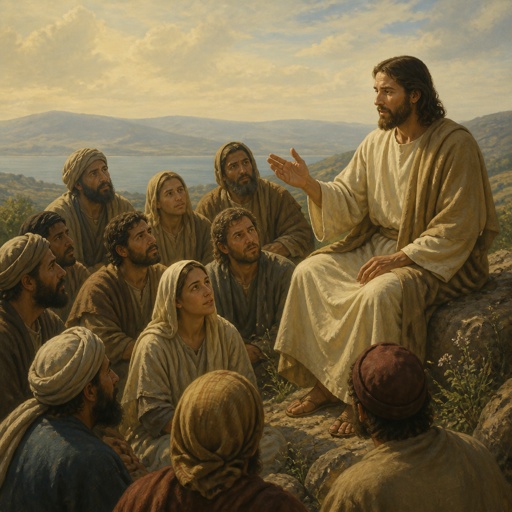
"And it came to pass, when Jesus had ended these sayings, the people were astonished at his doctrine:" - Matthew 7:28

MATTHEW 28: 23

matthew 8:28

Matthew 23:28

Matthew 28:11

Matthew 23:28

Matthew 28:19-20

1 Chronicles 28:7 - "Moreover I will establish his kingdom for ever, if he be constant to do my commandments and my judgments, as at this day."

Matthew 28:7 - "And go quickly, and tell his disciples that he is risen from the dead; and, behold, he goeth before you into Galilee; there shall ye see him: lo, I have told you." The image should not depict explicit or offensive content but be symbolic.

Matthew 28: 19-20

Matthew 28:19-20

Matthew 28:19-20

Matthew 24:28 - "For wheresoever the carcase is, there will the eagles be gathered together."

Matthew 27:28 - "And they stripped him, and put on him a scarlet robe."

Matthew 28:17 - "And when they saw him, they worshipped him: but some doubted."