What does Matthew 2:20 mean?
"Saying, Arise, and take the young child and his mother, and go into the land of Israel: for they are dead which sought the young child's life." - Matthew 2:20
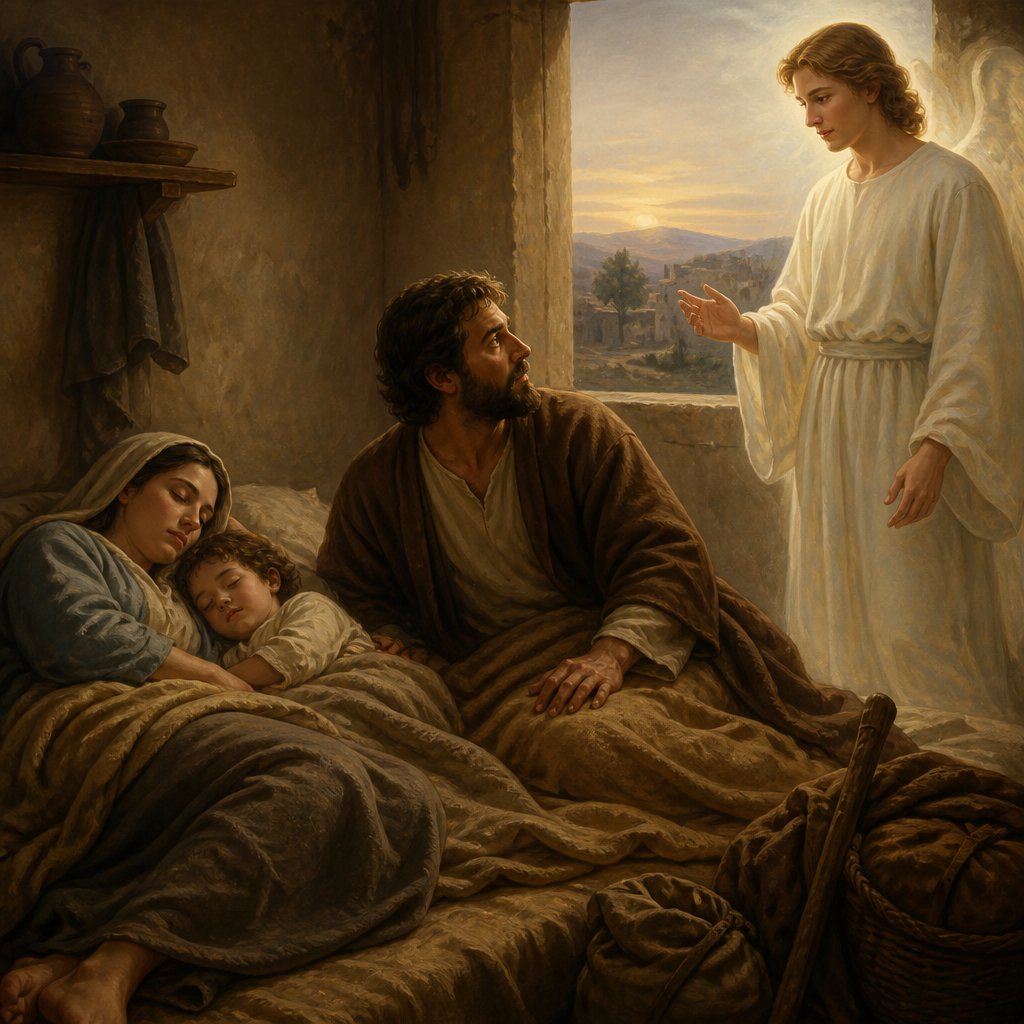
Matthew 2:20 (KJV): "Saying, Arise, and take the young child and his mother, and go into the land of Israel: for they are dead which sought the young child's life."
This verse is part of the narrative in the Gospel of Matthew, which tells the story of the birth and early life of Jesus Christ. In this particular verse, an angel of the Lord appears to Joseph in a dream, instructing him to take Jesus and Mary and leave Egypt to return to the land of Israel.
The verse is situated in a larger context, where King Herod, upon learning from the Magi about the birth of the "king of the Jews," feels threatened and seeks to destroy Jesus by ordering the massacre of all male children in Bethlehem under the age of two. This brutal event is known as the Massacre of the Innocents, and it is a tragically dark episode in the Christmas story.
In this verse, the angel's message to Joseph signifies the fulfillment of prophecy and divine intervention in preserving the life of Jesus. It also emphasizes the importance of obedience and faithfulness in the midst of adversity and danger.
The themes present in this verse are salvation, protection, and divine guidance. The verse illustrates the importance of God's protection over His chosen ones, especially those who are vulnerable and targeted by the powers of this world. It also highlights the idea of God's faithfulness in fulfilling His promises and providing guidance to His people, even in the midst of threatening circumstances.
One of the contextual elements that enriches the meaning of this verse is the idea of Jesus as the fulfillment of Old Testament prophecies. Throughout the Gospel of Matthew, there are numerous references to Old Testament prophecies being fulfilled in the life, death, and resurrection of Jesus. In this verse, the angel's instruction to Joseph to return to the land of Israel echoes the prophecy in Hosea 11:1, "out of Egypt I called my son," which Matthew later quotes in 2:15.
Moreover, the verse also serves as a reminder of the larger context of Jesus' life and mission. The threat to Jesus' life from King Herod foreshadows the opposition and hostility that Jesus will face throughout His life, ultimately leading to His crucifixion. The figure of Herod also serves as a representation of the earthly powers that oppose the reign of God and the establishment of His kingdom.
Symbolically, the verse points to Jesus as the ultimate savior and deliverer. The angel's message to Joseph hints at the significance of Jesus as the hope of Israel and the fulfillment of God's redemptive plan. Furthermore, the message of taking the young child and his mother to the land of Israel conveys the idea of Jesus as the embodiment of the promised land, where God's presence and blessing are manifest.
In conclusion, Matthew 2:20 is a pivotal verse in the Gospel of Matthew, marking the transition from the period of exile in Egypt to the return to the land of Israel for Jesus, Mary, and Joseph. It reveals the divine guidance and protection that surrounds Jesus from the very beginning of His life, emphasizing His mission as the fulfillment of God's promises and the salvation of His people. The verse also underscores the themes of obedience, faithfulness, and the ultimate triumph of God's redemptive plan over the forces of evil.
Have questions about Matthew 2:20?
Dive deeper into this scripture with Bible Chat — an AI-powered tool for exploring God's Word through conversation. Ask questions, get context, and grow in your understanding of the Bible.
Get Our Apps


Matthew 2:20 Artwork

Matthew 2:20 - "Saying, Arise, and take the young child and his mother, and go into the land of Israel: for they are dead which sought the young child's life."
"Saying, Arise, and take the young child and his mother, and go into the land of Israel: for they are dead which sought the young child's life." - Matthew 2:20

Matthew 20:2 - "And when he had agreed with the labourers for a penny a day, he sent them into his vineyard."

Matthew 18:20

Matthew 17:20

matthew 20:3

Matthew 18:20

Matthew 18:20

Matthew 17:20

matthew 5 13-20

Matthew 28:19-20

Matthew 20:29-34

Matthew 28:19-20

Matthew 28: 19-20

Matthew 28:19-20

Matthew 15 : 1-20

Matthew 20:20 - "¶ Then came to him the mother of Zebedee's children with her sons, worshipping him, and desiring a certain thing of him."

Matthew 4:20 - "And they straightway left their nets, and followed him."
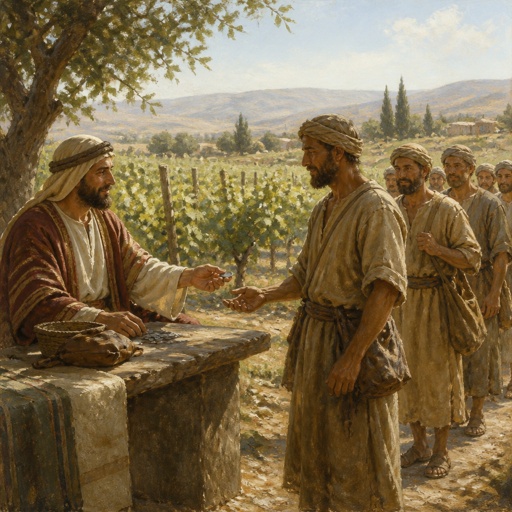
"And when he had agreed with the labourers for a penny a day, he sent them into his vineyard." - Matthew 20:2

Matthew 7:20 - "Wherefore by their fruits ye shall know them."

Matthew 20:29 - "And as they departed from Jericho, a great multitude followed him."

Matthew 22:20 - "And he saith unto them, Whose is this image and superscription?"

Matthew 20:11 - "And when they had received it, they murmured against the goodman of the house,"

Matthew 10:20 - "For it is not ye that speak, but the Spirit of your Father which speaketh in you."

Matthew 26:20 - "Now when the even was come, he sat down with the twelve."

Matthew 24:20 - "But pray ye that your flight be not in the winter, neither on the sabbath day:"

Matthew 20:27 - "And whosoever will be chief among you, let him be your servant:"

Matthew 20:33 - "They say unto him, Lord, that our eyes may be opened."

Matthew 23:20 - "Whoso therefore shall swear by the altar, sweareth by it, and by all things thereon."

Matthew 20:24 - "And when the ten heard it, they were moved with indignation against the two brethren."