What does Matthew 3:17 mean?
“And lo a voice from heaven, saying, This is my beloved Son, in whom I am well pleased.” — Matthew 3:17
Matthew 3:17 in the King James Version reads, “And lo a voice from heaven, saying, This is my beloved Son, in whom I am well pleased.” The verse is the Father’s public declaration at the baptism of Jesus, and its meaning is best seen by keeping it in its immediate setting. In Matthew 3, John the Baptist is preaching repentance and preparing the way of the Lord. When Jesus comes from Galilee to Jordan “to be baptized of him,” John at first forbids him, confessing his own unworthiness, but Jesus answers, “Suffer it to be so now: for thus it becometh us to fulfil all righteousness.” Jesus is baptized, and as he comes up “out of the water,” “the heavens were opened unto him,” the Spirit of God descends “like a dove,” and then comes the heavenly voice of Matthew 3:17. The verse, therefore, is not an isolated compliment; it is God’s own interpretive word over what is happening at the Jordan, explaining who Jesus is and what this moment signifies.
The first weight of the sentence falls on identification: “This is my … Son.” In a scene where Jesus outwardly takes a place among those confessing sins and seeking cleansing, the Father draws a clear line between Jesus and all others. John has been baptizing multitudes who need repentance, but the voice from heaven identifies Jesus not as another penitent Israelite, but as God’s Son. The word “This” has the force of presentation, as though heaven points him out for all to know. In Matthew’s Gospel this functions as divine testimony at the outset of Jesus’ public ministry. The Son will speak with authority, confront the tempter, call disciples, and preach the kingdom; before any of that unfolds, the Father himself provides the foundational witness to Jesus’ person.
The phrase “my beloved Son” carries the theme of covenant love and unique sonship. “Beloved” is not merely affection in the ordinary sense, but a term of divine favor and cherished delight, marking Jesus as uniquely precious to the Father. Matthew’s Gospel will later echo this exact language at another pivotal moment, the transfiguration, where the voice again says, “This is my beloved Son, in whom I am well pleased; hear ye him” (Matthew 17:5). That repetition shows that “beloved Son” is a title framing Jesus’ identity and mission from beginning to climactic revelation. At the Jordan, the Father’s love is declared not after Jesus has performed miracles or taught crowds, but at the commencement of his ministry, implying that Jesus’ worthiness and acceptance are grounded in who he is and in the Father’s eternal regard for him, not in public acclaim.
“In whom I am well pleased” adds the theme of divine approval and satisfaction. The Father’s pleasure is not flattery but verdict. In Matthew 3 the Lord Jesus submits to baptism “to fulfil all righteousness.” The Father’s statement answers that intention: the Son’s obedience is pleasing. The verse therefore signals that Jesus stands before God as the righteous one, approved in his person and in his willing submission to the Father’s will. Because this approval is spoken at the moment Jesus identifies with sinners in baptism, it also hints at the pattern of his whole saving work: he will take a humble place among those he came to redeem, yet he does so without forfeiting the Father’s delight, because his humility is itself perfect obedience.
The verse also has strong contextual significance as a kind of inauguration. John’s ministry has been marked by warning and expectancy: “the kingdom of heaven is at hand,” and “one mightier than I cometh.” Matthew 3:17 is heaven’s announcement that the promised one has arrived. It functions like a royal proclamation, establishing Jesus as the rightful Son and approved servant before the public contest begins. Immediately after this declaration, Matthew 4 shows Jesus led “of the Spirit” into the wilderness to be tempted of the devil. The voice of Matthew 3:17 thus stands as the Father’s testimony over Jesus right before the adversary challenges his identity with the repeated temptation, “If thou be the Son of God.” The narrative placement makes the meaning sharper: what God has declared from heaven will be contested on earth, and Jesus’ faithfulness will prove the truth of the Father’s word.
Symbolically, the “voice from heaven” emphasizes that Jesus’ authority and identity originate with God and are not bestowed by human institutions. John is a prophet, but he is not the ultimate witness; heaven itself speaks. The opened heavens and the voice suggest divine access and revelation, as though the barrier between heaven and earth is drawn back at the moment the Son steps into his public work. The baptismal setting itself carries symbolism of cleansing and new beginning, yet here it is applied to the sinless one, which turns the symbol outward: Jesus enters the waters not because he needs cleansing, but because he will stand with his people and later provide the true cleansing. The Father’s pleasure spoken over him at this moment underlines that this identification with sinners is not a detour from righteousness but the very way righteousness will be fulfilled.
Matthew 3:17 also sits within a larger biblical pattern in which God publicly designates his chosen one. Kings and servants in Scripture are recognized by divine word, but here the recognition is uniquely direct and absolute. The declaration does not merely say that God approves Jesus’ work; it proclaims his relationship: “my … Son.” That relationship shapes everything Matthew will show about Jesus’ teaching, authority, and mission. When Jesus later forgives sins, commands nature, receives worship, and speaks of his Father in unique terms, the reader has already heard the Father’s own witness confirming that Jesus is not merely a messenger but the beloved Son.
Taken together, Matthew 3:17 is a heavenly testimony that interprets Jesus’ baptism as the opening of his righteous mission, establishes his identity as God’s beloved Son, declares divine approval upon him, and sets the stage for the conflict and obedience that follow. It is a verse of revelation, not only telling what God thinks of Jesus, but telling the reader how to understand who Jesus is as he begins to act in history: the Son presented by the Father, loved by the Father, and pleasing to the Father as he “fulfil all righteousness.”
Get our apps


Artwork for Matthew 3:17

Matthew 3:17 - "And lo a voice from heaven, saying, This is my beloved Son, in whom I am well pleased."

"And lo a voice from heaven, saying, This is my beloved Son, in whom I am well pleased." - Matthew 3:17

Matthew 3:13-17

Matthew 17:3 - "And, behold, there appeared unto them Moses and Elias talking with him."
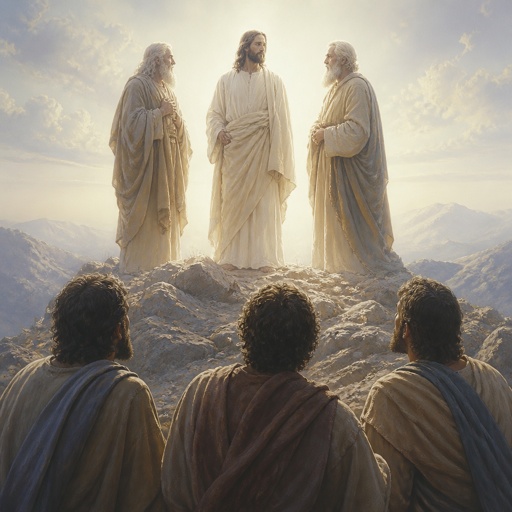
"And, behold, there appeared unto them Moses and Elias talking with him." - Matthew 17:3

Matthew 17:17-18

Matthew 17:17-18

Matthew 6:17

Matthew 17:20

Matthew 17:20

Matthew 19:16-17

Matthew 6:17-18

Matthew 17:14-21

Matthew 17:14-15

Matthew 17:2-3: There he was transfigured before them. His face shone like the sun, and his clothes became as white as the light. Just then there appeared before them Moses and Elijah, talking with Jesus.

Matthew 17:2-3: There he was transfigured before them. His face shone like the sun, and his clothes became as white as the light. Just then there appeared before them Moses and Elijah, talking with Jesus.

Matthew 17:2-3: There he was transfigured before them. His face shone like the sun, and his clothes became as white as the light. Just then there appeared before them Moses and Elijah, talking with Jesus.

Matthew 17:2-3: There he was transfigured before them. His face shone like the sun, and his clothes became as white as the light. Just then there appeared before them Moses and Elijah, talking with Jesus.

Matthew 17:2-3: There he was transfigured before them. His face shone like the sun, and his clothes became as white as the light. Just then there appeared before them Moses and Elijah, talking with Jesus.

Matthew 17:2-3: There he was transfigured before them. His face shone like the sun, and his clothes became as white as the light. Just then there appeared before them Moses and Elijah, talking with Jesus.

Matthew 3:11

Matthew 3:16

Matthew 3:11

Matthew 3:11

Matthew 3:11

Matthew 3:11

Matthew 3:16

Matthew 3:16

Matthew 3:11

Matthew 2:17 - "Then was fulfilled that which was spoken by Jeremy the prophet, saying,"