What does Matthew 4:12 mean?
“Now when Jesus had heard that John was cast into prison, he departed into Galilee;” — Matthew 4:12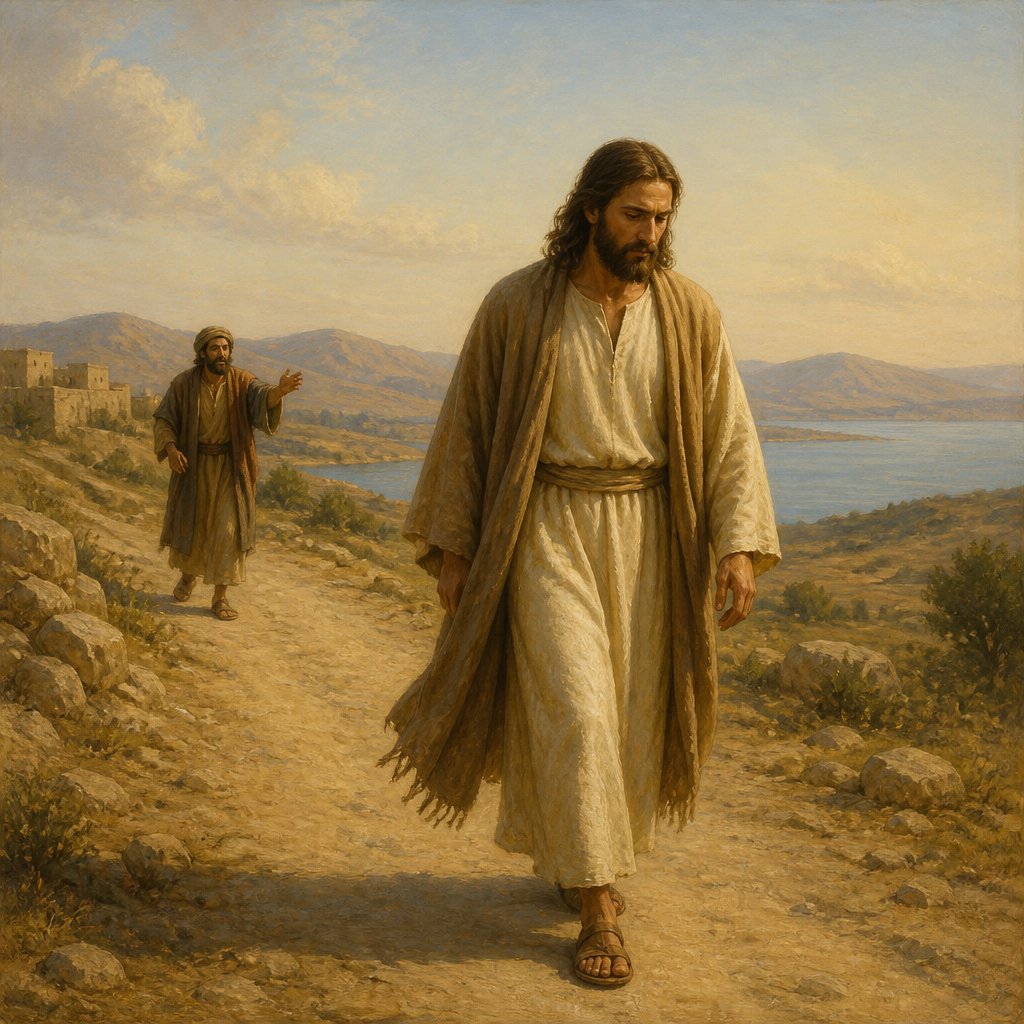
Matthew 4:12 in the King James Version of the Bible reads, "Now when Jesus had heard that John was cast into prison, he departed into Galilee." This short verse comes after Jesus' baptism and temptation in the wilderness, and it marks the beginning of his public ministry.
The verse is significant in several ways, and its meaning is deep and rich in theological and historical context. Jesus' departure into Galilee after learning of John the Baptist's imprisonment foreshadows the fulfillment of the prophecies of the Old Testament. This verse sets the stage for Jesus' ministry in Galilee, a region that held great significance in the history of the Jewish people.
One of the key themes in this verse is fulfillment of prophecy. Throughout the Gospels, there are numerous references to Old Testament prophecies being fulfilled in Jesus' life and ministry. In this case, Jesus' actions align with the prophecies found in Isaiah 9:1-2, which states, "Nevertheless the dimness shall not be such as was in her vexation, when at the first he lightly afflicted the land of Zebulun and the land of Naphtali, and afterward did more grievously afflict her by the way of the sea, beyond Jordan, in Galilee of the nations. The people that walked in darkness have seen a great light: they that dwell in the land of the shadow of death, upon them hath the light shined." This passage from Isaiah prophesied that a great light would shine in the land of Zebulun and Naphtali, which were regions in Galilee. Jesus' decision to begin his ministry in Galilee, therefore, was not a random choice but a deliberate fulfillment of prophetic promises.
The mention of John's imprisonment in this verse also serves to highlight the dangerous political climate in which Jesus lived and ministered. John the Baptist's imprisonment was a direct result of his bold preaching and condemnation of the ruling authorities, particularly King Herod. By associating himself with John and his fate, Jesus aligns himself with the prophetic tradition of speaking truth to power, setting the stage for his own confrontations with religious and political authorities in the days to come.
The symbolism in this verse is profound as well. In the immediate sense, Jesus' decision to leave Judea and go to Galilee foreshadows his transformation of the region from a land of obscurity to a place of great spiritual illumination. By starting his ministry in Galilee, Jesus demonstrates his concern for the marginalized and the outcasts of society, fulfilling the prophecy of Isaiah by bringing the light of redemption to those "who sat in darkness."
This verse also sets the stage for the overarching symbolic journey of Jesus' life and ministry. His departure into Galilee marks the beginning of a transformative period in which he would proclaim the kingdom of God, perform miracles, and call his disciples. It is a symbolic transition from the private life of Jesus to his public ministry, and it sets the tone for the transformative work that Jesus would accomplish in the lives of individuals and the world.
In conclusion, Matthew 4:12 in the King James Version of the Bible is a short but profound verse that carries great theological and historical significance. It sets the stage for the fulfillment of prophecy, highlights the dangerous socio-political climate in which Jesus ministered, and symbolically represents the beginning of Jesus' transformative ministry. This verse serves as a crucial turning point in the Gospel narratives and lays the foundation for the life, ministry, and mission of Jesus Christ.
Get our apps


Artwork for Matthew 4:12

Matthew 4:12 - "¶ Now when Jesus had heard that John was cast into prison, he departed into Galilee;"
"¶ Now when Jesus had heard that John was cast into prison, he departed into Galilee;" - Matthew 4:12

Matthew 12:4 - "How he entered into the house of God, and did eat the shewbread, which was not lawful for him to eat, neither for them which were with him, but only for the priests?"

Matthew 3:11-12

Matthew 3:11-12

Matthew 3:12

Matthew 3:12

Matthew 23:12

Matthew 7:12

Matthew 23:12

Matthew 7:12

Matthew 3:12

Matthew 2:1-12

Matthew 12:36-37

Matthew 5:1 a 12

matthew 12:36-37

Matthew 5:8-12

Matthew 2:1-12

Matthew 2:1-12

Matthew 5:1 a 12

Matthew 2:1-12

Matthew 12:36-37

Matthew 12:12 - "How much then is a man better than a sheep? Wherefore it is lawful to do well on the sabbath days."

Matthew 10:12 - "And when ye come into an house, salute it."

Matthew 4:10

Matthew 4:1

Matthew 6:4

Matthew 12:21 - "And in his name shall the Gentiles trust."

Matthew 12:16 - "And charged them that they should not make him known:"

Matthew 12:8 - "For the Son of man is Lord even of the sabbath day."