What does Matthew 4:5 mean?
“Then the devil taketh him up into the holy city, and setteth him on a pinnacle of the temple,” — Matthew 4:5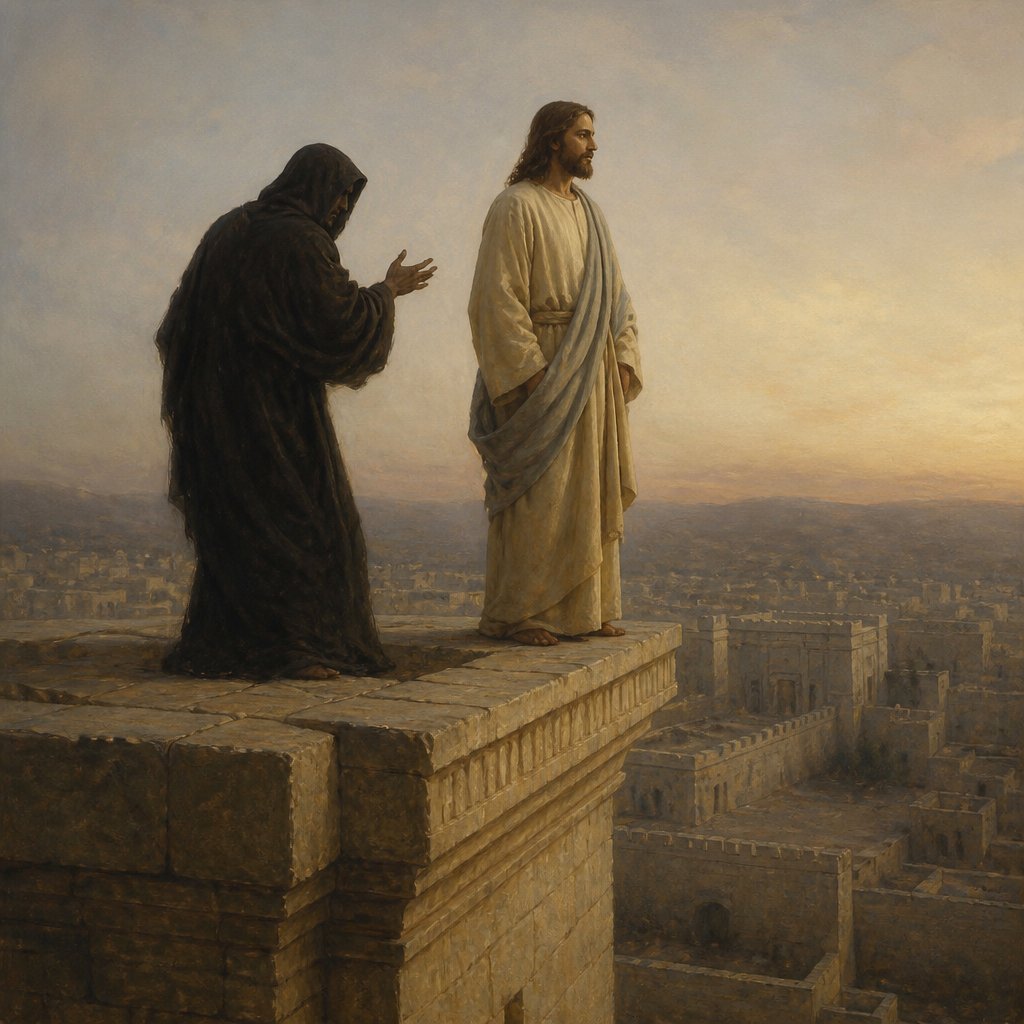
In Matthew 4:5, the King James Version (KJV) of the Bible reads:
"Then the devil taketh him up into the holy city, and setteth him on a pinnacle of the temple,"
This verse is taken from the Gospel of Matthew, which is the first book of the New Testament in the Christian Bible. It is part of the account of Jesus' temptation in the wilderness. The broader context of this verse is Jesus' forty-day fast in the desert, during which time he is tempted by the devil. In this particular temptation, the devil takes Jesus to the holy city and sets him on the pinnacle of the temple.
The theme of the temptation of Jesus in the wilderness is one of spiritual warfare and the struggle between good and evil. The devil tempts Jesus with worldly power and glory, trying to sway him away from his divine mission. This theme is central to the Christian faith and is a reminder of the constant battle between the forces of light and darkness.
The specific context of this verse is significant. The holy city mentioned here is commonly understood to be Jerusalem, the ancient and revered city of the Israelites. The temple referred to in the verse is the Temple in Jerusalem, which was the center of Jewish religious life and worship. The pinnacle of the temple is the highest point of the temple structure and would have been a place of great significance.
Symbolism plays a crucial role in understanding the deeper meaning of this verse. The holy city and the temple represent the center of religious authority and spiritual power. By taking Jesus to such a revered and sacred place, the devil is attempting to undermine Jesus' spiritual authority and mission. The pinnacle of the temple, in particular, is a place of extreme elevation, symbolizing the heights of spiritual power and influence. It is a potent symbol of the worldly temptations that come with great authority and responsibility.
The temptation at the pinnacle of the temple also calls to mind the temptation of pride and self-exaltation. The devil is attempting to entice Jesus into proving himself through a dramatic and public display of power, rather than relying on trust in God and humble service to others. This temptation represents a fundamental struggle for all humans – the choice between serving our own desires and ambitions, or surrendering to the will of God and serving others.
The narrative of Jesus' temptation in the wilderness is a powerful illustration of the inner struggles and temptations that all people face. It serves as a reminder that even the Son of God faced temptation and trials, and yet remained faithful to his divine calling.
In conclusion, Matthew 4:5 is a verse that carries rich symbolism and profound spiritual meaning. It is a pivotal moment in the temptation of Jesus, highlighting themes of spiritual warfare, the struggle between good and evil, and the choice between worldly power and divine will. The setting of the holy city and the pinnacle of the temple adds depth and significance to this narrative, underscoring the timeless and universal nature of the challenges and temptations faced by all people.
Get our apps


Artwork for Matthew 4:5

Matthew 4:5 - "Then the devil taketh him up into the holy city, and setteth him on a pinnacle of the temple,"

Matthew 4:5 Then the devil took Him up into the holy city, set Him on the pinnacle of the temple,

"Then the devil taketh him up into the holy city, and setteth him on a pinnacle of the temple," - Matthew 4:5

Matthew 5:4 - "Blessed are they that mourn: for they shall be comforted."

"Blessed are they that mourn: for they shall be comforted." - Matthew 5:4

Matthew 5:5 - "Blessed are the meek: for they shall inherit the earth."

Matthew 5:44

Matthew 5:44

Matthew 5

Matthew 5

Matthew 5:44

Matthew 5:44

Matthew 5

Matthew 5:44

Matthew 5:44

Matthew 5:14

Matthew 5:44

Matthew 5:38

Matthew 6:5

Matthew 5:14

Matthew 5:15

Matthew 5:30

Matthew 5:30

Matthew 5:15

Matthew 5:38

Matthew 5:1 a 12

matthew 5 13-20

Matthew 5:8-12

"Blessed are the meek: for they shall inherit the earth." - Matthew 5:5

Matthew 4:10