What does Matthew 5:46 mean?
“For if ye love them which love you, what reward have ye? do not even the publicans the same?” — Matthew 5:46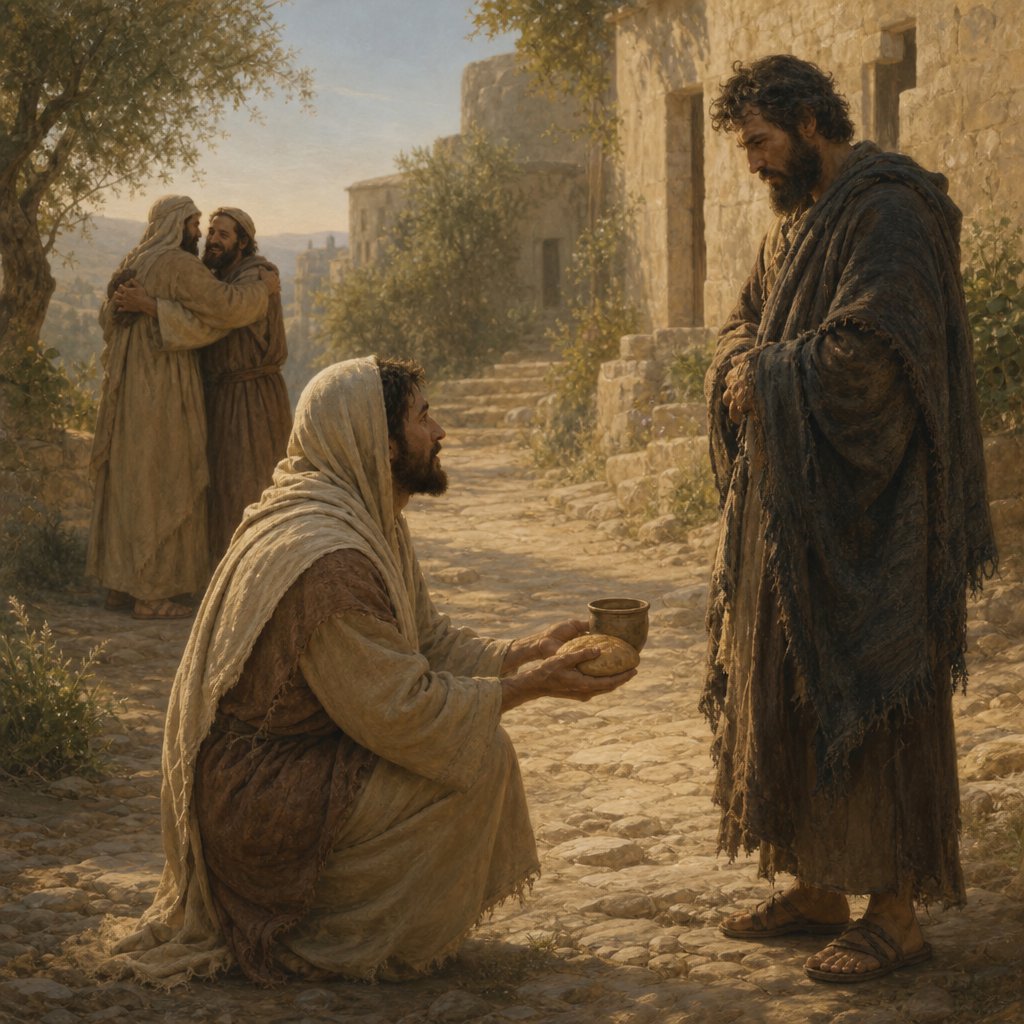
Matthew 5:46 in the King James Version says, “For if ye love them which love you, what reward have ye? do not even the publicans the same?” It stands in the middle of the Sermon on the Mount, where Jesus is describing the righteousness of the kingdom of heaven as something deeper than outward correctness. In this section he has already pressed beyond the limits of ordinary morality by commanding, “Love your enemies, bless them that curse you, do good to them that hate you,” and by calling his disciples to reflect the Father who “maketh his sun to rise on the evil and on the good.” Against that backdrop, Matthew 5:46 is not a detached proverb but a piercing question meant to expose how easily “love” can be reduced to a natural preference or a social transaction rather than the holy, God-shaped charity Jesus is teaching.
The verse turns on the contrast between a love that merely answers love and a love that originates in God. “If ye love them which love you” describes a kind of affection that requires little spiritual transformation. It is the love of reciprocity: I return warmth to those who are warm to me; I extend kindness where I expect kindness back. Jesus does not deny that such affection exists or that it can be pleasant, but he treats it as morally ordinary and spiritually insufficient for those who claim to belong to him. The heart of the verse is the question, “what reward have ye?” In the Sermon on the Mount, “reward” is a loaded word. Jesus has already spoken of doing religious acts to be “seen of men,” and he warns that those who seek human applause “have their reward.” The implied meaning in Matthew 5:46 is that reciprocal love tends to collect its wages immediately in the form of social comfort, mutual approval, and preserved reputation. If that is the motive and the measure, then the “reward” is already spent in the world of human exchange, and there is nothing distinctly heavenly about it.
When Jesus adds, “do not even the publicans the same?” he uses a group that, in the social imagination of his hearers, represented the spiritual baseline of the community. “Publicans” were tax collectors associated with Rome, often viewed as compromised, dishonest, and ceremonially and socially suspect. Jesus’ point is not merely to insult them; it is to make the comparison unavoidable. Even those regarded as morally low, even those who operate by the world’s rules of advantage and return, are capable of loving those who love them. So if a disciple’s love never rises above that level—never crosses the boundary of convenience, never persists when it is not rewarded—then the disciple is not displaying the distinguishing mark of the Father’s children. The question therefore functions like a mirror: it asks whether one’s “love” is truly kingdom love or simply human affinity dressed in religious language.
The symbolism and inner logic of the verse reach back to the larger movement of Matthew 5. Jesus is not merely raising ethical standards; he is revealing the character of God and calling his people to resemble him. The Father’s kindness in the passage is portrayed in cosmic imagery: sun and rain fall on the just and unjust. These are symbols of God’s steady, life-giving benevolence that does not depend on human worthiness. In that light, Matthew 5:46 becomes an invitation into divine likeness. Love that only circulates within the circle of those who “love you” is like a small, closed system: it never demonstrates the open-handed mercy of heaven. But love that extends outward—to the ungrateful, the hostile, the stranger, the enemy—mirrors the way God gives. The “reward” then is not merely a payment for good behavior; it is bound up with communion with God, the approval of the Father, and the shaping of the heart into something like his own.
The verse also carries a subtle warning about self-deception. A person can feel sincere affection for friends and family and assume that this proves spiritual maturity. Jesus challenges that assumption by showing that natural affection, though real, is not the evidence he is seeking. Kingdom righteousness is recognizable when love survives insult, refuses revenge, blesses those who curse, and does good without the guarantee of return. In this way Matthew 5:46 presses the conscience: it asks what kind of love governs you when you have no social advantage, no emotional reward, no assurance of being understood. The verse is not teaching that love for those who love you is wrong; rather, it teaches that such love is not the boundary line of Christian obedience. It is the starting point that even “publicans” can reach. Jesus is calling his disciples beyond the merely human toward a love that is obedient, costly, and God-reflecting.
In practical significance, Matthew 5:46 redefines what makes Christian love remarkable. The world commonly recognizes love that stays within its own tribe, rewards its allies, and mirrors its own interests. Jesus sets before his followers a higher sign: love that moves first, love that continues when it is not repaid, love that seeks the good of the other even when the other is an enemy. The verse therefore acts as a test of motives and a doorway into the larger theme of the Sermon on the Mount: that the life of the kingdom is not about performing righteousness for immediate human reward, but about living from the Father’s character and for the Father’s approval.
Get our apps


Artwork for Matthew 5:46

Matthew 5:46 - "For if ye love them which love you, what reward have ye? do not even the publicans the same?"

"For if ye love them which love you, what reward have ye? do not even the publicans the same?" - Matthew 5:46

Matthew 5:46 (KJVA) 46 For if ye love them which love you, what reward have ye? do not even the publicans the same?

Matthew 5:46-47 - "For if you love those who love you, what reward have you? Do not even the tax collectors do the same? And if you greet only your brothers, what are you doing more than others? Do not even the Gentiles do the same?"
"For if ye love them which love you, what reward have ye? do not even the publicans the same?" - Matthew 5:46
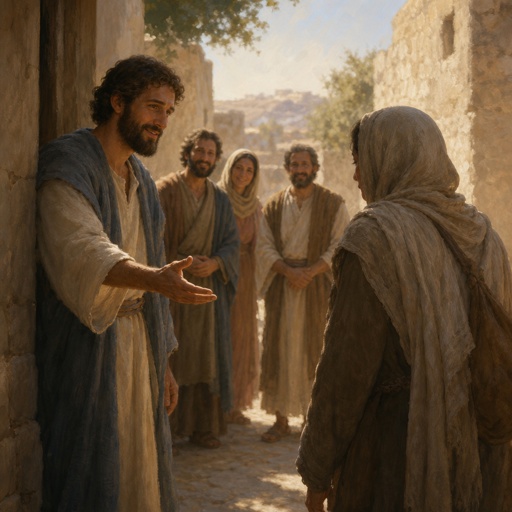
"For if you love those who love you, what reward have you? Do not even the tax collectors do the same? And if you greet only your brothers, what are you doing more than others? Do not even the Gentiles do the same?" - Matthew 5:46-47

Matthew 27:46
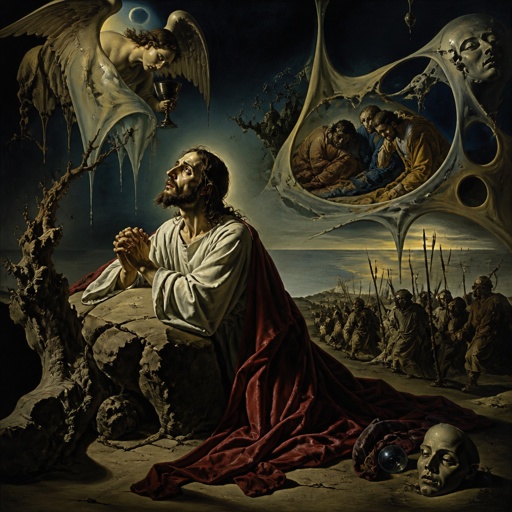
Matthew 26:36-46

Psalm 46:5

Matthew 25:46 - "And these shall go away into everlasting punishment: but the righteous into life eternal."

Matthew 21:46 - "But when they sought to lay hands on him, they feared the multitude, because they took him for a prophet."

Matthew 24:46 - "Blessed is that servant, whom his lord when he cometh shall find so doing."

Matthew 26:46 - "Rise, let us be going: behold, he is at hand that doth betray me."

Matthew 12:46 - "¶ While he yet talked to the people, behold, his mother and his brethren stood without, desiring to speak with him."

Matthew 13:46 - "Who, when he had found one pearl of great price, went and sold all that he had, and bought it."

God is within her she will not fall Psalm 46:5

Psalms 46:5 - "God is in the midst of her; she shall not be moved: God shall help her, and that right early."

John 5:46 - "For had ye believed Moses, ye would have believed me: for he wrote of me."

"And these shall go away into everlasting punishment: but the righteous into life eternal." - Matthew 25:46

Matthew 22:46 - "And no man was able to answer him a word, neither durst any man from that day forth ask him any more questions."

Isaiah 46:5 - "¶ To whom will ye liken me, and make me equal, and compare me, that we may be like?"

Mathew:21:33-46

Matthew 27:46 - "And about the ninth hour Jesus cried with a loud voice, saying, Eli, Eli, lama sabachthani? that is to say, My God, my God, why hast thou forsaken me?"

Ezekiel 46:5 - "And the meat offering shall be an ephah for a ram, and the meat offering for the lambs as he shall be able to give, and an hin of oil to an ephah."

"But when they sought to lay hands on him, they feared the multitude, because they took him for a prophet." - Matthew 21:46
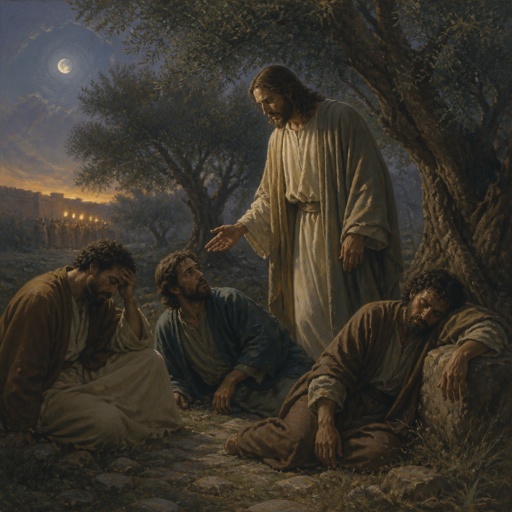
"Rise, let us be going: behold, he is at hand that doth betray me." - Matthew 26:46

Matthew 5:5 - "Blessed are the meek: for they shall inherit the earth."

Matthew 27:46 says, "Eli, Eli, lema sabachthani?", which translates to "My God, my God, why have you forsaken me?"

Matthew 5:44

Matthew 5:44